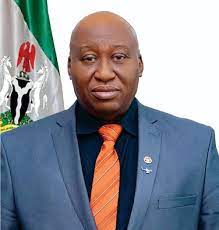
A Magistrate Court in Uyo, Akwa Ibom State, has discharged and acquitted a journalist accused of defaming a former Rector of the Maritime Academy of Nigeria, Oron, Emmanuel Effedua.
The court delivered the judgement on 10 July.
Mr Effedua, a retired naval commodore, was first appointed rector of the academy in November 2017 and reappointed in 2021 for a final four-year term, but resigned in January 2025.
The Nigerian police had arraigned the journalist, Gideon Ekere, the publisher of The Post Newspaper, for allegedly defaming Mr Effedua.
The arraignment followed the newspaper publication in September 2021 that Mr Effedua sacked a whistleblower for exposing the rector’s alleged corruption in the academy.
The whistleblower, Adamu Jibril, is a former staff member of the academy. He had accused the rector of victimisation.
Defamation allegation
In a statement sent to PREMIUM TIMES, Mr Ekere said his newspaper published a story from a petition that Mr Jibril wrote to the Economic and Financial Crimes Commission (EFCC), Independent Corrupt Practices and other Related Offences Commission (ICPC), and the National Assembly, alleging that Mr Effedua connived with some officials of the institution, including himself (Mr Jibril), bursar and cashier to siphon public funds
“Mr Jibril further noted that he protested that, after using his account to divert over N62m between 2018 and 2020, it was unfair for the management and the cartel not to assist him when he needed assistance.”
Mr Effedua reportedly denied Mr Jibril’s financial assistance when his (Jibril’s) mother was said to have been seriously ill, prompting him to raise the alarm about the alleged fraudulent activity of the rector. He was subsequently sacked, the statement said.
Dissatisfied with the publication, the former rector petitioned the journalist to the police, who arrested and charged him with defamation.
Mr Effedua reportedly testified before the court that he was aware of Mr Jibril’s petition and that he had honoured the invitations of the anti-graft agencies and the National Assembly, and that nothing incriminating was found against him.
He told the court that the newspaper’s publication portrayed him in a bad light.
In his testimony, Mr Ekere told the court that his newspaper published the petition Mr Jibril sent to the anti-graft agencies and the National Assembly, alleging fraud by Mr Effedua. He argued that it was within his constitutional right as a journalist to inform the public of the matter.
He further told the court that his newspaper had balanced the report by publishing Mr Effedua’s side of the story, and wondered why he should be accused of defamation.
In its ruling, the court held that the prosecution failed to prove its case beyond a reasonable doubt, and wondered how a story that came from a petition submitted to the National Assembly, ICPC, and EFCC, which Mr Effedua accepted to have been invited for investigation, could be said to be defamatory or false.
The court discharged and acquitted the journalist.
Mr Effedua did not respond to calls and a text message seeking his comment.
*Premium Times