shippingposition
  • Home
  • News
  • Editorial
    • Vox Pop
  • Maritime safety
  • Oil and Gas
  • Personality
  • Health
No Result
View All Result
shippingposition

Home » FG Reiterates Commitment To Reactivating Inland Waterways Transportation

FG Reiterates Commitment To Reactivating Inland Waterways Transportation

by Joshua
March 17, 2023
in Featured, News

The Federal Government has reiterated its commitment to reactivating the nation’s inland waterways transportation to revive the trading activities and boost the economy.
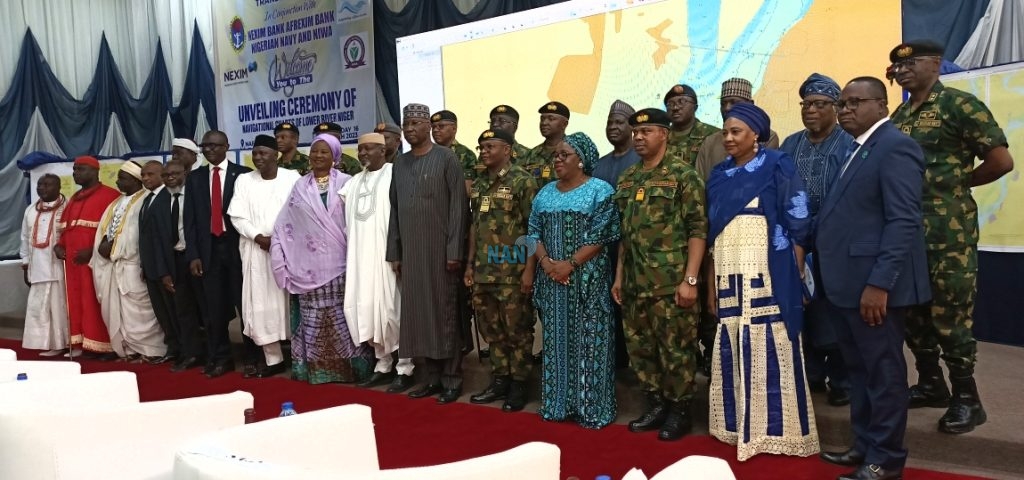
The Secretary to the Government of the Federation (SGF), Mr Boss Mustapha, said this at the unveiling of the Navigational Charts of the power River Niger on Thursday, in Abuja.


Mustapha said that there was the need to really get back the mode of transportation on the inland waterways, so as to rekindle the trading activities that used to exist along the river Niger and Benue.


He commended the  Nigerian Navy for providing the resources, persons and the platforms for the conduct of the chatting of the River Niger.


He also commended the Ministry of Transportation through National Inland Waterways Authority (NIWA) and other stakeholders for the professionalism they had exhibited.


He said the successful execution of the project locally, had saved the country huge foreign exchange, adding that all the charts in the past were done by foreign firms.


“But today we can beat our chest and say that our Nigerian Navy has provided the platform that is necessary for the chart and for that.


“What this charting has done is that it has created an infrastructure or a process that eventual exercises of capital dredging or maintenance dredging will be guided.


“It is important that we realise that whichever government takes over from President Mohammed Buhari, it must continue the trajectory of creating an intermodal transport system for this country.


“whether we like it or not, it would inhibit our development if we could.


“About a month or two ago, the Federal Executive Council approved a contract, worth N1.9 trillion through the tax credit scheme for the rehabilitation and reconstruction of our roads.”


He said that, that was however important,  but added that if an alternative means of transportation  was not provided that would carry heavy duty goods, the lifespan of the roads could not be saved.


“So it is important that we continue along this trajectory and ensure that it is not only the chatting but also to think about getting the corporate world to participate.


“It is also important that we get the corporate world to be genuinely involved in the development of the river Niger so that we can save the lifespan and also remove the level of carnage, casualties, fatalities that are recorded on our roads on a daily basis,” he said.


Minister of Transformation, Mr Mu’azu Sambo, said the navigational chart was a project that could potentially change the very dynamics of prosperity for the country.


Sambo said the project was in tandem with the statutory responsibilities and objectives of the Ministry of Transportation to boost the efforts of the President Muhammadu Buhari’s government.


This he said was towards the development and operation of an efficient and safe transportation network.


He said that a well developed and efficient inland water transportation was necessary for an integrated and functional multimodal transportation system which its major pillar was dependent upon accurate and timely hydrographic studies and charts.


According to him, the objective of this project is to provide direct maritime linkages within Nigeria and between African countries.


“Thereby utilising Nigeria’s Gross Domestic Products (GDP) growth attracting foreign direct investments (FDI) creating highly needed jobs and boosting internal as well as intra African trading.


“The United States economy today is supported by revenues in excess of 70 billion dollars from 600 million tonnes of cargo transported through its inland waterways.


“It created hundreds of thousands of jobs, building and industrial communities along the waterway channels and thus spreading economic prosperity throughout the length and breadth of these waterways.


“The United States of America’s waterways and multimodal transportation network provide a competitive edge in global markets.


“No wonder its corn and soybean farmers are the most efficient in the world.”


The minister said that Nigeria was blessed with an 800 kilometer coastline and over 10,000 kilometers of inland waterways that potentially confirms it with such maritime power.


“That in itself alone and transform this country into a great and prosperous place on earth.


“I would like to reaffirm the Federal Minister of Transportation’s commitment to the successful attainment of the overall objective of this project as aligned with President Muhammadu Buhari’s vision for the holistic and sustainable development of the maritime sector and the inland waterways in particular,” he said.


The Managing Director of NIWA, Dr George Moghalu, said the chart covered a total distance of 594KM (321 Nautical Miles) with a total survey area of 1719.8 Square Kilometers.


Moghalu, represented by the General Manager, Legal Services, Mr Danladi Ibrahim, commended the Nigerian Navy for the successful collaboration which ensured the successful execution of the project.


He said that NIWA would be looking forward to future collaboration with the Navy with a view to extending the hydrographic survey of Inland Waterways nationwide.


“Consequently, the successful completion of the project through this kind of collaboration represents a major milestone in the history of the development of inland water transportation in Nigeria.


“I would therefore like to affirm the NIWA’s commitment to its statutory function of developing and improving the Inland Waterways Transportation system in Nigeria.


“We are also committed to providing an enabling environment for the private sector Participation in the development of the Inland Waterways Transportation (IWT) sector.


“In the same vein, I am glad to inform you that the Authority has just concluded the installation of marine navigational buoys from the Onitsha River Port to the Bifurcation on the River Niger as part of our efforts to ensuring adequate provision of navigational aid on the Waterways.


“The Authority has also installed Permanent Electronic Gauge Stations at several locations along the Lower River Niger and is also executing several other projects on Inland waterways nationwide especially on the Lower River Niger to ensure all year-round navigation,” he added.


shippingposition

Kindly like us on Facebook/twitter


Related Posts

NSC Pushes Fast-Track Clearance of Power Project Cargo at Ports

NSC Pushes Fast-Track Clearance of Power Project Cargo at Ports

April 17, 2026
Oyetola Commissions NIMASA–UNILAG Institute of Maritime Studies Building, Reaffirms Commitment to Blue Economy Growth

Oyetola Commissions NIMASA–UNILAG Institute of Maritime Studies Building, Reaffirms Commitment to Blue Economy Growth

April 17, 2026
Maritime Sector Faces Priority Alignment Challenges – Centre The Sea Empowerment and Research Centre (SEREC) has raised concern over alleged policy misalignment and weak coordination in Nigeria’s maritime sector. It said the sector was at a critical crossroads, shaped not by limited capacity but by weak prioritisation discipline. SEREC made this known in a policy bulletin and presidential advisory memo made available to newsmen by its Head of Research, Mr Eugene Nweke, on Thursday in Abuja. Nweke said the sector had prioritised projects over systems, announcements over outcomes and revenue over value creation, describing the trend as a national economic risk. “Nigeria’s maritime sector has repeatedly prioritised visibility over viability, expansion over optimisation and announcements over execution. This has resulted to congestion in spite expansion, digitalisation without integration and revenue growth without efficiency gains,” he said. He said policy inconsistency and institutional fatigue had weakened the sector, resulting in reform fatigue and stakeholder distrust. According to him, Nigeria is losing economic momentum and regional relevance, with annual losses estimated at between N2.5 trillion and N4 trillion due to inefficiencies. He said with proper reforms, the sector could generate over one trillion in annual savings, recover between N500 billion and one trillion naira in revenue from cargo retention. The sector, he said, could unlock three billion to six billion dollars in export growth, with gains expected to boost jobs and GDP. Nweke said the sector had suffered from port expansion without adequate evacuation systems, poor connectivity and underperforming inland container depots. Several depots, he said, were licenced based on geographic considerations rather than economic demand, leaving many underutilised. He called for their conversion into export logistics hubs to support agro-export growth, cold-chain systems and structured export aggregation, critical for AfCFTA competitiveness. Nweke also warned against uncoordinated deep seaport development and fragmented digital trade reforms, noting that it could undermine smooth implementation of the National Single Window. He noted that to reposition the maritime sector, focus must shift from revenue obsession to trade efficiency, export competitiveness and cost reduction. According to him, Nigeria’s maritime system remains import-driven, with weak export infrastructure, poor logistics integration and limited export terminals. He said this had led to cargo diversion to neighbouring ports saying, ‘Nigeria is losing cargo not by geography but by inefficiency’. He stressed the need for a strong independent regulator to enforce global standards and curb tariff abuses, describing regulation as key to a functional port economy. Nweke urged proper implementation of the Cargo Tracking Note (CTN), warning it could fail without transparency and coordination. He said maritime reforms must prioritise system integration, measurable outcomes and coordination over fragmentation. “Nigeria is approaching a tipping point. It is either we fix our maritime system or continue to finance the efficiency of neighbouring economies,” he said.

Maritime Sector Faces Priority Alignment Challenges – Centre The Sea Empowerment and Research Centre (SEREC) has raised concern over alleged policy misalignment and weak coordination in Nigeria’s maritime sector. It said the sector was at a critical crossroads, shaped not by limited capacity but by weak prioritisation discipline. SEREC made this known in a policy bulletin and presidential advisory memo made available to newsmen by its Head of Research, Mr Eugene Nweke, on Thursday in Abuja. Nweke said the sector had prioritised projects over systems, announcements over outcomes and revenue over value creation, describing the trend as a national economic risk. “Nigeria’s maritime sector has repeatedly prioritised visibility over viability, expansion over optimisation and announcements over execution. This has resulted to congestion in spite expansion, digitalisation without integration and revenue growth without efficiency gains,” he said. He said policy inconsistency and institutional fatigue had weakened the sector, resulting in reform fatigue and stakeholder distrust. According to him, Nigeria is losing economic momentum and regional relevance, with annual losses estimated at between N2.5 trillion and N4 trillion due to inefficiencies. He said with proper reforms, the sector could generate over one trillion in annual savings, recover between N500 billion and one trillion naira in revenue from cargo retention. The sector, he said, could unlock three billion to six billion dollars in export growth, with gains expected to boost jobs and GDP. Nweke said the sector had suffered from port expansion without adequate evacuation systems, poor connectivity and underperforming inland container depots. Several depots, he said, were licenced based on geographic considerations rather than economic demand, leaving many underutilised. He called for their conversion into export logistics hubs to support agro-export growth, cold-chain systems and structured export aggregation, critical for AfCFTA competitiveness. Nweke also warned against uncoordinated deep seaport development and fragmented digital trade reforms, noting that it could undermine smooth implementation of the National Single Window. He noted that to reposition the maritime sector, focus must shift from revenue obsession to trade efficiency, export competitiveness and cost reduction. According to him, Nigeria’s maritime system remains import-driven, with weak export infrastructure, poor logistics integration and limited export terminals. He said this had led to cargo diversion to neighbouring ports saying, ‘Nigeria is losing cargo not by geography but by inefficiency’. He stressed the need for a strong independent regulator to enforce global standards and curb tariff abuses, describing regulation as key to a functional port economy. Nweke urged proper implementation of the Cargo Tracking Note (CTN), warning it could fail without transparency and coordination. He said maritime reforms must prioritise system integration, measurable outcomes and coordination over fragmentation. “Nigeria is approaching a tipping point. It is either we fix our maritime system or continue to finance the efficiency of neighbouring economies,” he said.

April 17, 2026
Reforms Drive Maritime Turnaround, Position Nigeria for Blue Economy Leadership — Dantsoho

Reforms Drive Maritime Turnaround, Position Nigeria for Blue Economy Leadership — Dantsoho

April 16, 2026

Latest News

NSC Pushes Fast-Track Clearance of Power Project Cargo at Ports

NSC Pushes Fast-Track Clearance of Power Project Cargo at Ports

April 17, 2026

Oyetola Commissions NIMASA–UNILAG Institute of Maritime Studies Building, Reaffirms Commitment to Blue Economy Growth

Maritime Sector Faces Priority Alignment Challenges – Centre The Sea Empowerment and Research Centre (SEREC) has raised concern over alleged policy misalignment and weak coordination in Nigeria’s maritime sector. It said the sector was at a critical crossroads, shaped not by limited capacity but by weak prioritisation discipline. SEREC made this known in a policy bulletin and presidential advisory memo made available to newsmen by its Head of Research, Mr Eugene Nweke, on Thursday in Abuja. Nweke said the sector had prioritised projects over systems, announcements over outcomes and revenue over value creation, describing the trend as a national economic risk. “Nigeria’s maritime sector has repeatedly prioritised visibility over viability, expansion over optimisation and announcements over execution. This has resulted to congestion in spite expansion, digitalisation without integration and revenue growth without efficiency gains,” he said. He said policy inconsistency and institutional fatigue had weakened the sector, resulting in reform fatigue and stakeholder distrust. According to him, Nigeria is losing economic momentum and regional relevance, with annual losses estimated at between N2.5 trillion and N4 trillion due to inefficiencies. He said with proper reforms, the sector could generate over one trillion in annual savings, recover between N500 billion and one trillion naira in revenue from cargo retention. The sector, he said, could unlock three billion to six billion dollars in export growth, with gains expected to boost jobs and GDP. Nweke said the sector had suffered from port expansion without adequate evacuation systems, poor connectivity and underperforming inland container depots. Several depots, he said, were licenced based on geographic considerations rather than economic demand, leaving many underutilised. He called for their conversion into export logistics hubs to support agro-export growth, cold-chain systems and structured export aggregation, critical for AfCFTA competitiveness. Nweke also warned against uncoordinated deep seaport development and fragmented digital trade reforms, noting that it could undermine smooth implementation of the National Single Window. He noted that to reposition the maritime sector, focus must shift from revenue obsession to trade efficiency, export competitiveness and cost reduction. According to him, Nigeria’s maritime system remains import-driven, with weak export infrastructure, poor logistics integration and limited export terminals. He said this had led to cargo diversion to neighbouring ports saying, ‘Nigeria is losing cargo not by geography but by inefficiency’. He stressed the need for a strong independent regulator to enforce global standards and curb tariff abuses, describing regulation as key to a functional port economy. Nweke urged proper implementation of the Cargo Tracking Note (CTN), warning it could fail without transparency and coordination. He said maritime reforms must prioritise system integration, measurable outcomes and coordination over fragmentation. “Nigeria is approaching a tipping point. It is either we fix our maritime system or continue to finance the efficiency of neighbouring economies,” he said.

Vessels Expected At Lagos Ports As At 17th April, 2026

Reforms Drive Maritime Turnaround, Position Nigeria for Blue Economy Leadership — Dantsoho

Tariff Hike: Freight Forwarders Demand Policy Review, Stronger Local Content Protection

Customs Boss Pledges Multimedia Centre, Radio Station For NIJ

MWUN, Maritime Unions Threaten Action Against Temile Over Workers’ Unionisation Dispute

NCS Seizes Smuggled Donkey Skin, PMS Worth N98.3 Million In Adamawa

Vessels Expected At Lagos Ports As At 16th April, 2026

NIJ Honours Customs CG Adeniyi with Fellowship, Announces Landmark Multimedia Centre Donation

NIMASA DG Commends NSDP Graduates As 34 Beneficiaries Obtain CoC

kindly like our Facebook page

Health

Sleep Deprivation Root Cause Of Many Disease – Says Physician
Health

Health Benefits Of Consuming Garden Egg

March 23, 2026

A great source of dietary fibre, minerals and vitamins, garden eggs are a welcomed addition to every meal. This fruit...

Sleep Deprivation Root Cause Of Many Disease – Says Physician

Sleep Deprivation Root Cause Of Many Disease – Says Physician

March 23, 2026
Report Finds Hypertension Affects Up To 40% Of Nigerian Adults In 2025

Stress Management: Psychiatrist Identifies Effective Coping Mechanisms

March 16, 2026
Report Finds Hypertension Affects Up To 40% Of Nigerian Adults In 2025

Report Finds Hypertension Affects Up To 40% Of Nigerian Adults In 2025

March 16, 2026
Lemons Are Among Fruits That Have The Highest Healing Powers Of Diseases On Earth

Lemons Are Among Fruits That Have The Highest Healing Powers Of Diseases On Earth

March 9, 2026
Nigeria Reports Higher Lassa Fever Death Rate

Nigeria Reports Higher Lassa Fever Death Rate

March 9, 2026
The Big Question: Can Diabetes Be Reversed?

Some Early Warning Signs of Diabetes That You Don’t Know, But Should

March 2, 2026
Why Your Favourite Seasoning Cubes May Be Hurting Your Kidneys

Why Your Favourite Seasoning Cubes May Be Hurting Your Kidneys

February 23, 2026
SHOCKING: FIIRO Links High Rates of Organ Failure, Cardiovascular Diseases in Nigeria to Local Grinding Machines

SHOCKING: FIIRO Links High Rates of Organ Failure, Cardiovascular Diseases in Nigeria to Local Grinding Machines

February 23, 2026
MONDAY INTERVIEW: Oyebamiji Did Not See The Media As Adversaries, But As Partners In Development”—Minister Oyetola

DANGER: 11% Of Nigerians Have Kidney Disease – Experts

February 16, 2026

© 2021 Shippingposition

Navigate Site

  • Home
  • About Us
  • Contact us
  • Privacy Policy
  • Editorial Policy
  • Sitemap
  • Terms

Follow Us

No Result
View All Result
  • News
  • Coast To Coast
  • Oil and Gas
  • Maritime Education
  • The Terminals
  • Maritime safety

© 2021 Shippingposition