
Ship ownership, improved cargo and passenger volume, reliable utilities, security and a concerted war against corruption have been identified as some of the major means of developing the country’s maritime industry.
These were part of the submissions of the Chief Executive Officer of Sifax Group; Dr. Taiwo Afolabi, while delivering a paper titled “Building Economic Capacity through Maritime Infrastructure” at the just-concluded Nigerian Maritime Expo (NIMAREX).
Ship ownership, improved cargo and passenger volume, reliable utilities, security and a concerted war against corruption have been identified as some of the major means of developing the country’s maritime industry.
These were part of the submissions of the Chief Executive Officer of Sifax Group; Dr. Taiwo Afolabi, while delivering a paper titled “Building Economic Capacity through Maritime Infrastructure” at the just-concluded Nigerian Maritime Expo (NIMAREX).
Afolabi, who was represented by Major Henry Ajetunmobi (rtd), a Director of Sifax Group, added that there is need to take advantage of the huge economic potentials of the maritime industry in order to contribute better to the country’s Gross Domestic Product.
He noted that in view of the dwindling revenue from the oil industry, the Federal Government and other maritime stakeholders, including industry regulators, government agencies, investors, financiers, operators and others must design a road map that is capable of developing the industry and turn it to a huge revenue earner for the benefit of the country.
On the alleged arbitrary charges by shipping companies and terminal operators, Afolabi called for a cautious approach. “The issues, no doubt, calls for the wisdom of Solomon as well as random eclectic borrowings from the principles long adopted by other maritime nations, especially those in the advanced world that have made a huge success of privatization in their own ports and terminals. But over and above this, is the need for the economic regulator, acting in full consultation with critical stakeholders, to seek to regulate the industry, with a clearly perceived passion to balance and protect the interests of all parties to avoid crisis.”
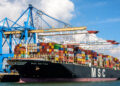
Afolabi noted it wasn’t enough to be contented with the huge natural endowments of long coastline but investors must start financing the acquisition of vessels, particularly Nigerian-flagged ones with the capacity to participate in deep ocean-going international trade.
He further noted that the revamping of public utilities would serve as incentive to current and prospective investors in the industry, adding that improved security that guarantees the safety of persons and goods around our maritime assets and a committed war against endemic corruption will jump start development in the nation’s maritime industry.
Another key to development in the industry identified by Afolabi is improved cargo and passenger volume. He said: “We must begin to take measures now to develop other critical sectors of the economy, particularly in agriculture and optimal exploitation of the vast deposits of our solid mineral and non-oil natural resources, to generate enough cargo that can challenge the present high volume of our import cargo throughput that has given us our present unflattering image as a chronic import-dependent nation.”
How To Grow Maritime Industry— Sifax Boss; Afolabi 4
Ship ownership, improved cargo and passenger volume, reliable utilities, security and a concerted war against corruption have been identified as some of the major means of developing the country’s maritime industry.
These were part of the submissions of the Chief Executive Officer of Sifax Group; Dr. Taiwo Afolabi, while delivering a paper titled “Building Economic Capacity through Maritime Infrastructure” at the just-concluded Nigerian Maritime Expo (NIMAREX).
Afolabi, who was represented by Major Henry Ajetunmobi (rtd), a Director of Sifax Group, added that there is need to take advantage of the huge economic potentials of the maritime industry in order to contribute better to the country’s Gross Domestic Product.
He noted that in view of the dwindling revenue from the oil industry, the Federal Government and other maritime stakeholders, including industry regulators, government agencies, investors, financiers, operators and others must design a road map that is capable of developing the industry and turn it to a huge revenue earner for the benefit of the country.
On the alleged arbitrary charges by shipping companies and terminal operators, Afolabi called for a cautious approach. “The issues, no doubt, calls for the wisdom of Solomon as well as random eclectic borrowings from the principles long adopted by other maritime nations, especially those in the advanced world that have made a huge success of privatization in their own ports and terminals. But over and above this, is the need for the economic regulator, acting in full consultation with critical stakeholders, to seek to regulate the industry, with a clearly perceived passion to balance and protect the interests of all parties to avoid crisis.”
Afolabi noted it wasn’t enough to be contented with the huge natural endowments of long coastline but investors must start financing the acquisition of vessels, particularly Nigerian-flagged ones with the capacity to participate in deep ocean-going international trade.
He further noted that the revamping of public utilities would serve as incentive to current and prospective investors in the industry, adding that improved security that guarantees the safety of persons and goods around our maritime assets and a committed war against endemic corruption will jump start development in the nation’s maritime industry.
Another key to development in the industry identified by Afolabi is improved cargo and passenger volume. He said: “We must begin to take measures now to develop other critical sectors of the economy, particularly in agriculture and optimal exploitation of the vast deposits of our solid mineral and non-oil natural resources, to generate enough cargo that can challenge the present high volume of our import cargo throughput that has given us our present unflattering image as a chronic import-dependent nation.”












Discussion about this post