
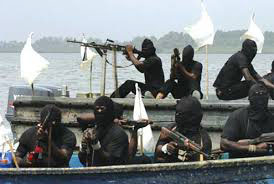
At dawn on November 5, 2005, a cruise liner named the Seabourn Spirit was attacked by machine-gun fire and rocket-propelled grenades about 160 kilometers (99 miles) off the coast of Somalia. The Spirit was carrying 151 passengers and 161 crew members when it was targeted by what are now believed to be pirates, operating from two small vessels. The ship, with only one crew member injured, escaped by changing course, increasing speed and using a high-tech sonic weapon, which sends an earsplitting noise toward the attackers.
Despite the fact that the ship successfully evaded the threat and on this occasion the assailants were most likely pirates, it has sparked a fear that cruise liners are vulnerable to attack by militant groups with maritime capability. Indeed, cruise ships are certainly an attractive target; the biggest can carry up to 2,500 passengers. Moreover, Islamist militant organizations such as al-Qaeda and/or its associate groups have clearly demonstrated a desire to attack maritime targets. A brief survey of the last five years provides a plentiful array of examples of both successful and failed attacks in the maritime domain.
Previous Attacks on Maritime Targets
In October 2000, al-Qaeda carried out an attack on the U.S. Navy destroyer the USS Cole while it was anchored in Aden Harbor in Yemen. Shortly before noon, two suicide bombers approached the USS Cole in an explosive-laden speed boat and detonated it along the port side of the vessel. The blast tore open the Cole’s steel hull and killed 17 members of the crew.
Two years later, the MV Limburg was the target. The super-tanker was attacked in the Gulf of Aden as it approached Yemen’s Ash Shihr oil terminal. Again, a small boat was used which exploded as it approached the vessel. Despite causing substantial damage to the side of the Limburg, only one crew member was killed in the attack.
In June 2002, Moroccan authorities foiled a number of attempts to attack commercial and naval vessels transiting the Straits of Gibraltar. Following the arrests of several Jemaah Islamiyah (J.I.) operatives in Singapore in 2001, it was revealed that the group has planned to attack visiting U.S. naval warships in the region.
In February 2003, after the arrest and interrogation of al-Qaeda’s Abdelrahim al-Nashiri, it emerged that the group had intended to attack ships in the Straits of Hormuz. The planned operation would use a number of small craft, which would be packed with explosives and discharged from a “mother ship” once in position near passing U.S. warships.
By far the most lethal maritime terrorist incident this millennium was the attack on the M/V Superferry 14 in Manila by the Abu Sayyaf Group in February 2004. Just after midnight local time, a bomb exploded onboard the passenger ferry, which had left Manila Bay two hours earlier. The resulting fire caused the ship to capsize, and more than 100 people were killed in the attack.
Read Also: Kenya: Appointment of Kenya Port Boss: Workers Union dares minister
Concern over Large-Scale Maritime Attacks
In Southeast Asia in particular, since the September 11 attacks a number of worst case scenarios have been postulated by the media and academics alike. The formation of a terrorism-piracy nexus was, and still is, seen as a potential alarming development. It was believed that given the high rates of piracy seen in the region’s waterways, coupled with the valuable knowledge and skills of the pirates, it was only a matter of time before terrorists teamed up with pirates.
The possibility of terrorists blocking strategic waterways like the Malacca and Singapore Straits was also seen as a real threat. Predictions were made that militants could sink a large vessel at a narrow chokepoint in one of the region’s waterways, block the passage of shipping and cause widespread economic chaos.
Despite these isolated incidents of maritime terrorism and the predictions of worst case scenarios, maritime terrorist attacks are, and have remained, quite rare. They constitute only two percent of all international terrorist incidents over the last three decades.
While there is no doubt that a number of terrorist organizations have the desire or motivation to carry out attacks of this kind, in general there is still currently a lack of capability in this area of operation and it is likely to remain the case in the immediate future. Attacks against maritime targets require specialized equipment and skills; they also might require some knowledge of local shipping patterns, boat operation and maintenance, and boarding techniques. Even the attack involving the USS Cole, conceivably one of the simplest methods of attacking a maritime target, failed in its first attempt. The original intended mark was in fact the USS The Sullivans. However, in their first try at launching the suicide boat, the al-Qaeda operatives underestimated the weight of the explosives they were carrying onboard and the boat sank as it entered the water.
Although, at present, the probability of a large-scale maritime attack is low, the threat of maritime terrorism must not be ignored altogether. There is evidence that preliminary steps have been made by the al-Qaeda network in particular to develop some competency in this area. Recently, a basic diving manual was recovered in Kandahar in Afghanistan, and it is believed that this is evidence of a larger plan to set up and run a diving school. J.I. has also been conducting training in the southern Philippines in order to develop underwater destruction capability. In addition, J.I. and a number of other jihadist groups based in Indonesia already fully exploit the maritime domain for the purposes of transporting people and arms to and from the Philippines.
Conclusion
In order to prevent a large-scale terror attack on a maritime target, measures must continue to be implemented in the maritime domain, particularly in the areas of target-hardening and situation-awareness development. This necessitates a deepening of cooperation between those states concerned. Solutions must be tailored which take into account issues such as differing resources, national priorities and concerns over the erosion of sovereignty. This is particularly the case in international waterways such as the Straits of Malacca where the territorial waters and exclusive economic zones of the three littoral states overlap. Countermeasures should also be focused and appropriate, and based on a true understanding of the threat faced.
Additionally, the land capability of terrorist groups will have to be disrupted and degraded, which will in turn prevent any development of a maritime capability. Effective surveillance, and intelligence gathering and sharing will help to prevent the acquisition of weapons and explosives by militant groups intending to carry out attacks in the maritime domain. A large-scale attack on a target at sea requires a considerable amount of planning, training and technology. The disruption of this process will severely degrade a group’s ability to carry out a large-scale maritime operation.
Kindly like us on Facebook















Discussion about this post