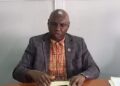
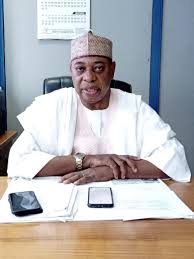
Dr. Paul Adalikwu, is the Secretary General, Maritime Organization of West & Central Africa (MOWCA). He had an interaction with maritime journalists at the sidelines of the 2025 Regional Ferry Safety Conference held in Lagos recently. In the engagement, he touched on some industry issues. Our Assistant Editor; Oluyinka Onigbinde was there.
Lagos is a cosmopolitan city with a multimodal transport system
- 20 of the MOWCA member countries are coastal, and five are land-linked
Today is the Day of the Seafarer. What is MOWCA doing to stop the harassment of female seafarers on board vessels?
The Maritime Organization for West and Central Africa (MOWCA) is not working alone to ensure the welfare and overall safety of seafarers. The International Maritime Organization (IMO) is our global sister institution in this regard. So, the Maritime Organization for West and Central Africa (MOWCA) is partnering with the IMO in ensuring that measures are put in place to reduce, if not completely eliminate, the harassment of seafarers in general, but particularly the female gender. We are working with critical stakeholders, but most importantly with the IMO in London, to ensure that this menace comes to an end.
Nigeria has officially flagged-off the quest to contest for IMO Category C election. Is she getting the backing of the sub-region?
Yes. Nigeria last became a member of the IMO Category C in 2011. They’ve contested four more times and lost. But under the present leadership of President Bola Ahmed Tinubu, who gave the approval for Nigeria to contest again, the Minister and his team from the Ministry of Marine and Blue Economy—a newly created ministry went to London last week to launch the campaign. We hope that with all critical stakeholders coming together, Nigeria has a very good shot of winning this seat. They’ve contacted MOWCA and are engaging with the 25 member countries to give a bloc vote to Nigeria as well. And we hope that this will happen.
Some of MOWCA members are landlocked countries. How has MOWCA impacted these countries that are without access to the sea?
Well, 20 of the MOWCA member countries are coastal, and five are land-linked. We no longer call them land-locked; they are now called land-linked. We encourage them to have a better relationship and engagement with the ports of neighboring countries—like Chad and Cameroon, Chad and Nigeria, Niger and Nigeria, Burkina Faso and Ghana—to ensure that transit goods going through their countries pass freely to the destinations they are meant for, with minimal issues. MOWCA acts as an intermediary between our land-linked countries and the coastal countries through which goods can pass to their destinations.
Can we quickly talk about CINFOCOM? What has been the impact of CINFOCOM so far?
CINFOCOM in MOWCA is a Center for Information and Communication. I’m glad to report that the IMO and the government of France have provided capacity building in the last six months to all the staff of MOWCA to ensure that access to live information—on what is happening in our territorial waters—is made possible through the Center for Information and Communication at MOWCA. This was revived once I came into office two and a half years ago.
What are the biggest challenges currently facing ferry safety across West and Central Africa?
As all of you are aware, the issue of ferry safety is very important for the member states of MOWCA, which covers the 25 countries in this region. There have been incessant ferry accidents across the length and breadth of these countries. Nigeria, Senegal, and the Democratic Republic of Congo are the biggest culprits, with over 8,000 lives lost in the last decade. That’s a very huge number. And so, we at MOWCA were motivated to engage with the government of Gabon last year when the Esther Miracle accident happened. The Minister of Transport actually lost his job as a result of that accident for not paying due attention to this critical sector of human lives in the country.
You mentioned that ferry transport is a vital lifeline in the region. Could you talk more about MOWCA’s recent efforts in enhancing safety in this sector?
In 2024, MOWCA partnered with the government of Gabon and the International Maritime Organization (IMO) to convene a significant regional workshop in Libreville, Gabon. That gathering focused on the safety of inland waterway transport and ferry accidents. It was especially poignant because it provided an opportunity to address the tragic Esther Miracle ferry accident that occurred in Gabon in 2023—a stark reminder of the urgent need for action. However, we did not stop at highlighting that incident alone. We used the platform to examine broader maritime and ferry safety concerns across the entire sub-region. One key outcome of that workshop was the development of the Libreville Action Plan, a document that will be central to the discussions we’re having here in Lagos. Going forward, we thought that Nigeria, being a critical member of MOWCA and having incessant ferry accidents almost on a monthly basis, was a logical next step. So, we decided to engage with the Lagos State Government through LASWA and InterFerry; an international ferry organization based in Canada, to bring this two-day conference to Nigeria. The idea is to create awareness, particularly among the 36 states of Nigeria, that the safety of citizens using ferries is very important. The conference began this morning and it will end tomorrow with resolutions and actions that will hopefully reduce ferry accidents in this country and beyond.
What led to the decision to host this year’s conference in Lagos, Nigeria?
Recognizing the vital role ferry services play in connecting communities and supporting local economies, MOWCA was privileged to attend the 48th edition of the Interferry Conference in Marrakech, Morocco, in October 2024. That event allowed us to escalate discussions on the high rate of ferry incidents in the sub-region, with particular emphasis on Nigeria, Senegal, and the Democratic Republic of Congo (DRC). It was graciously agreed to host a conference focused on ferry safety operations, and Lagos was selected as the host city. Lagos is a cosmopolitan city with a multimodal transport system and 22% water coverage, with an average of about 60,000 daily commuters moving between the mainland and the islands. The presence of a robust water transport authority—the Lagos State Waterways Authority (LASWA) made Lagos an ideal choice.
It must have taken a lot to put this event together. What can you say about the support from Lagos State?
I am profoundly grateful to the Lagos State Government and the leadership of LASWA. Despite being approached at short notice and without any prior budgetary provisions, they welcomed the opportunity to host this conference with open arms. It takes foresight and a genuine commitment to public safety to respond that way, especially in a city as vibrant and busy as Lagos. Hosting us here has allowed them to showcase their work and initiatives to a wider audience of regional and international maritime professionals.
What are your expectations from this gathering?
The idea is to gather stakeholders in Lagos to understudy their model, align it with emerging global best practices, and explore areas of improvement that will make ferry services safe and attractive options for human and service mobility. Over the course of this conference, we will hear from leading experts, policymakers, engineers, operators, and researchers who will share insights, best practices, and forward-looking strategies. I encourage everyone to engage actively, ask questions, and share perspectives because the solutions to ferry safety challenges will come not from a single voice, but from the collective wisdom and experiences of us all.
What are the takeaways so far from this two-day conference?
Well, the speakers are still speaking and resolutions will be made at the end, with input from the critical stakeholders that are present. Let me not pre-empt what will be resolved by giving you what I think as my personal opinion. It will be a collective decision and input that people will come up with at the end of the conference. This is what we want to see going forward from this point.
Finally, what is your parting message to stakeholders as they participate in this conference and return to their various countries and organizations?
My message is this: Let us make the most of this opportunity—not just to learn, but to genuinely connect with one another and reaffirm our unshakable dedication to saving lives and raising the standards of ferry safety in our water bodies and the region at large. The responsibility lies with each of us to ensure that ferry transport becomes a truly reliable and safe means of travel for all.