
“West Africa is on track to secure and take more advantage of its blue economy”. These were the words of Baye Meissa Khoule, a captain in the Senegalese Navy and chairman of a group of West African experts who recently validated a priority action plan for the implementation of the Economic Community of West African States’ (ECOWAS) integrated maritime strategy (EIMS).
“West Africa is on track to secure and take more advantage of its blue economy”. These were the words of Baye Meissa Khoule, a captain in the Senegalese Navy and chairman of a group of West African experts who recently validated a priority action plan for the implementation of the Economic Community of West African States’ (ECOWAS) integrated maritime strategy (EIMS).
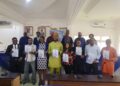
On 27 and 28 July in Abuja, Nigeria, 30 delegates from the 15 ECOWAS member states carried out an in-depth examination of the regional maritime strategy, identifying 20 priority activities to be implemented between 2016 and 2020.
These activities are not only limited to the framework of maritime security, but also extend to other key areas such as governance, economy, environment, education and research.
One such key activity is the adoption of a common maritime code, which will follow on an evaluation of maritime legal frameworks. The strengthening and harmonising of these maritime regimes should aim to address issues of impunity, and mitigate weaknesses in regulations that relate to unlawful acts at sea, the protection of seafarers, and compensation for losses or damage to seaborne goods.
In addition to the planned maritime code, the experts requested that the ECOWAS Commission encourage member states to ratify the major international maritime conventions and make them mandatory at national levels. Delegates also proposed activities aimed at promoting the maritime economy and food security. The conservation of fishery resources, measures for fighting illegal, unreported and unregulated fishing; and the development of aquaculture were subsequently incorporated into the priority plan.
A suggestion was to establish protected areas for marine species' rest and reproduction. The experts also advised countries wishing to authorise so-called flags of convenience (when a ship is registered to a country, but not necessarily from that country) for economic reasons to exclude fishing vessels, since these are sometimes used to mask the illicit trafficking of drugs and migrants.
Drawing attention to the negative effects of ecosystem degradation, the delegates also suggested that all 12 coastal countries in the region immediately set up units to both prevent and fight marine pollution. The delegates further advised that at least one liquid waste reception facility be built in a West African seaport by 2020.
In August 2006 the Probo Koala, a Panamanian flagged vessel managed by Swiss-Dutch company Trafigura, dumped over 500 cubic metres of toxic waste in various parts of the Ivorian economic capital, Abidjan. According to official figures, the incident caused more than 15 deaths and poisoned over 100 000 people, to whom compensation has still not been fully paid.
Had Abidjan, or another port in the region, possessed a liquid waste facility, the Probo Koala disaster could have been averted. This project is therefore vital if future disasters of this nature are to be avoided. Assumed to be a costly project, it could reasonably be conducted through a public-private partnership.
In addition, the priority activities also include an assessment of port security, the promotion of maritime tourism, and support to maritime training centres of excellence in the region. As a next step, the ECOWAS Council of Ministers will be required to endorse the outcomes of the meeting, which will then become binding on member states. The meeting builds on the momentum generated by the effective implementation of the ECOWAS maritime strategy, following the adoption of this document on 29 March 2014.
ECOWAS has indeed made considerable progress in building its maritime security architecture. The multinational coordination centre in Cotonou, Benin of its so-called pilot Zone E – which includes Nigeria, Togo, Benin and Niger – is operational. Plans are also underway for the inauguration, before the end of this year, of a similar centre in Accra, Ghana, for Zone F – made up of Ghana, Côte d'Ivoire, Liberia, Guinea, Sierra Leone and Burkina Faso.
Isaac Armstrong, Acting Regional Security Division Head at ECOWAS, is optimistic about the opening of the Regional Centre of Maritime Security in West Africa, based in Abidjan, which will coordinate the activities of the three maritime zones. According to Armstrong, however, a few challenges must still be ironed out with regard to Zone G, which includes Senegal, the Gambia, Guinea Bissau, Cape Verde and Mali. This zone is still looking for a host country. It is hoped that under its current presidency of the organisation, Senegal will agree to host it.
Member states are also implementing a considerable number of activities aimed at protecting maritime economies. There is evidence of a strong political will from Nigeria, especially since President Muhammadu Buhari took office in May this year, to overcome problems such as the smuggling of oil, piracy and armed robbery on board ships. The new authorities banned 113 tankers from Nigerian waters after these were suspected of being involved in illegal activities.
Operators of illegal refineries are often arrested after the sacking and replacement of the managing director of the Nigerian National Petroleum Corporation, a public organisation managing Nigerian interests in the national oil industry.
The chief of navy staff was also replaced as part of a general shake-up targeting military leaders and officers. Buhari is also considering investigations in foreign countries where former top officials, including past ministers, are alleged to have bank accounts supplied with revenue generated from illegal activities in the oil sector.
It seems these decisions are delivering results. Last month, the Nigerian Navy announced a drastic reduction in losses due to oil theft from 2 400 000 to 300 000 barrels per month. The Nigerian Joint Task Force also announced the destruction of illegal refineries, seizure of weapons and ammunitions, and the arrest of suspected armed robbers or pirates. However, these apparent good commitments of the new regime in Abuja should not, it is hoped, become an excuse for settling old political scores.
All these actions undertaken in West Africa point to a region that is determined to curb maritime insecurity. It is hoped that the priority plan of action will be endorsed and implemented without delay, and that member states will continue the fight against the maritime threats in the same spirit.
*Written by Barthélemy Blédé, Senior Researcher, Conflict Management and Peacebuilding Division, ISS Dakar







Discussion about this post