In this exclusive interview with the Minister of Finance and Coordinating Minister of the Economy of Nigeria, Mr Wale Edun, he provides insights into the National Single Window, addressing concerns on funding, sustainability, MSME inclusion, and economic impact. He emphasizes that the initiative represents a transformative step toward trade facilitation, industrial growth, and enhanced ease of doing business.

“We are not treating NSW as a one-off intervention, but as an evolving national economic infrastructure”
“Nigeria is entering a new phase of industrial development”
There have been past reforms that struggled to gain traction. What makes this initiative sustainable?
The difference this time is very clear and very deliberate—there is strong political will at the highest level, backed by determination and the institutional capacity required to address long-standing economic challenges. Nigeria has attempted reforms in the past, but many of them did not achieve their full potential due to gaps in coordination, weak enforcement, or a lack of continuity.
What we are seeing now is a rare alignment across government—policy direction, technical execution, and institutional support; are all working in sync. That alignment significantly reduces the risk of policy reversals or stalled implementation. It also ensures that challenges are addressed promptly as they arise, rather than allowing them to derail the entire process.
Importantly, His Excellency, the President, is not only committed to the rollout of the National Single Window, but also to its long-term success. This means continuous monitoring, evaluation, and improvement will be part of the system. We are not treating this as a one-off intervention, but as an evolving national economic infrastructure.
Furthermore, the initiative is being launched with immediate implementation timelines and clearly defined milestones. With these structures already in place—both technically and institutionally—we are confident that the National Single Window will not only be sustained, but will continue to be strengthened and expanded over time.
MSMEs often face barriers with digital systems. How will they benefit from this platform?
Our experience and empirical findings show that MSMEs actually embrace technology when it directly improves their efficiency and profitability. They do not see digital platforms as obstacles; rather, they see them as tools that help them reduce time, cut unnecessary costs, and expand their market reach. The National Single Window is designed in a way that aligns perfectly with these needs. It simplifies processes, reduces paperwork, and eliminates the need for multiple physical interactions with agencies, which are often costly and time-consuming for small businesses.
Given that MSMEs account for nearly 90 percent of enterprises in Nigeria, they are not just beneficiaries of this initiative—they are central to its success. That is why the Federal Ministry of Industry, Trade and Investment, working through key agencies such as SMEDAN, SON, and the Nigerian Export Promotion Council, is placing a strong emphasis on awareness creation, training, and capacity development.
Beyond that, we are taking this engagement closer to the people. Beginning in Kano, we are rolling out a sub-national sensitization tour that will cover multiple states. This initiative will educate businesses on how to leverage opportunities under the African Continental Free Trade Area (AfCFTA), access duty-free trade windows, and effectively use the National Single Window platform.
We have also established dedicated engagement centres where users can receive real-time support, hands-on training, and troubleshooting assistance. So, rather than being excluded, MSMEs are being deliberately empowered to take full advantage of this reform. In essence, they are at the heart of the National Single Window initiative.
How does the National Single Window enhance trade and industrial productivity?
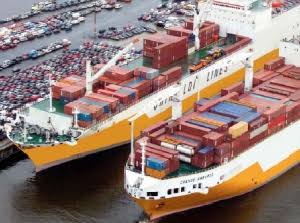
The National Single Window fundamentally transforms how trade is conducted by simplifying and streamlining import and export procedures. One of the biggest constraints businesses face is the complexity and delays associated with clearing goods, processing documentation, and making multiple regulatory payments. By consolidating these processes into a single, integrated platform, we significantly reduce turnaround time. Businesses can access raw materials, spare parts, and finished goods more quickly and predictably, which directly improves production efficiency and planning.
In addition, Nigeria is entering a new phase of industrial development. With increased investments in refineries and petrochemical complexes, we are beginning to see more domestic production of critical raw materials. This has far-reaching implications for industries such as textiles, pharmaceuticals, chemicals, and agro-processing.
The National Single Window complements this progress by ensuring that both imported inputs and locally produced materials move more efficiently across the supply chain. When combined with ongoing improvements in road infrastructure, power supply, and regulatory reforms aimed at ease of doing business, the platform serves as the ‘soft infrastructure’ that supports these ‘hard infrastructure’ investments. Ultimately, this creates a more competitive industrial environment—one where Nigerian businesses can compete effectively not just locally, but across West Africa and the broader African continent.
Concerns have been raised about whether funding for the project was included in the budget. Can you clarify?
Yes, the project is fully captured within the national budget, and this is in line with the legal and constitutional requirements governing public expenditure in Nigeria. No government project of this scale can be executed outside the framework approved by the National Assembly. It is also important to distinguish between budgetary allocation and actual expenditure. At this stage, we are at the launch and early implementation phase, which means spending is ongoing and will be reported progressively. Detailed breakdowns of actual expenditures will be made available as implementation advances. What I can confirm is that the entire framework has been carefully planned—from the development of the digital platform itself to the supporting infrastructure required to ensure seamless operation. This includes integration with existing agency systems, training programmes, and operational support mechanisms. So, this is not an ad hoc or underfunded initiative. It is a well-structured, properly financed reform that has gone through the necessary budgetary and legislative processes.
Will the National Single Window disrupt the revenue collection roles of existing agencies?
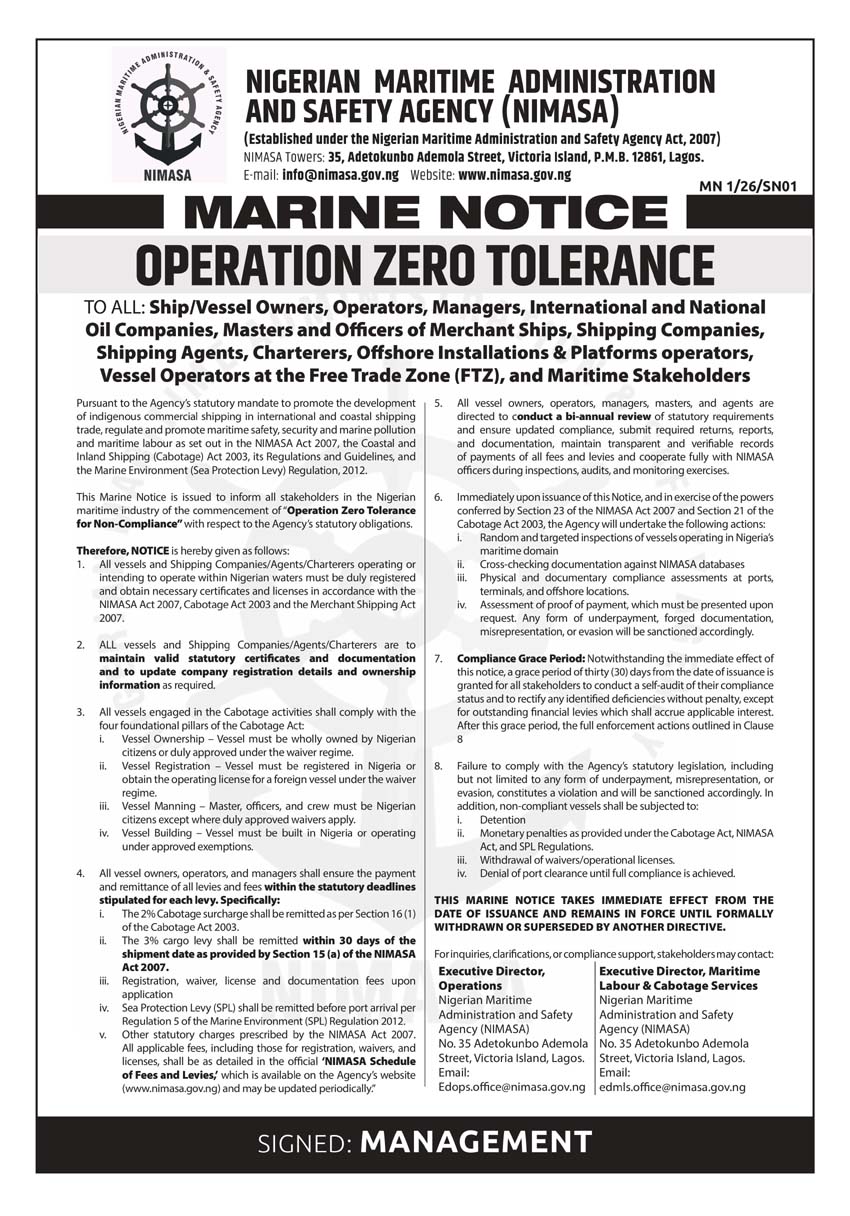
Not at all. The intention is not to replace or diminish the roles of any agency, but rather to enhance how they operate through integration and efficiency. Currently, businesses often have to interact with multiple agencies—such as the Nigerian Ports Authority (NPA), the Nigerian Maritime Administration and Safety Agency (NIMASA), and the National Agency for Food and Drug Administration and Control (NAFDAC)—making separate payments and submissions to each. This creates duplication, delays, and inefficiencies.
With the National Single Window, all of that is streamlined. Businesses make a single payment through the platform, and the system automatically distributes the funds to the respective agencies based on predefined rules. This means that each agency continues to perform its statutory functions and receives its due revenue, but without the inefficiencies associated with fragmented processes. It is similar to how modern digital commerce platforms operate—one interface for the user, with multiple processes happening seamlessly in the background. The result is improved efficiency, reduced transaction time, greater transparency, and better accountability across the entire system.
How will the system work across multiple agencies with different platforms?
The National Single Window is designed as an integration layer that connects existing systems rather than replacing them. Each agency—whether it is the Nigeria Customs Service, NAFDAC, NIMASA, or any other regulatory body—will continue to operate its own platform in line with its statutory responsibilities. However, these platforms will now be interconnected through a unified interface. This means that once a trader submits documentation through the National Single Window, that information is automatically shared with all relevant agencies that require it. This eliminates the need for multiple submissions of the same documents, which has historically been a major source of delays and inefficiencies. It also ensures that all agencies are working with the same data set in real time, which improves coordination and reduces the likelihood of discrepancies. In addition, the system enhances transparency and traceability. Every transaction and document submission can be tracked, which strengthens accountability and builds trust in the system.
What guarantees the continuity of this initiative beyond the current administration?
Sustainability is being secured through deliberate legal and institutional frameworks. The National Single Window is being embedded in relevant laws and regulations, including ongoing tax reforms and updates to Customs legislation. In a constitutional democracy like Nigeria, once a reform is codified into law, it becomes part of the national framework and is no longer dependent on the preferences of any single administration. That legal backing provides a strong guarantee of continuity.
Beyond the legal aspect, we are also building institutional capacity and stakeholder ownership. When agencies, businesses, and the broader economy begin to rely on a system because of the value it delivers, it becomes self-sustaining. So, between legal institutionalization and practical adoption, we are confident that the National Single Window will endure well beyond the current administration.
Is the initiative aimed at reducing costs for businesses?
While cost efficiency is certainly one of the outcomes, the primary objective is much broader—it is about enhancing business performance, competitiveness, and overall economic growth. The focus is on removing bottlenecks that slow down trade and increase inefficiencies. When businesses can operate more smoothly, access inputs more quickly, and deliver products to market faster, their profitability improves.
Our approach to revenue is based on enabling growth rather than imposing pressure. When businesses grow, government revenue naturally increases. For instance, if a business expands its operations and increases its earnings significantly, the tax contributions from that business will also rise proportionally. So, instead of focusing narrowly on saving small amounts of money, we are focused on expanding the entire economic pie. This approach benefits businesses, government, and the economy as a whole.
What role has inter-agency collaboration played in delivering this project?
The National Single Window is a clear example of what can be achieved through effective inter-agency collaboration. Multiple ministries, departments, and agencies have worked together, aligning their processes, systems, and objectives to deliver this initiative. There has been extensive coordination behind the scenes, including the establishment of service-level agreements to ensure that each stakeholder understands and fulfills its responsibilities. This level of cooperation is critical for a project of this scale and complexity.
What is particularly encouraging is the shared sense of purpose among all stakeholders. There is a collective understanding that this initiative is not just about improving processes within individual agencies, but about transforming Nigeria’s entire trade ecosystem. Ultimately, the success of the National Single Window is not just about the technology—it is about the collaboration, coordination, and commitment that underpin it. That is what makes this reform truly impactful and sustainable.