Niger State Commissioner for the Ministry of Transportation, Hajia Hadiza Idris Kuta in this interview with Joshua Yousouph speaks on the state government’s response to boat mishaps–from providing fiber boats and thousands of life jackets to working with traditional leaders and recruiting water marshals for enforcement. She also highlights the cultural and financial barriers to phasing-out wooden boats, while stressing that beyond infrastructure, real change depends on shifting mindsets, improving compliance, and making safer boats affordable for locals.
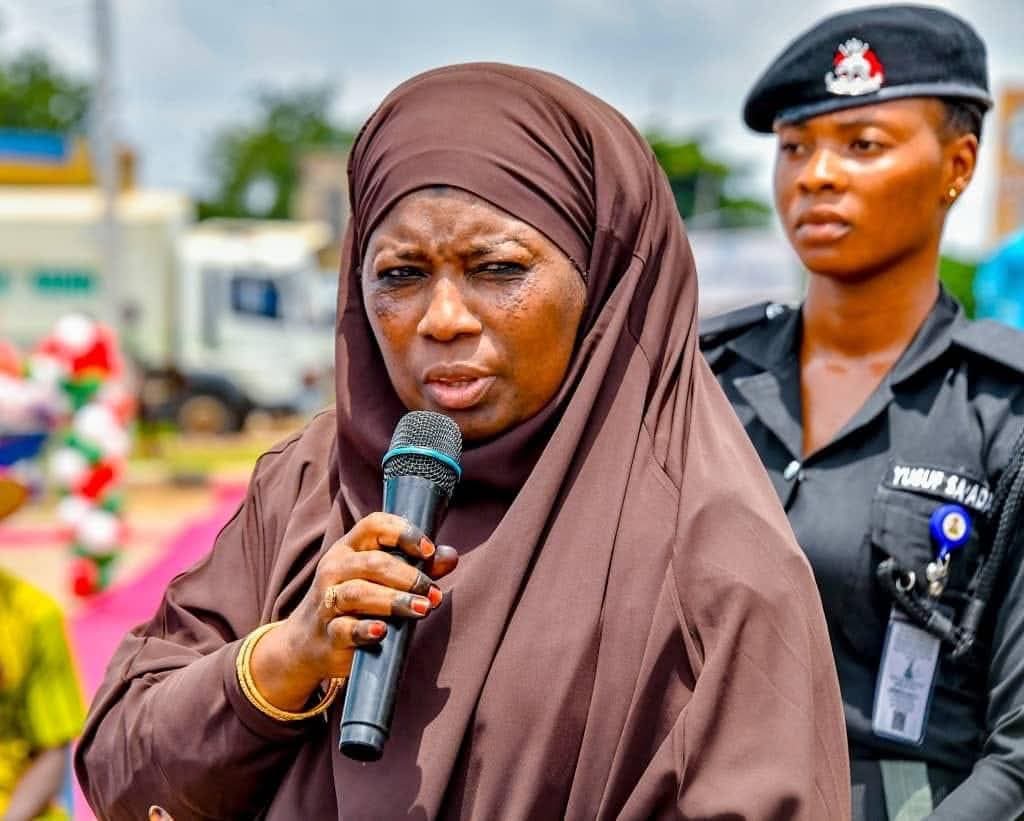
“Sensitization must go hand-in-hand with providing infrastructure”
“Sometimes, you must arrest one or two boat operators who flout safety rules”
“Government is providing boats, jackets, and even ambulances. We are working with NIWA on certification’
Recently, there was a tragic boat accident in the state. We understand that even though there was a government-provided rescue boat nearby, it was not used. Can you explain what happened?
Yes, when that boat accident happened, we actually had a speedboat at the station. But even on that day, they didn’t use it. The government had given it to them for rescue operations, but when the time came, the locals felt, “Ah, the person has already fallen into the water, what’s the point?” That is exactly when the boat should have been used. So, this shows we need to do a lot of sensitization, a lot of enlightenment for the locals. Rescue is possible if you act quickly, but many still carry a cultural belief that once someone falls into the river, it’s already taken by the marine spirits.
How is government addressing this cultural beliefs?
Yes, that is true. In many places, when people are drowning, others hesitate to help because of cultural beliefs—that “the marine spirit has taken the person.” That is why government is focusing heavily on sensitization. We plan to call an emergency meeting with traditional rulers, the tribunal, and local leaders. In some villages, people don’t listen to the governor or even their district head. But they listen to traditional and spiritual leaders. If we get those leaders to tell them that these practices are dangerous, people will listen. We also believe enforcement must be part of it. Sometimes, you must arrest one or two boat operators who flout safety rules. For example, when they hear that about 12 boat operators have been arrested since last year for using boats recklessly or flouting safety rules, that will send a strong message and they will certainly adjust and do the right things.
You mentioned certification. We know NIWA is responsible, but what is the state government doing in this aspect?
Yes, NIWA is responsible, but we are working in conjunction with NIWA. What we have told them is that we want all boat operators registered. We already have a registration office. Registration and certification are very important, but as you know, everything marine is expensive. Even getting the license is expensive. Many locals can’t afford it, so they cut corners. They go behind the system, avoid licensing, and still use their boats. And if you look at this whole area, almost everybody is using wooden boats. They can’t afford fiber boats. So, if the government really wants to phase-out wooden boats, then there must be a scheme to help people purchase safer boats. This is because if you chase out wooden boats completely, this whole area will be cut off from transportation. Communities will be stranded.
Can you tell us about the recent intervention of the state government on water safety?
The state government shared some life jackets before that of the federal government arrived in the state. Contracts have been awarded to supplement what the federal government did. Sadly, we had another recent mishap in the state. There’s no part in Niger state that the state government is not concerned about, especially the riverine areas. To enhance safety, His Excellency, the Governor of Niger State has tried to move people away from the use of wooden boats. We shared seven fiber boats to some riverine areas in the state. And in addition to that, ambulances were provided, including a water ambulance. There is also a plan to train operators. We are now considering recruiting water marshals that will enforce the usage of life jackets. Because we discovered that most people don’t even want to use them. Very soon, it will come to a point where if you don’t wear a jacket, you will not be allowed to board the boat. This is all in an attempt to curb loss of life and mishaps on water.
The state government donated eight fiber boats, and also five larger boats that can carry up to 50 passengers each. The carrying capacity of these fiber boats are 25 passengers, with two operators. They are strictly passenger boats, not cargo. But the challenge is usage. For instance, we had a fiber boat around the accident area, but the operator was in a hurry and didn’t use it for rescue. These things frustrate government effort. Government has put in so much, but because the locals are used to doing things their own way, sensitization must go hand-in-hand with providing infrastructure.
How many life jackets have been distributed so far and can you mention the communities where these seven fibre boats were distributed??
We have distributed over 3,500 life jackets. We distributed seven fibre boats including one to the Marine Police making it eight fibre boats. Specifically the communities where the fiber boats were distributed to were: Nupeko, Muregi, Shiroro, Kasabo, Malele, Muye, and Gbajibo. As earlier stated, the Marine Police also received one. These fibre boats were given to complement other private boat operators at those riverine areas of the State.
Looking at the size of Niger State, don’t you think seven boats are still just a tip of the iceberg?
Yes of course. This is only a starting point. More will come. There are still plans in the pipeline to provide more fibre boats for these riverine areas of the state. In fact, what we are trying to do is to come up with a hire purchase scheme for locals. That way, they can own and pay gradually. But the truth is, everything marine is expensive—even the smallest fiber boat costs millions of naira. Most of these villagers don’t have that kind of money. You see, some villages even use small wooden boats just to cross from one compound to another. Others use boats to go to school, to the market, to the farm, even to hospitals. These are daily needs. That is why we need schemes to make safer boats affordable. Locals can’t afford them. That is why government must create financing schemes, pump in money, and help locals purchase them—either directly or on hire purchase. We have to accept that this is a real problem and confront it. Otherwise, people will keep relying on unsafe wooden boats.
Beyond substandard boats, what are the other causes of mishaps in the state?
From what we have studied, the last two major accidents were not caused by logs or objects in the water. They were mainly due to environmental factors. Heavy rains raised water levels so high that trees which were once visible became submerged. Operators who thought they knew the route ended up hitting unseen obstacles. This is another area for sensitization. When water levels rise too high, operators should either suspend operations or take safer alternative routes. We also need to mark out danger zones clearly.
Overcrowding is seen as a major cause of boat mishaps in the state. How will you ensure compliance?
When the boats were distributed, it wasn’t just a matter of giving out the keys of the boats. There was sensitization. They were handed over to community leaders and the Boat Riders Association. That association is helping with enforcement for now, until the marshals are fully in place. We also involved the Marine Police. In addition, we gave 27 life jackets per boat. The rule is that once the jackets are exhausted, nobody boards without one. And importantly, we have abolished night travel. No boat is allowed to move at night.
What about regulation of routes and distances for these boats, especially on market days?
No specific regulation on distance for now. Boats can sail anywhere navigable, from one point to another. But the journeys are usually short.
Aside from boats, what about infrastructure like jetties?
That is already in our 2026 budget. For instance, Nupeko is one of the busiest parts, and Gondar too. We are working to provide proper jetties. The major challenge we have with jetties is that the water level is not consistent. Sometimes the water can be miles away very far from the jetty when the water level is very low. And in some cases, the water level can be very high that the jetties can be overwhelmed with water.
Some observers argue that state governments should not leave everything about water transportation to federal agencies like NIWA. Do you agree?
Absolutely. That is why we are making these interventions. In fact, this is the first time in history that such kinds of boats are being provided. Initially, there was resistance from some communities, but now there’s 100% acceptance. This has encouraged the state to invest more. His Excellency is equally giving attention to the aviation sector, road infrastructure, and even rail. Now, the water sector is also receiving attention.
You mentioned water marshals earlier. How will they work with NIWA and other agencies?
Already NIWA has its own marshals. The state wants to augment by recruiting more, including rescue marshals to complement enforcement marshals. But strictly speaking, jetties and landing points are the prerogative of NIWA. The state only intervenes to save lives.
How do you ensure boat operators are competent?
That’s for NIWA. They certify operators. Operators must undergo training, obtain certification, and their boats are inspected annually for safety. They are also trained in passenger rescue. But as we all know, compliance is the real challenge. Nigerians often resist compliance. People believe they can survive water hazards because “nothing can happen.” But with climate change, rising water levels, and encroachment on water channels, accidents have become more frequent. That’s why both federal and state governments, together with traditional leaders and communities, must keep working together to ensure safety on our waterways.
So, in summary, how would you describe the state government’s approach?
It is multi-pronged. Government is providing boats, jackets, and even ambulances. We are working with NIWA on certification. We are also pushing for sensitization—through traditional leaders, community associations, and enforcement. But at the heart of it is affordability. Until safer boats that are become affordable for locals are available, they will continue to rely on unsafe wooden boats. That is the challenge we are determined to solve.