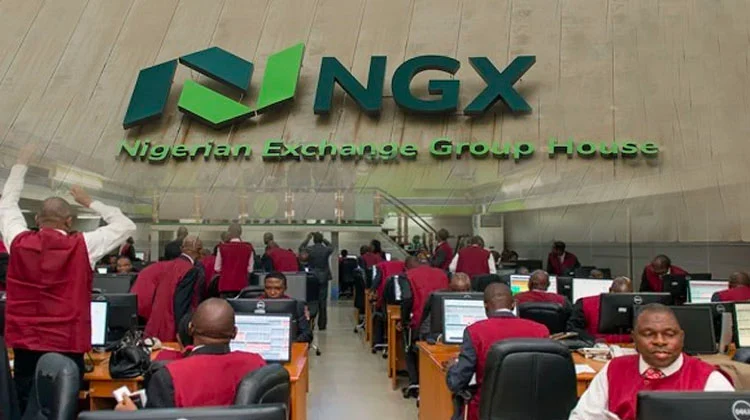
Trading on the Nigerian Stock Exchange wrapped up Friday, February 13, 2026 on a bullish note, with turnover surging and investor activity tilting firmly toward gainers despite a slight dip in the number of deals.
A total of 936.25 million shares exchanged hands in 49,888 deals, valued at ₦52.63 billion. Compared with Thursday’s session, market data showed a 34% rise in volume and an 85% jump in turnover, even as deals slipped by 2%. The Exchange’s market capitalization stood at ₦117 trillion, underscoring the depth of liquidity chasing select counters into the weekend.
Market breadth was positive. Out of 132 equities that participated in trading, 53 stocks advanced while 33 declined, reflecting broad-based buying interest.
On the gainers’ chart, Nestlé Nigeria led the rally with a 10% appreciation to close at ₦2,662.00 per share. It was closely followed by Union Dicon Salt, Infinity Trust Mortgage Bank, and McNichols, each posting 10% gains to cap a strong session for mid- and large-cap names.
Conversely, the losers’ table was topped by Skyway Aviation Handling Company, which shed 10% to close at ₦135.00. It was trailed by Guinness Nigeria (-9.97%), Omatek Ventures (-9.39%), and NPF Microfinance Bank (-6.51%), as profit-taking and stock-specific pressures weighed on prices.
Activity was particularly brisk in the financials and investment space. First HoldCo topped the volume chart with 106 million shares traded. It was followed by Zenith Bank (72.6 million), United Capital (45.4 million), and Guaranty Trust Holding Company (45 million), highlighting sustained investor focus on liquid, fundamentally followed names.
Market watchers say the sharp improvement in turnover alongside positive breadth points to renewed risk appetite and portfolio repositioning ahead of the new trading week, even as selective sell-offs in a few stocks kept overall sentiment balanced. If liquidity continues to rotate into blue chips and high-volume counters, analysts expect momentum to remain supportive in the near term—though stock pickers may need to stay nimble as volatility persists.