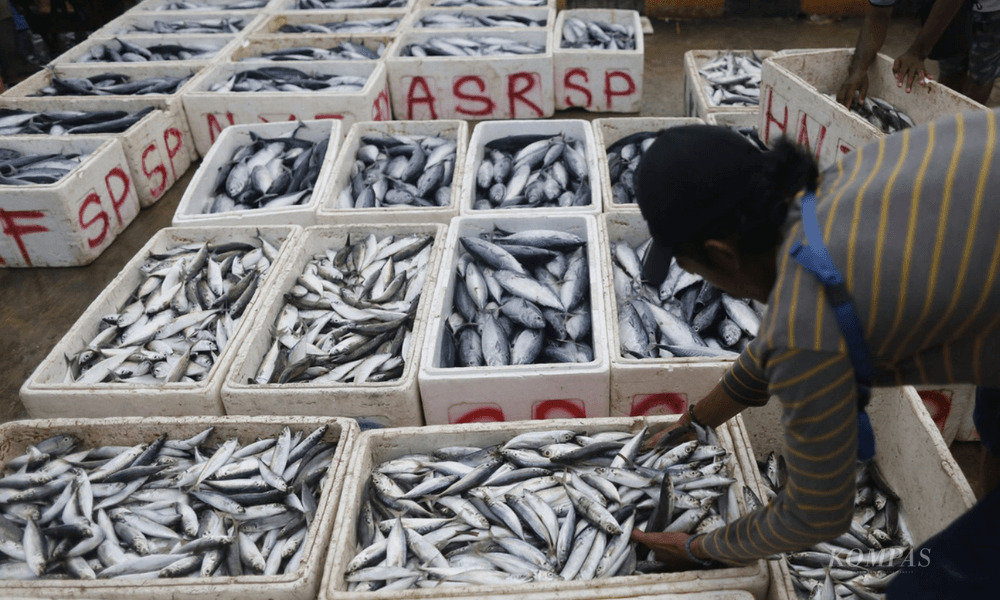
Nigeria has recorded a significant rise in fish production, reaching approximately 1.4 million metric tonnes in just two years, the Minister of Marine and Blue Economy, Adegboyega Oyetola, disclosed this recently in Lagos. The increase, he said, is a clear indicator of progress since the ministry’s establishment and reflects ongoing efforts to strengthen the sector through technological innovation and improved regional coordination.
Speaking at the closing ceremony of the 16th Conference of Ministers of the Fisheries Committee for the West and Central Gulf of Guinea, Oyetola highlighted the Federal Government’s plans to enhance local production and reduce reliance on imports, which continue to drain the nation’s foreign reserves.
The minister revealed that discussions are underway with the Bank of Industry (BOI) to make single-digit interest loans available to fishermen across Nigeria. “Commercial banks rarely offer such low-interest facilities, but institutions like BOI can support fishermen through cooperative structures, enabling them to expand production sustainably,” he explained.
Oyetola emphasized that the government’s goal is not only to increase output but also to develop the fish value chain, empower artisanal fishermen, and improve access to affordable inputs. He said establishing local feed mills and modern storage facilities are among key strategies to cut costs and preserve fish beyond the daily harvest.
“Fishing is a critical source of protein and a major contributor to employment. We are investing in inputs, supporting cooperatives, and addressing challenges like finance and feed production to grow local capacity,” the minister stated.
On the persistent challenge of illegal, unreported, and unregulated (IUU) fishing, Oyetola acknowledged the significant economic losses caused by foreign vessels exploiting Nigeria’s waters. “Covering our 200-nautical-mile exclusive economic zone with human patrols alone is impossible. Technology and regional cooperation are the only ways to address this effectively,” he said. The minister added that advanced monitoring systems, combined with collaboration among Gulf of Guinea states, would help curb illicit fishing and prevent foreign operators from harvesting fish illegally and selling them back as imports.
Oyetola also stressed Nigeria’s commitment to regional partnerships through the Fisheries Committee for the West and Central Gulf of Guinea (FCWC), noting that intelligence-sharing, joint patrols, and technological initiatives are central to strengthening oversight across borders.
The outgoing FCWC chairman, Cyrus Saygbe, acting director-general of Liberia’s National Fisheries and Aquaculture Authority, commended Nigeria’s efforts under Oyetola’s leadership. Saygbe noted the substantial losses African countries endure annually due to illegal fishing and praised the recent adoption of technological solutions and regional patrols. “The Gulf of Guinea continues to experience extensive exploitation. Our focus is on internal strategies and regional collaboration to safeguard our waters,” he said. Saygbe also welcomed the passage of the World Trade Organisation Bill, noting that it would help African countries defend their waters against larger international operators.
Since its creation in August 2023, the Federal Ministry of Marine and Blue Economy has taken several steps to tackle illegal, unregulated fishing. Oyetola’s office is finalizing a National Policy on Marine & Blue Economy, which will specifically address IUU fishing, environmental degradation, and unsustainable practices in the fisheries sector. The policy aims to align Nigeria with global best practices and position the country as a regional leader in the blue economy.
Earlier, the minister had hosted a delegation from the FCWC, signing agreements including the Monrovia Declaration and a regional Protocol on Labour Standards for fishing vessels, aimed at improving governance, transparency, and working conditions in the fisheries sector. The ministry reaffirmed its commitment to strengthening monitoring, surveillance, data-sharing, and regulatory alignment across Gulf of Guinea states.