The Nigerian Maritime Administration and Safety Agency (NIMASA) says it plans to transform the maritime domain and the West African sub-region into a global model for gender-inclusive digital excellence. The Director-General of NIMASA, Dr Dayo Mobereola, said digitalisation offers a powerful opportunity to bridge gender gaps in the maritime sector while driving innovation, efficiency and growth across the industry.
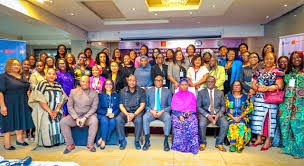
Mobereola made the remarks at a three-day symposium, titled “Digitalisation and the Empowerment of Women in the Maritime Sector of West Africa: Opportunities, Challenges and Pathways”.
The event, held in Lagos on Wednesday, was organised by the Kofi Annan International Peacekeeping Training Centre (KAIPTC) in collaboration with the Ministry of Foreign Affairs of Denmark and the Inter-Regional Coordination Centre (ICC).
Mobereola, represented by the Director of Finance and Administration, NIMASA, Mr Chudi Offordile, said the maritime sector was undergoing rapid transformation driven by automation, smart logistics and advanced data systems.
According to him, digitalisation is reshaping how ships operate, how ports function and how cargo is tracked, while also transforming the way maritime administrations regulate and deliver services.
“While digitalisation creates new opportunities for efficiency and growth, it also exposes persistent gaps, particularly in the participation of women in the maritime sector,” he said.
Mobereola noted that women remain significantly underrepresented across many maritime operations in West Africa, describing the situation as a loss of valuable talent and opportunities for inclusive growth.
“These disparities are not merely statistics; they represent untapped talent and unrealised potential that we must urgently address,” he said.
He described digitalisation as a “great equaliser” capable of dismantling traditional barriers that have historically limited female participation in the maritime industry.
“Digitalisation shifts the industry’s centre of gravity from physical strength to intellectual agility and technical precision,” he said.
According to him, innovations such as artificial intelligence-driven simulations, e-learning platforms and digital training tools are expanding access to knowledge and creating new career pathways for women.
“Today, a young woman in a rural West African community can access the same training modules as someone in the most advanced parts of the world,” Mobereola added.
He also highlighted the enormous opportunities within the blue economy, stressing that empowering women was not only a matter of social justice but also essential for economic transformation and industry sustainability.
“The blue economy represents a frontier of limitless potential. Empowering women within this space is not just about representation but about securing the sector’s long-term growth,” he said.
In his remarks, the Deputy Commandant of the Kofi Annan International Peacekeeping Training Centre, Brig.-Gen. Zibrim Ayorrogo, emphasised the critical role of women in shaping the future of maritime security and governance in the Gulf of Guinea.
Ayorrogo said digital transformation presents a unique opportunity to strengthen maritime domain awareness, improve coordination and enhance response capabilities to security threats.
“The Gulf of Guinea is a maritime domain of immense strategic importance, but it also faces complex challenges including piracy, illegal fishing and trafficking,” he said.
He stressed that empowering women with digital skills and leadership opportunities would help ensure more inclusive and effective maritime governance across the region.
“Women’s participation in maritime affairs has historically been constrained by socio-cultural and institutional barriers, yet their involvement brings diverse perspectives vital for holistic governance,” he said.
Also, Director at KAIPTC, Dr Emma Birikorang, said the programme would focus on key areas such as artificial intelligence, cyber security, social media dynamics and multilateral responses to emerging security threats.
Birikorang said the centre was also implementing strategic initiatives on maritime security in the Gulf of Guinea, including programmes on technology governance, cyber security and control of small arms and light weapons.
Project Manager, KAIPTC, Dr John Pokoo, emphasised the importance of training and capacity development for women in the maritime sector.
According to him, stronger collaboration between governments, the private sector and development institutions would accelerate access to digital technologies and expand opportunities for women within the maritime space.
“The future of the Gulf of Guinea maritime domain depends on inclusive approaches that harness the full potential of all stakeholders, particularly women, who are vital agents of change,” Pokoo said.