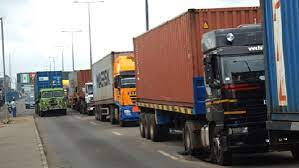
Truck operators have said movement of trucks in and out of Apapa port has remained largely orderly despite the expiration of the concession agreement granted to the operators of the electronic truck call-up system, Eto call up system
The call-up platform, introduced by the Nigerian Ports Authority to regulate truck movement along the Apapa port corridor and eliminate the notorious gridlock that once crippled the area, has been managed by Truck Transit Parks Limited (TTP). However, the concession has since expired, raising concerns among stakeholders about a possible return of traffic chaos along the port access roads.
But, truck operators say their fears have not materialised. General Secretary of the Association of Maritime Truck Owners (AMATO), Mohammed Sanni Bala, said truck movement along the Apapa corridor has remained fairly coordinated despite the expiration of the electronic call up contract.
Bala noted that although there is congestion within the terminal of APM Terminals Apapa, the situation has not translated into widespread traffic disruption along the port access roads.
“So far, there is no disruption inside APMT, because we know how long containers are staying there to be evacuated,” he said.
According to him, the current congestion being experienced is largely within the terminal due to the high volume of containers awaiting evacuation, which has affected the inflow of trucks carrying export and empty containers.
He explained that terminal operators, shipping companies and port authorities are already working together to evacuate the backlog in order to create space for export cargo and empty containers.
“APMT and other stakeholders are working together with the shipping companies to evacuate those containers lying in the terminal so as to create space for exports and empty containers,” he said.
Bala added that the slight traffic build-up being observed around the port corridor is a reflection of congestion within the terminal, rather than a breakdown of the call-up system.
“If you look around, you will discover that there is congestion, there is minimal traffic build-up as a result of congestion in the APMT terminal,” he said.
He further explained that truck movement from truck parks into the port is still being carefully coordinated between traffic enforcement teams and the port authority to prevent indiscriminate release of trucks onto the access roads.
“The movement has been fair, because there is coordination between the brigades and the port. They don’t just release trucks to the port until the NPA authorises them, so that there will not be indiscriminate release of trucks to congest the port access road,” Bala said.
He also dismissed suggestions that the expiration of the concession agreement for the ETO system had led to operational challenges, insisting that the current situation is unrelated to the call-up platform.
According to him, truckers are complying with the single-lane policy introduced along the port corridor to ensure smooth traffic flow for other road users.
“All the single lanes are intact and trucks are complying with the single-lane policy, so the second lane allows other road users to have seamless movement in and out of the port without obstruction,” he said.
Bala, who spoke while monitoring truck movement along the corridor, said traffic remained fluid with trucks carrying export cargo gradually moving into the port while those handling import containers were exiting the terminals.
“I am on the road now and there is seamless movement. Export trucks are moving into the port and as imports move out, they create space for exports and empty containers,” he said.
He expressed optimism that the congestion currently being experienced within the terminal would ease before the weekend as more containers are evacuated.
Other truck drivers operating along the Apapa corridor also corroborated Bala’s position, noting that traffic flow has remained manageable despite the uncertainty surrounding the ETO concession.
One of the drivers, who spoke on condition of anonymity, said the situation on the port access road is far better than what was obtainable before the introduction of the electronic call-up system.
According to him, the coordination among truck parks, port authorities and enforcement teams has helped maintain order along the corridor.
Another driver said while occasional delays still occur due to terminal congestion, trucks are no longer allowed to queue indiscriminately along the port access routes, as was the case in the past.