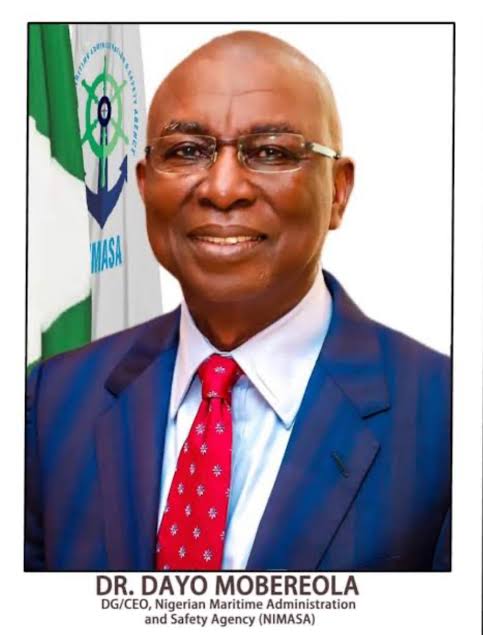
Despite repeated assurances from the Nigerian Maritime Administration and Safety Agency (NIMASA) under Director General Dr. Dayo Mobereola, the persistent imposition of War Risk Insurance (WRI) premiums on vessels bound for Nigeria continues to cast a shadow over the nation’s maritime reputation and economy.
Foreign insurance firms—most notably Lloyd’s of London and various Protection & Indemnity (P&I) clubs—still classify Nigerian waters as high-risk, leading to the imposition of exorbitant WRI charges. This has cost Nigeria an estimated $1.5 billion in the past three years alone, with a single Very Large Crude Carrier (VLCC) incurring up to $445,000 in surcharges per voyage. New container vessels face up to $525,000, and shipping lines like Maersk impose additional transit disruption charges of $450 per container.
This financial burden ultimately trickles down to Nigerian businesses and consumers, raising import and export costs and inflating the prices of goods.
While NIMASA continues to tout its “aggressive campaign” to eliminate the WRI premiums, including discussions with international bodies and intentions to escalate the matter to the United Nations, many industry stakeholders question the tangible results of these efforts.
Enter the Maritime Reporters Association of Nigeria (MARAN), which is leading a more direct and action-oriented campaign against WRI through its upcoming 3rd Annual Maritime Lecture (MAMAL 2025), scheduled for August 28, 2025, at the Eko Hotel and Suites, Lagos.
Themed “Addressing the Burden of War Risk Insurance on Nigerian Maritime Trade,” the event aims to move beyond rhetoric and forge a united front among stakeholders to demand meaningful change.
MARAN President, Mr. Godfrey Bivbere, described the continued imposition of WRI as an “international fraud” that disproportionately affects developing countries in the Gulf of Guinea. He noted that while Nigeria has made significant strides in maritime security, foreign insurers have refused to revise their risk assessments accordingly.
Indeed, the International Maritime Bureau (IMB) delisted Nigeria as a piracy-prone nation in 2021, and in 2023, the International Bargaining Forum (IBF) removed Nigeria from its high-risk classification. The Minister of Marine and Blue Economy, Adegboyega Oyetola, has also repeatedly stated that Nigerian waters have seen no pirate activity in over three years—progress largely attributed to the multi-billion naira Deep Blue Project, spearheaded by NIMASA itself.
Industry leaders, including Alhaji Aminu Umar of Sea Transport Services Nigeria Limited and Mr. Sola Adewunmi, President of the Nigeria Shipowners Association (NISA), have called for NIMASA to directly engage with the Joint War Committee—the entity responsible for WRI classifications. So far, no visible results have emerged from such efforts.
Against this backdrop, MAMAL 2025 is expected to gather over 500 key stakeholders, including maritime security experts, terminal operators, shipowners, insurers, legal professionals, diplomats, and government officials. The lecture will scrutinize the root causes of persistent WRI charges, question the roles of classification societies like Lloyd’s, and examine the response—or lack thereof—by Nigerian authorities and maritime agencies.
While NIMASA continues its diplomatic lobbying, MARAN is organizing a platform for stakeholders to directly confront the issue, share actionable strategies, and demand immediate reform.
The continued classification of Nigerian waters as war zones is not only unjustifiable—it undermines years of investment in maritime security and threatens national economic progress. MAMAL 2025 may well mark the turning point in the fight against what many now see as institutionalized exploitation disguised as insurance risk management.
The Nigerian maritime industry is watching closely. The time for talking may be over—what the sector needs now is results.