Just like yesterday, it has been more than 30 years, since hundreds of seafarers from the liquidated Nigerian National Shipping Line (NNSL) were disengaged. They were laid-off without being paid their entitlements that is, after the national carrier was liquidated in 1995, by the then-military government.
Media reports say that over 600 of the former workers have died, with many remaining survivors facing severe hardships and lacking funds to take care of their medical needs.
In the mass termination of employment, several seafarer comprising of engineers, deckhands, navigators, and officers were forced into premature retirement.
The embattled seafarers served at sea, often in harsh conditions, staffing the nation’s ships and carrying Nigeria’s flag across the world’s oceans. Yet the nation, the agencies responsible, and even the unions under whose umbrella they worked, have all turned their backs on these hapless seafarers. The moral debt is undeniable, and the story of these men and women is a damning reflection of institutional neglect.
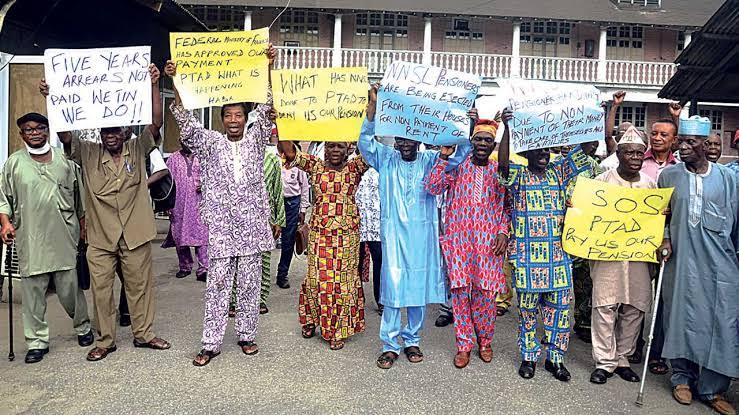
About 30 years after the liquidation of NNSL, thousands of these workers are still awaiting pension and terminal benefits. Many have died, and their next-of-kin have no hope of any reprieve.
We are aware that the Maritime Workers Union of Nigeria (MWUN) has been actively engaged in discussions to ensure the remaining beneficiaries are compensated, but year-after-year, this remains promises.
The collapse of NNSL was not an accident, but the result of a steady decline of a an agency of government that is rooted in mismanagement, political interference, ageing vessels, mounting debt, poor cargo support and the absence of long-term investment in ship renewal and maintenance. This had lasted for many years, with government pouring in palliatives to ensure that the NNSL remained afloat, even though, its ships were being seized by trading partners and creditors all over the world as a result of failed obligations.
So, by mid-1990s, that is, during tenure of General Abdusallam Abubakar as military leader, the once-proud fleet was no longer commercially viable. By 1995, the liquidation came swiftly, assets were sold-off, and the workforce was abruptly disengaged. For the thousands of seafarers, this was not just the closure of a company, but the sudden end of livelihoods. Many of them were still in their prime, willing to work, yet they were compelled to retire unprepared. In reality, they were not retiring but abandoned; left without pension, gratuity or any of the benefits that had been promised.
Sadly, the remaining assets of NNSL were sold-off among the elites, even as the workers were totally ignored.
The human cost has been enormous. According to reports, more than 700 of the disengaged workers have died since the liquidation, while Shipping Position Daily investigations found that at least 13 ex-NNSL seafarers died in 2024 alone while awaiting their long-overdue entitlements, and eight more died in 2025. The figures have kept rising since.
Others are bedridden, blind or battling chronic illness – casualties of years of hardship and neglect after numerous verification exercises. The cumulative toll over three decades is staggering. These are not mere statistics. They represent individuals—fathers, mothers and breadwinners—whose twilight years were being spent battling poverty, illness and neglect, rather than enjoying dignity after years of service to their nation.
Government’s handling of the matter has been marked by half-measures and insincerity. Verification exercises have been launched repeatedly, with the Federal Government and the Maritime Workers Union of Nigeria (MWUN) inviting beneficiaries and next-of-kin to present themselves for screening.
While verification is necessary in principle, the endless cycles of screening without actual disbursement have become little more than a cruel ritual. Promises are made, files are reviewed, hope is stirred, yet nothing tangible reaches the pockets of those who need it most.
We can not overstate the damage this neglect has done to trust public servants’ trusts in public institutions and more importantly the trust in selfless service. When governments disengage workers, promises of terminal benefits are part of the deal. If those promises are never honoured, what message does that send to the workforce of today and tomorrow? It breeds cynicism, erodes faith in workers’ unions and government agencies, and undermines the moral authority of the State.
The government must move beyond endless verification exercises and issue clear timelines for payment. It must allocate funds that reflect the true scale of what is owed. Transparency is essential: lists of verified beneficiaries, amounts due and amounts paid must be made public. The MWUN must also be awake to its duty. It cannot continue as a passive observer or a mouthpiece for promises. It must press harder, mobilise, and if necessary, litigate to force action.
The plight of ex-NNSL seafarers is not just about unpaid benefits; it is about justice, dignity and nationalism. They kept Nigeria’s flag flying on international waters. That they are being left to die waiting for entitlements that are rightfully theirs, is an indictment of successive governments and union leaderships alike.
How does the Federal Government assure public servants who are currently in service, that dedication without compromise is good, when the story of the ex-workers of liquidated NNSL is that of abandonment?