By Oluyinka Onigbinde
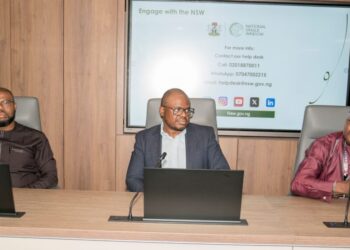
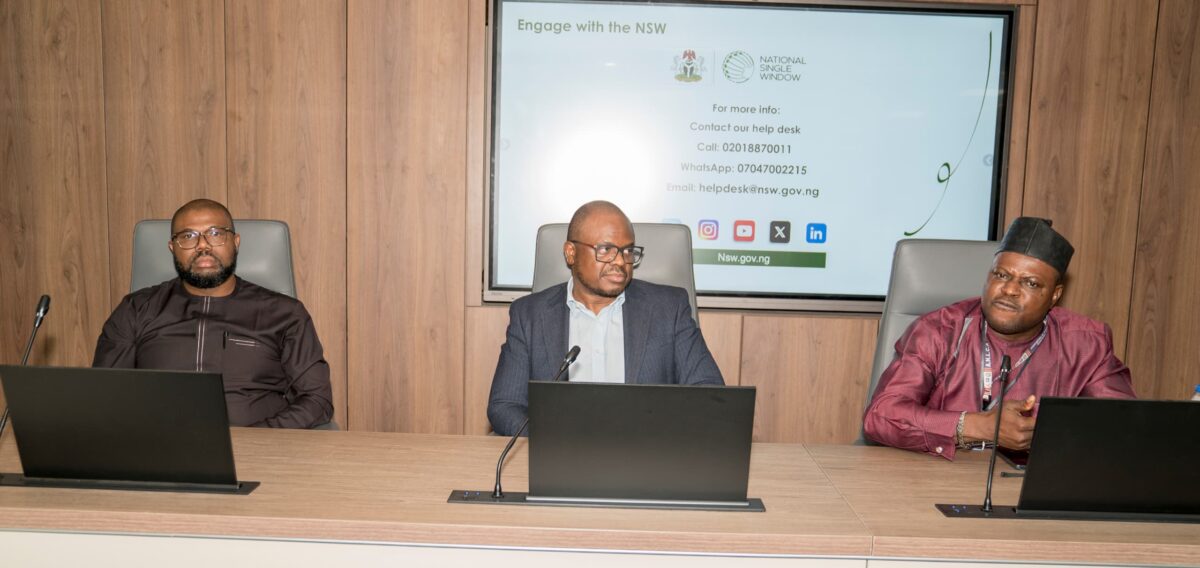
Nigeria’s National Single Window platform is set to commence the second phase of its implementation in June after processing more than 39,000 applications for licences, permits, certificates and other trade-related documents within eight weeks of going live.
The Director of the National Single Window Secretariat, Tola Fakolade, disclosed this in Lagos on Friday while briefing journalists on the progress recorded since the deployment of phase one of the platform in March 2026.
Fakolade said approximately 39,039 LPCO applications had been submitted through the platform within the period under review, describing the development as a sign of increasing stakeholder confidence in the digital trade facilitation system.
According to him, the Standards Organisation of Nigeria accounted for the highest volume with 30,937 applications, while the National Agency for Food and Drug Administration and Control recorded 7,942 submissions.
He added that the National Environmental Standards and Regulations Enforcement Agency processed 138 applications, while the Nigeria Agricultural Quarantine Service recorded 22 submissions on the platform.
Fakolade noted that the volume of applications reflects growing reliance on the NSW for the submission and processing of trade-related documents by importers, exporters and regulatory agencies.
He further disclosed that 7,567 users have so far been onboarded on the platform, including importers, licensed customs agents, freight forwarders and clearing agents.
A breakdown of the figure showed that 6,935 importers registered on the system, alongside 359 clearing and forwarding agents, 104 freight forwarders and 169 licensed customs agents.
The NSW director also highlighted progress in the Air Cargo Manifest Module, which went live on March 27, 2026, with DHL serving as the pilot airline.
According to him, 136 manifests have been submitted through the platform, while eight airlines and courier operators are currently transmitting air cargo manifests on the NSW system.
Fakolade explained that the initiative forms part of efforts to digitise cargo processing and improve efficiency in cargo clearance procedures.
He added that the Secretariat commenced nationwide training programmes in February 2026 across Lagos, Abuja, Port Harcourt and Kano to prepare both government agencies and private-sector operators for the deployment of the platform.
He said 2,990 private-sector stakeholders, including importers, exporters, freight forwarders and customs agents, have so far been trained on the use of the platform.
In addition, 579 representatives from ministries, departments and agencies were also trained on the operational workflow, approval processes and agency-specific responsibilities required for the effective implementation of the NSW platform.
Fakolade stated that phase two of the rollout would focus on concluding the manifest integration process for all airlines and shipping lines to enable direct submission of manifests through the platform.
Navy Vows Sustained Operations Against Sea Piracy, Oil Theft
The Nigerian Navy has pledged to intensify maritime security operations against sea piracy, crude oil theft and other maritime crimes to sustain safety within Nigeria’s territorial waters and the Gulf of Guinea (GoG).
Rear Adm. Abdulrahman Mohammed, Commandant of the Nigerian Navy Basic Training School (NNBTS), made the remark on Friday during a Jumat prayer held to mark the Nigerian Navy’s 70th anniversary celebration in Onne, Rivers.
Mohammed said the commitment of the navy to maritime security operations had enabled Nigeria to record zero sea piracy attacks within its waters and the wider GoG for more than three years.
He attributed the achievement to collaborative efforts by the Nigerian Navy, other security agencies and maritime stakeholders.
“Through the efforts of the Nigerian Navy and other stakeholders, Nigeria has curtailed piracy in Nigerian waters and the larger Gulf of Guinea.
”The absence of pirate attacks over the past three years demonstrates that the Navy’s security strategies are yielding positive results,” he said.
Mohammed described the Navy’s 70th anniversary as significant, noting that the service had consistently protected Nigeria’s territorial integrity and maritime environment since its establishment.
“For 70 years, the Nigerian Navy has protected Nigeria’s maritime domain against crimes and threats to territorial integrity,” he stated.
He said the anniversary offered an opportunity to celebrate the Navy’s achievements in safeguarding national security and supporting economic activities.
The commandant described the NNBTS as a critical institution responsible for training ratings who formed the backbone of naval operations nationwide.
Mohammed said the school served as the first point of contact for recruits who joined the Nigerian Navy.
He noted that many of the Navy’s successes over the decades were made possible by personnel trained at the institution.
“Personnel trained here are equipped with the military bearing and professional capacity to serve effectively in maritime security operations.
“The feats achieved by the Nigerian Navy over the years were made possible by products of this school,” he added.
Mohammed assured Nigerians that the Navy would intensify efforts to ensure a safer maritime environment for economic and commercial activities.
He also pledged to build on the achievements of his predecessors by improving infrastructure and training capacity at the institution.
“Leadership is a continuum. I will build on the existing efforts and take the training school to the next level in the areas of infrastructure development and training capacity,” he said.