· Punit Oza on the tyranny of two
The Bhagavad Gita warns that dvandva — the pairs of opposites — is the trap in which the undiscerning mind remains caught. Heat and cold, gain and loss, victory and defeat: the Gita counsels rising above these dualities to see clearly.
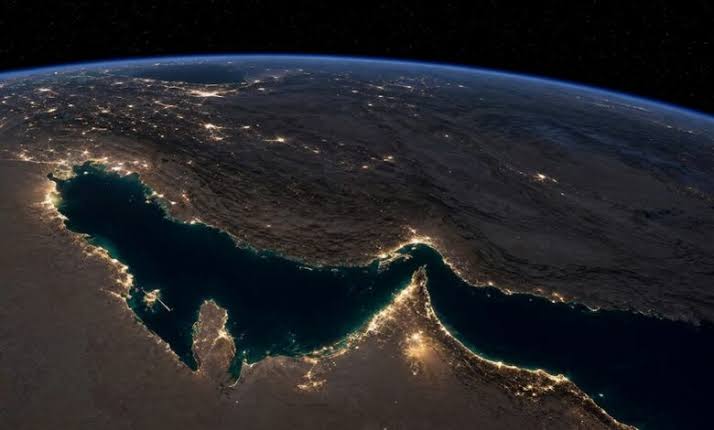
The Strait of Hormuz in July 2026 is a masterclass in what happens when the world does the opposite — when every actor, every institution, and every decision is split into two irreconcilable halves. The result is not balance. It is paralysis, priced by the day in freight, insurance and human risk.
President Trump’s announcement this week — a 20% toll on all cargo transiting Hormuz, with the United States self-declared as “Guardian of the Strait,” alongside a reinstated naval blockade of Iranian ports — is not a resolution of the crisis. It is the crisis achieving its final, symmetrical form. For every American assertion there is now an Iranian mirror image. Duality is no longer a feature of this conflict. It is the conflict.
Let us count the twos.
1. Two world views
At the foundation sit two irreconcilable readings of the same waterway. For the United States, Israel and the broader West, Hormuz is an international strait — a global commons through which a quarter of seaborne oil and a fifth of the world’s LNG must flow freely, and whose closure is an act of economic warfare against the world. For Iran, Hormuz is geography as destiny: the strait sits on its doorstep, within or adjacent to its territorial waters, and represents the one strategic lever that decades of sanctions could never confiscate. The West sees a highway; Iran sees a moat. Neither side is entirely wrong, which is precisely why neither will yield.
2. Two power centres in the Middle East
The region has crystallised into two spheres. Washington anchors one — the Gulf monarchies, Fifth Fleet infrastructure in Bahrain, air bases in Kuwait and Qatar, and an Israeli partner prosecuting parallel campaigns. Tehran anchors the other — the IRGC’s naval and missile architecture along the strait, residual proxy reach from Yemen to the Levant, and a demonstrated willingness to strike Gulf infrastructure when pressed. The renewed Saudi–Houthi exchanges this week confirm that the two spheres do not merely coexist; they grind against each other along every fault line in the region.
3. Two toll collectors
Here the duality becomes commercially absurd. Iran signalled early in the crisis that passage would carry a price — and the IRGC has reportedly been collecting fees from “friendly” vessels for months. Washington called this extortion and a violation of international law; the IMO agreed that no state may unilaterally levy charges on strait transits. Now the United States has announced its own 20% toll “as a matter of fairness” for providing security. A shipowner contemplating a Hormuz transit today faces the prospect of two invoices for the same passage — one from the guardian, one from the gatekeeper — with no legal framework validating either, no clarity on how “20% of cargo” is even assessed, and every possibility that paying one authority invites sanction or attack from the other. UNCLOS is silent because UNCLOS never imagined this. The strait has become the world’s first double-tolled chokepoint, and P&I clubs, charterers and traders have no precedent to price it.
4. Two routes, one dilemma
The physical geography reinforces the political one. The traffic separation scheme through Hormuz o ers, crudely, a northern passage hugging the Iranian side and a southern passage closer to Omani waters. Sail north, and you transit under the gaze of IRGC fast-attack craft, shore-based missiles and mine-laying capability — but arguably within the “coordination” framework Tehran demands. Sail south, and you shelter under Omani jurisdiction and the US Navy’s escort corridor — but you signal alignment with Washington’s regime and become, in Iranian eyes, an “unauthorised” transit. The UAE tankers struck this week in Omani territorial waters, with a seafarer killed, demonstrate the brutal truth: there is no neutral lane. Route selection has become a declaration of allegiance, made on behalf of crews who signed up to carry cargo, not flags of ideology.
5. Two blockades
Layered over the routes are two blockades running in opposite directions. Iran enforces its version against vessels transiting without its coordination — the drone and missile strikes on merchant ships are its enforcement mechanism. The United States has now reinstated its naval blockade of Iranian ports, choking Iran’s oil exports and revoking the sales licence that was the MOU’s central economic concession. Each blockade is justified as a response to the other. Together they create a Venn diagram of prohibition in which the compliant vessel — one acceptable to both powers — may simply not exist.
6. Two Washingtons
The duality extends inside the White House. One stream — the president and the MAGA hardliners — sees Hormuz as a demonstration of restored American primacy: the strait stays open on American terms, Iran pays for its defiance, and the world pays for American protection. The other stream — the pragmatists associated with vice president Vance, who carried the diplomatic water in Islamabad this spring — reads the domestic polling, the petrol prices above four dollars a gallon, and the midterm calendar, and wants an o -ramp. The MOU was the pragmatists’ artefact. Its collapse, and the President’s own dismissal of it as not meaning much, tells us which stream currently holds the tiller.
7. Two Tehrans
Mirror-perfect, Iran is equally divided. The elected government and foreign ministry signed the MOU because the economics demanded it — the restored oil licence was a lifeline for a suffocating economy. The IRGC read the same document as a surrender instrument, one that would let Washington build a permanent protected corridor and strip Iran of its single greatest deterrent: the credible threat to close the strait. The drone strikes on shipping that began barely a week after the signing were not indiscipline. They were the IRGC’s veto, exercised in the only currency it trusts. In the vacuum following the Supreme Leader’s death, the question of which Tehran speaks for Iran has no answer — which means every Iranian signature is provisional.
8. Two scapegoats
Failed agreements demand culprits, and each capital has duly produced one. In Washington, the MOU’s architects are being recast as naive dealmakers who trusted a memorandum with an untrustworthy counterpart — the president’s own “sleazebags” remark effectively disowning his negotiators’ work. In Tehran, the president’s camp that signed the document is being branded by hardliners as having bartered away sovereign leverage for an oil licence that Washington revoked within weeks anyway. Both scapegoats serve the same function: they allow each system to blame diplomacy itself, clearing the political ground for escalation. When the peacemakers are the villains, war becomes the responsible option.
9. Two choices for the market
Which brings every charterer, refiner, importer and trader to the final duality: wait, or diversify. Waiting assumes reversion — that ceasefires eventually hold, that the strait reopens as it always has, that this is a storm to be ridden out with war-risk premiums and patience. Diversification assumes rupture — that Hormuz risk is now structural, and that supply chains must be rebuilt around it: Saudi crude pushed through the East–West pipeline to Yanbu, Emirati barrels via Fujairah, Atlantic Basin and US Gulf crude for Asian refiners, American and Australian LNG substituting for stranded Qatari cargoes, strategic reserves drawn down and rebuilt from new directions. Waiting is cheaper if normality returns. Diversification is survival if it does not. Six weeks ago, the brief surge to 49 daily transits rewarded the waiters. This week’s collapse rewarded the diversifiers. The market is being whipsawed between the two logics — and the whipsaw itself is now the dominant cost.
Trade flows will move
History is unambiguous on one point: chokepoint disruptions do not pause trade — they reroute it, and the reroutes outlive the crisis. The Suez closure of 1967–1975 did not stop oil moving from the Gulf to Europe; it birthed the VLCC and normalised the Cape of Good Hope, and Suez never recovered its former share of crude flows. The sanctions on Russian crude after 2022 did not remove Russian barrels from the market; they redirected them east, created a shadow fleet, and permanently redrew the tanker map. The Red Sea crisis of 2023–24 did not halt Asia–Europe trade; it made 12,000 extra miles around Africa an operational routine and repriced an entire container market.
Hormuz is harder — there is no maritime bypass, only pipelines with finite capacity and buyers with finite patience. But that only means the reconfiguration will be deeper, not that it will not happen. Every month this war continues, Asian refiners lock in Atlantic Basin term barrels, LNG buyers sign twenty-year US o takes, Gulf producers accelerate pipeline expansion, and insurers reprice the Gulf as a permanent war-risk zone. These are not temporary hedges; they are structural commitments. When — if — Hormuz normalises, it will reopen into a market that has partially learned to live without it.
That is the final irony of duality. Two world views, two tolls, two routes, two blockades, two Washingtons, two Tehrans — each side fighting to control the strait — may together achieve the one outcome neither wants: a world that slowly, expensively, but irreversibly organises itself around Hormuz rather than through it.
The Gita’s counsel to rise above the pairs of opposites was addressed to a warrior on a battlefield. It applies equally to an industry caught between two guardians of one strait. The shipowners, traders and — above all — the seafarers transiting those waters did not choose this duality. But until the two powers transcend it, they will keep paying its price.
*Source: Splash247.com