
It may be absolutely correct to argue that while breast cancer enjoys all the awareness, little is known about its ‘brother’ prostate cancer. This week, we intend to talk to the men folk on the terror called prostate cancer.
About prostate cancer
The prostate is a gland that produces the liquid part of semen. It’s about the size of a walnut and lies at the base of your bladder.
The front of your prostate surrounds your urethra, the tube that carries urine from your bladder and out through your penis. Any change in the size or shape of the prostate can narrow this tube, making it difficult for you to urinate.
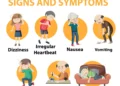
Symptoms of prostate cancer include:
•difficulty in starting to pass urine
•a weak, sometimes intermittent flow of urine
•dribbling of urine before and after urinating
•a frequent or urgent need to pass urine
•pain when passing urine
•rarely, blood in the urine
•erectile dysfunction
These symptoms are similar to those produced by a common non-cancerous disease where the prostate becomes enlarged (benign prostatic hyperplasia).
If you have any of these symptoms, it’s very important that you visit your GP for advice. If prostate cancer is found early, it can often be cured.
If prostate cancer spreads to other parts of your body, other symptoms can develop. The most common site for prostate cancer to spread to is the lower back, pelvis and hips. These bones can become painful and tender.
Causes
The cause of prostate cancer isn’t fully understood at present, but you are more likely to develop prostate cancer if:
•you’re over 50
•you have close relatives who have had prostate cancer
•several women in your family have had breast cancer – you may have inherited a faulty gene which may increase your risk of prostate cancer
•you’re African-Caribbean or African-American
•your diet is high in fat
•you’re overweight
Diagnosis
Your GP will ask you about your symptoms and will examine you. He or she may also ask you about your medical history and may do some of the following tests or will refer you to a urologist (a surgeon specialising in the urinary system).
•A digital rectal examination (DRE) is an examination of your prostate. Your doctor will insert a lubricated, gloved finger into your rectum (the lower part of the large intestine, ending at the anus) and feel your prostate through the wall of your rectum. If there is prostate cancer, it may feel harder than usual, or knobbly.
•A prostate-specific antigen (PSA) blood test will test the amount of PSA in a sample of your blood. PSA is a protein which is made by both normal and cancerous prostate cells. A high PSA level doesn’t always indicate cancer and can be caused by other prostate diseases.
•In a prostate biopsy, your surgeon will remove a small piece of tissue. The sample will be sent to a laboratory for examination to find out if it’s cancer and if so, how fast it’s growing.
•CT, MRI and bone scans can help your surgeon see how far the cancer has spread (if at all). A CT scan uses X-rays to make a three-dimensional picture of your body. An MRI scan uses magnets and radiowaves to produce images of the inside of your body.
Treatment
Your treatment for prostate cancer will depend on a number of factors, such as your age and whether the cancer has spread, and if so, how far. There are various treatments available. Some can have serious side-effects so it’s important to speak with your doctor who will advise you on the best treatment for you.
Active monitoring
Sometimes, particularly for slow-growing tumours, no treatment is the best course of action. This is often called active monitoring or watchful waiting. Your condition will be monitored closely with routine check-ups. Your doctor may start treatment if your tests show that the cancer is growing or causing symptoms.
Surgery
Surgery is a common treatment for prostate cancer. It’s most suitable for otherwise healthy men (usually, those under 70) whose cancer hasn’t spread beyond the prostate.
The most common technique is a radical prostatectomy. This is a major operation, which removes the whole of the prostate and some surrounding healthy tissue.
New surgical developments include keyhole surgery (a laparoscopic prostatectomy) where the prostate is removed through smaller incisions and robot-assisted surgery.
Radiotherapy
Radiotherapy uses radiation to destroy cancer cells. Techniques for treating prostate cancer include conformal radiotherapy (CRT), high-resolution intensity modulated radiotherapy (IMRT) and brachytherapy.
Hormone therapy
Hormone therapy blocks the action of the male sex hormone (testosterone) that helps cancer grow. This can slow the growth and spread of prostate tumours but won’t kill the cancer cells.
Medical hormone therapies include goserelin (Zoladex) and bicalutamide (Casodex).
Alternatively, surgical hormone therapy involves removing your testicles, which permanently gets rid of the main source of testosterone. This operation is called an orchidectomy.
Chemotherapy
If hormone treatment stops working (hormone refractory cancer) your doctor may recommend chemotherapy. Drugs such as docetaxel (Taxotere) are used to destroy cancer cells.
Cryotherapy
This is surgery to freeze the prostate with liquid gas and kill cancer cells. This treatment may be used if you have a recurrent or refractory prostate cancer.
Ultrasound
High intensity focused ultrasound (HIFU) is a treatment given using a machine that gives off high frequency sound waves. This heats up the targeted cancer cells and destroys them.










Discussion about this post