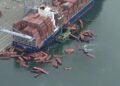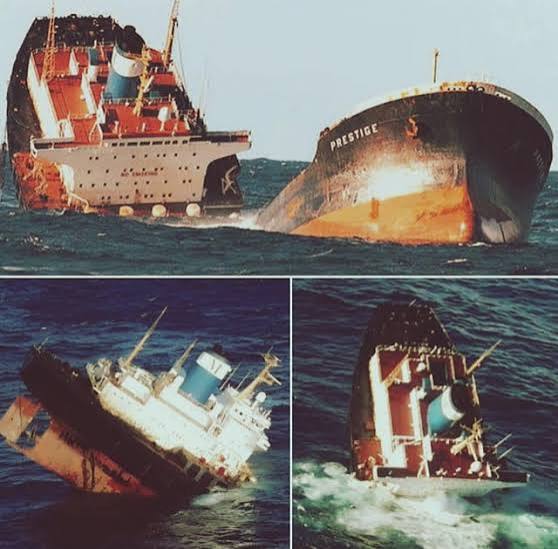
Ships with structural damage and a dirty or volatile cargo in their tanks are not among the most welcomed visitors in the coastal waters of any State and there is little point in attempting to apportion blame on those who have made decisions to keep stricken ships away from their coastlines. Nonetheless, in some cases, a refusal could result in compounding the problem, which may ultimately result in endangering life, the ship and the environment.
During the debate on places of refuge, the legal issues surrounding this concept were analysed and the question was asked whether a coastal State is under an obligation, or at least is not precluded, under international law, from providing a place (where a ship can be taken when it is disabled, damaged or otherwise in distress and is posing a serious risk of pollution), in order to remove the ship from the threat of danger and undertake repairs or otherwise deal with the situation.
International law recognizes the right of States to regulate entry into their ports (UNCLOS, Article 2, refers to the sovereignty of a coastal State over its land territory, internal waters, archipelagic waters and the territorial sea):
The right of a foreign ship to stop and anchor in cases of force majeure or distress is explicitly referred to by UNCLOS in the case of navigation in the territorial sea (Article 18(2)), straits used for international navigation (Article 39.1(c)) and in archipelagic waters (Article 54).
The right of a foreign ship to enter a port or internal waters of another State in situations of force majeure or distress is not regulated by UNCLOS, although this constitutes an internationally accepted practice, at least in order to preserve human life. This, however, does not preclude the adoption of rules or guidelines complementing the provisions of UNCLOS.
Meanwhile, the right of a coastal State to take action to protect its coastline from marine pollution is well established in international law. Relevant provisions include: UNCLOS, Articles 194, 195, 198, 199, 211, 221, 225; Salvage Convention, article 9; and Facilitation Convention, article V(2).
Under longstanding maritime tradition and the practice of good seamanship, the master of a ship faced with a serious emergency is expected to seek shelter to avoid disaster. To some extent the practice is codified in chapter V of SOLAS, which requires that the owner, the charterer or the company operating the ship or any other person, shall not prevent or restrict the master of the ship from taking or executing any decision which, in the master’s professional judgement, is necessary for safe navigation and protection of the marine environment.
Similarly, SOLAS article IV provides that ships which are not subject to the provisions of the Convention at the time of their departure on any voyage, shall not become subject to the provisions of the Convention on account of any deviation from their intended voyage due to stress of weather or any other case of force majeure.
By focussing more on human life and safety rather than on what is to be done with the ship in cases of force majeure or distress, these provisions do not of themselves give a right of entry to a place of refuge, nor do they explicitly refer to the question of a coastal State’s obligation to establish places of refuge. On the other hand, neither do they preclude such a principle.
Given this background, it has proved possible for IMO to develop the Guidelines on places of refuge for ships in need of assistance mentioned earlier on in a manner which retains a proper and equitable balance between the rights and interests of coastal States and the need to render assistance to ships which are damaged or disabled or otherwise in distress at sea.
It would be highly desirable if, taking the IMO Guidelines into account, coastal States designated places of refuge for use when confronted with situations involving ships (laden tankers, in particular) in need of assistance off their coasts and, accordingly, drew up relevant emergency plans, instead of being unprepared to face such situations and, because of that, risking the wrong decision being made by improvising or, in the heat of the moment, acting under pressure from groups representing various interests.