The Nigerian Coast Guard Bill has repeatedly sparked intense debate and public opposition, emerging from a backdrop of political maneuvering and bureaucratic missteps. Proponents tout it as a long-awaited solution to maritime insecurity, but a closer look reveals a bill that has been rejected time and again by lawmakers, security experts, and civil society, and rightfully so.
Rather than resolving Nigeria’s maritime challenges, the proposed bill would merely add another layer of redundancy to an already overburdened and inefficient security architecture.
The bill’s origins can be traced to efforts by certain legislators who, over the years, have pushed for a specialized maritime force. They argue that existing institutions that are saddled with responsibilities of policing the nation’s waters are inadequate.
However, the history of the bill is littered with failed attempts, public hearings interrupted by tragedy, and passionate protests by stakeholders who view the initiative as both unnecessary and constitutionally-flawed. Activists and concerned citizens have repeatedly stormed legislative chambers to demand the withdrawal of the bill, branding it as wasteful duplication of Nigeria’s maritime security apparatus.
The Nigerian Coast Guard was initiated in 2021 through a bill introduced in the 9th Senate by Senator Akon Eyakenyi, representing Akwa Ibom South Senatorial District. At its core, the proposed legislation aims to establish a full-fledged Nigerian Coast Guard—a military service branch under the Ministry of Marine and Blue Economy, tasked with safeguarding Nigeria’s extensive maritime zones, enforcing maritime laws, protecting offshore installations, and conducting search-and-rescue operations. In theory, this new body would complement the existing framework by shouldering responsibilities that, proponents claim, are inadequately handled by current agencies. However, this purported “complementarity” is where the bill unravels. It died with the 9th Senate.
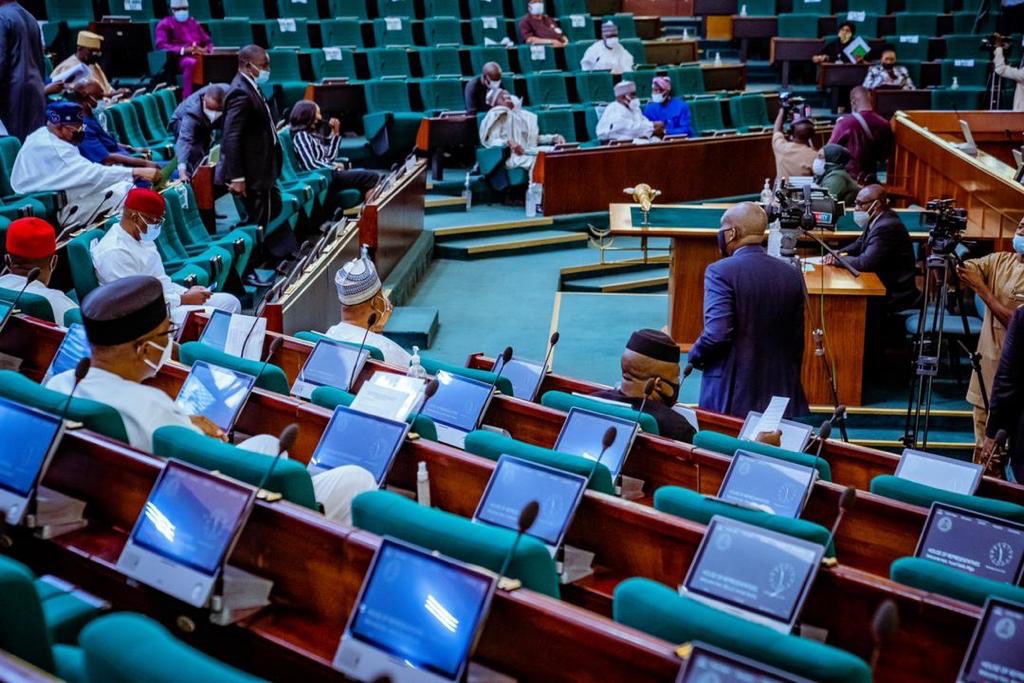
The push to establish a Nigerian Coast Guard gained traction again in December 5, 2024, when stakeholders gathered at the National Assembly for a public hearing on the Nigerian Coast Guard (Establishment) Bill, 2024. The reintroduced bill, now sponsored by Senator Wasiu Eshinlokun (APC-Lagos), has progressed through notable legislative stages, including its second reading in the Senate in October 2024. In December 2024, the Senate Committee on Marine Transport held a public hearing to gather stakeholder feedback.
Supporters of the bill, including maritime stakeholders and experts, argue that a Coast Guard would bolster maritime security and unlock Nigeria’s economic potential in the blue economy. However, the bill faced significant opposition from the Nigerian Navy, lawmakers, and civil society groups. Critics contend that creating a new agency could result in redundancy, resource constraints, and jurisdictional overlap with existing bodies.
One of the most significant criticisms leveled against the Coast Guard Bill is its blatant overlap with the Nigerian Navy’s duties. The nation’s Navy, already internationally acclaimed for its robust maritime security operations, has repeatedly objected to the idea of duplicating its functions. At the public hearing, senior naval officers argued that the proposed coast guard would lead to jurisdictional conflicts, operational inefficiencies, and unnecessary competition for resources.
There have also been allegations that various militant factions have been forming groups and organizations in the Niger Delta and South- South region, hoping to be incorporated into the structure of the proposed Coast Guard. Industry experts have corroborated the fears that were expressed in government quarters about the potential harm in the Coast Guard initiative. Industry stakeholders have also warned that the emergence of these mushroom organizations could undermine the credibility and effectiveness of the initiative, sparking renewed debates on the role of regulatory agencies in safeguarding maritime security.
The push for the enactment of the controversial Bill has hit another brick wall, as the National Security Adviser (NSA); Mallam Nuhu Ribadu has firmly rejected the proposal, citing security concerns. The position of the NSA’s office was reportedly based on the security threats that the various non-state actors in the Niger Delta region could pose if the new body is created.
Furthermore, critics point out that Nigeria’s existing maritime agencies such as the Nigerian Maritime Administration and Safety Agency (NIMASA) and the National Inland Waterways Authority (NIWA) are already burdened with overlapping responsibilities. Adding another agency to the mix not only risks further fragmentation of command but also threatens to divert scarce resources from these institutions that desperately need strengthening. Lawmakers and civil society organizations have emphasized that the bill appears designed to create a parallel armed force rather than enhancing the efficacy of current maritime security structures.
Beyond the duplication of duties, several compelling arguments underpin the stance that Nigeria does not need a separate Coast Guard. Establishing and maintaining a new military service is an expensive undertaking. With Nigeria already grappling with financial constraints, channeling funds into another redundant security agency would only exacerbate budgetary pressures, particularly when those funds could be used to upgrade existing institutions.
The Nigerian Constitution explicitly recognizes only the Army, Navy, and Air Force as the nation’s military arms. Creating a new branch without a constitutional amendment not only raises legal ambiguities, but could also lead to an erosion of the established chain of command during emergencies. International best practices illustrate that countries with robust maritime security frameworks maintain distinct roles for their navies and coast guards. However, these examples also underscore that the functions of a coast guard are best managed by a civilian-led maritime agency focused on law enforcement and search-and-rescue, not by a militarized body that duplicates the Navy’s core competencies. In Nigeria’s context, the Navy has historically fulfilled these roles effectively, and its capabilities can be enhanced without resorting to the creation of an entirely new force.
Introducing another agency into Nigeria’s maritime security apparatus is likely to complicate inter-agency coordination, as overlapping mandates can lead to confusion, conflicting orders, and ultimately, a weakened response to maritime threats. This fragmentation is counter-productive, especially when rapid, unified action is essential for safeguarding the nation’s coastal integrity.
In a country where the security architecture is already beset by inefficiencies and resource constraints, the Nigerian Coast Guard Bill stands out as a redundant gamble, a proposal that risks further undermining an already fragile system. Rather than carving out a new military service that overlaps with the well-established and battle-tested roles of the Nigerian Navy and existing maritime agencies, Nigeria would be better served by investing in and reforming these institutions. Strengthening the current framework, ensuring proper funding, and enhancing inter-agency coordination are far more pragmatic approaches to addressing the nation’s maritime challenges than introducing an unnecessary and potentially destabilizing new entity.
For Nigeria’s future security, it is imperative that lawmakers heed the persistent warnings from the Navy, civil society, and maritime experts: when a system is already struggling, adding another layer without addressing underlying inefficiencies is not progress, it’s a recipe for further dysfunction.
In a nation bustling with over 200 million people, we are convinced that we already have the human capacity, institutions, and infrastructure within the maritime sector to nurture a thriving blue economy.
What we truly need is for the Ministry of Marine and Blue Economy to collaborate effectively with all relevant ministries and institutions at both national and state levels. It’s through a multidisciplinary approach that the Ministry can achieve significant results, rather than by creating a new coast guard.