In its history, NIMASA (that is from 1987 when it was created and first christened National Maritime Authourity) and now, has had at least 12 chief executive officers.
When it was NMA, it had: Dr Bassey Ekong (now deceased), Alhaji Munir Ja’far, Engr Buba Galadima, Mr Patrick Egesi, Dr George Eneh, Architect Ferdinand Agu and Engr Festus Ugwu(now deceased).
And since it became NIMASA, following the merger with the Joint Maritime Labour Industrial Council (JOMALIC), it has also had Mrs Mfon Ekong Usoro, Dr Ade Dosunmu, Mr Temisan Omatseye Mr Ziakede Akpobolokemi and now Dr Dakuku Peterside.
To say that the office of chief executive of NIMASA (and even, the then-NMA) has always been highly politicized is to state the obvious. Each minister wants his own protégé to be the director general. It started towards the tail end of the tenure of Alhaji Munir Jafar’ as the director general of the then- NMA, when he was removed on the instruction of the then-Head of State (now late) General Sani Abacha who directed his minister of transport (now deceased too) Major General Ibrahim Dahiru Gumel to kick the crown prince of Zauzau Emirate in Kaduna state out. He was replaced with Alhaji Buba Galadima who was later to allegedly use NMA to fund the transmutation campaign of late General Abacha.
About 29 years of NMA and about nine years of NIMASA and with seven and five chief executive officers respectively at the saddle, it will not be wrong to infer that NIMASA is the most politicised agency of government in Nigeria.
The mandate of NMA at inception was very clear. When it was founded, the intention of government was to have an agency that would engineer a rapid development of the nation’s shipping and maritime sector by creating a better platform and engender more opportunities for indigenous shipping practitioners in sea-borne trade.
In a nutshell, apart from its general responsibilities for maritime safety administration, what is generally called commercial responsibilities, port and flag state control and of course, Cabotage, Nigeria’s maritime administration agency (in this case, NMA) was also created to improve the lot Nigerian ship owners and other categories of operators in the sector.
For those who still remember the early days of NMA; up until mid-1990s, the agency became an avenue for award of contracts, without consideration for execution of its mandate. The agency also became known for uncoordinated and ridiculous cargo allocation system as cargoes that would have been carried by genuine indigenous ship owners were offered to briefcase shipping companies.
Much later, a good opportunity to retrace itself was offered in the name of the Ship Acquisition and Ship Building Fund (SASBF). But, rather than judiciously manage the funds which accrued from statutory payments into the agency’s coffers, the NMA only succeeded in creating millionaires out of non-ship owning individuals.
The merger of NMA and JOMALIC was meant to refocus and harness the mandate of the two agencies into one.
Did government make a mistake? First, would the maritime industry have been better-off without the merger of both NMA and JOMALIC. In other words, did the merger overwhelm subsequent chief executives of NIMASA? Is NIMASA suffering from the carry-over of its ineptitude while it was called NMA? Is it true that from NMA to NIMASA, the problem has been with the appointment of non-professionals to manage the nation’s apex maritime regulatory agency? Are all these posers collectively responsible for the high turn-over of chief executives of the agency?
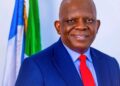
The appointment of the current DG; Dr Dakuku Peterside is not a departure from the usual, in which case successive Ministers (or even President) try to bring in their protégé.
We make bold to state that his appointment is a clear violation of the NIMASA Act. But that is not an excuse for failure.
We recall that prior to transmutation to NIMASA, the then-NMA once had a Ferdinand Agu (an Architect) who still ranks as one of the best CEOs that the agency has ever had. It was Agu who saw the advantage in protecting indigenous ship owners; he fought for and got the National Assembly to pass the Cabotage Act. Sadly he didn’t stay long enough afterwards to ensure proper implementation.
Dr Peterside is coming in at a time when the image of NIMASA has been badly damaged by his predecessor; Mr Ziakede Akpobolokemi, who notably didn’t also meet the criteria for appointment as DG. Apart from the plethora of allegations of fraud hovering on his head, Akpobolokemi also spent his more than four years building an Ijaw enclave in NIMASA.
So the question is: Should Dakuku Peterside fail because ‘he is not qualified’ by virtue of the Act. The answer is No. If an Architect succeeded, why can’t a PhD holder in Administration.
He is an alumnus of Harvard-Kennedy School, University of Harvard, a Masters Degree holder in Business administration (Management) and a holder of Certificates in leadership and Project management.
These academic laurels should suffice, so what is left is to understand NIMASA’s mandate, have a grasp of his own charge and be determined to succeed.
Why shouldn’t Dakuku Peterside prioritise and group his mandate into three, this way: Shipping Development (which will take care of Cabotage, increased bottoms, training, certification and employment), Maritime Safety and Security, and lastly Flag and Port State responsibilities.

The Task Before Dr Dakuku Peterside As NIMASA Director General

Latest News

Health

Stress Management: Psychiatrist Identifies Effective Coping Mechanisms
A consultant Psychiatrist, Dr Stephen Oluwaniyi, has identified stress as a risk factor for developing mental health conditions, advising that...








© 2021 Shippingposition
Discussion about this post