“The electronic call-up system is a brilliant idea”
“The world has become a flat ground, there are no different specifications for the third world or second world countries”
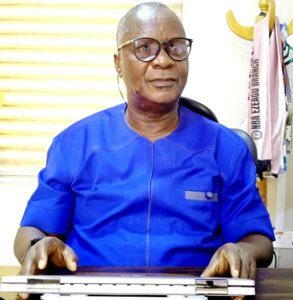
Dr Obiora Madu is undoubtedly the doyen of logistics and supply chain training in Nigeria. He is the Chief Executive Officer of Multimix Group and Director General of African Centre for Supply Chain. In this interview with Oluyinka Onigbinde and Adewale Buraimoh, he speaks fact to the challenges of logistics in Nigeria
What’s your assessment of the logistics industry in Nigeria?
Let me start by saying that it is below par. For a very long time, the administration has been thinking of transport but we’ve gone past transport. Transport is part of logistics; logistics is part of the supply chain. It is actually the supply chain that we should be thinking of this time. It is because in transport, we have multi-modal and intermodal, but logistics goes beyond that because other issues of warehousing come in. But then the supply chain emphasizes integration which is where the world is at the moment. If you don’t integrate, you cannot optimize. First of all, we don’t have a National Logistics Policy. What we claim to have had is National Transport Policy. How far that has worked, I do not even know. But the point is that we need to rejig our understanding of what is going on currently. So many governments all over the world are adjusting. The private sector is far ahead – supply chain wise compared to the government. The day they apply supply chain to government activities, policies will improve. So there is a whole lot of work to be done. I don’t even want to talk about infrastructure. This is because, you need power infrastructure, IT infrastructure, physical infrastructure (the roads and others) and soft infrastructure; that is, the quality of people you are producing from your schools. The fact is that logistics and supply chain are not common in Nigerian institutions. Let’s sum it up in our position in the Logistics performance index of the World Bank. We’re 110 over 160. That is not encouraging.
Why is it difficult for us to get it right, what are the challenges?
The biggest challenge is that we make everything look like rocket science. There’s no big deal in having a National Logistics Policy. Even in Africa, so many nations have it. There’s no big deal in being deliberate about your infrastructure and knowing that if everything is on the road it will make the road bad. I think it is just political will. The private sector doesn’t build infrastructure. You can have some PPPs here and there but at the end of the day, it is the government’s responsibility. It is a matter of decision. That is the way I see it. For example, the Prime minister of Malaysia said the day they put the highway from the Northern part of Malaysia to the Southern part, the economy opened. Do you know how much food perishes on yearly basis? and we are talking about the shortage of food in the country. We don’t have any food chain facility or infrastructure, direction, and warehouse of international standard. All I am just saying is that it is not rocket science. If we have the political will and then break it down as projects and over time it will materialize. It doesn’t happen overnight. The other day I saw some people pushing a drum to fuel a train. It is absurd. You’ll start wondering what the hell is going on because I’ve not seen that elsewhere, but that’s where we find ourselves.
Let’s look at the African Continental Free Trade Agreement, what’s the place of the supply chain industry?
It is just as if you are aware of what African Centre for Supply Chain is trying to do. The 5th edition of the next publication in the industry report is actually on the place of the supply chain in the success of AfCFTA. The supply chain makes it possible for integration. Today if you are flying to other countries you’ll pass through other countries. In fact, we had a job to do in Cape Verde sometimes and the job took us one and a half-day, but the whole journey took us six days because when we finished we had to wait for when the flight from Cote D’Ivoire would come. That was when our journey home started. You can’t ship anything from Kenya to Nigeria or otherwise without having to send it through Europe. Whatever competitive advantage you have, you lose after that. There are no continental highways and coastal shipping lines. So I am folding my hands, keeping my fingers crossed. Since AfCFTA started, how many transactions have been done? Let’s look at the statistics. The truth is that everybody sees it as a fantastic idea talking about two points something trillion GDP and a 1.4 billion population. This is fantastic but these things are not a matter of numbers if you don’t put the right infrastructure. The private sector has done well. Look at people like Combo360 currently in many African countries. So the private sector has gone ahead in spite of the infrastructural deficit. It is unfortunate but we are all hopeful. First things first, the rest will follow. We cannot talk about the AfCFTA when some countries are closing their borders. What kind of free trade is that going to be? Well, everything in Africa is hidden under political will. I think with time we would sign the agreement although it would take a while. When the Executive Secretary came out and said people should not expect wonders to be done, I just laughed because that should have been said at the beginning.
What do you make of the Lekki Deep Seaport, what impediments do you think the port may have in terms of logistics?
Well, I think most of the house owners in Apapa have relocated to somewhere else as a result of what we saw. The unfortunate ones who relocated close to that particular area will have to relocate again. It is when it happens, then we see it and cry out because I understand that the Governor said the rail line is not in the master plan. It is all grammar. The reality is that you have a port and you don’t build a port in one day. It is a gigantic project housing the largest refinery and fertilizer plant and then you wait until the project is being commissioned and then remember that the rail line is not in the picture. That is lack of planning. I think the challenge is in the fact that we do not measure. We just keep going without asking ourselves questions. That is where the problem is.
Also Watch: Shipping Position Interaction with Dr Obiora Madu
Will you be willing to proffer some solutions as to how they can get out of this quagmire?
I think the best way is not to allow yourself to get into the quagmire, because once you get there, you are in a hurry to take up the business you won’t see clearly because you have spent a lot of money on the project. It is not the best time to think about it. But we will probably perform wonders but the fact is, it is not the best time. After a project is ready and commissioned, is it at that time you are thinking about what to do. The environmental analysis should have been done.
What’s your assessment of the trucks’ electronic call-up system one year after?
The people who operate it are Nigerians. By that I mean the stakeholders operating and using the system and the rest of them. We need an attitudinal change in this country. If you are driving on the road you will see traffic where there shouldn’t be one. What is the reason? Because the policeman is not standing there to wave a hand or the soldier is not there with a whip. It was bound to have teething challenges of technology and I think it did ease traffic for some time. But has it met the objectives? I don’t think so. But some steps have been taken which we can improve on. There are big lessons that if we automate, we would improve a lot of things even inside the port itself and that electronic call-up system. It is a brilliant idea.
You mentioned attitudinal change which also has to do with capacity building, manpower development. Do you think the government is doing enough in the area of manpower development?
Let’s even look out of government. I can hit my chest and boast that about 3,000 logistics professionals have passed through our system here. That is only us at Multimix. There has been pockets of us (training centres) here and there. Government has an institute but it is a Civil service organization, so it works like Civil service. It is only recently that we started discussing at the NUC level about introducing Logistics and Supply Chain Management into the Degree programmes and some international agencies are funding the introduction of Master’s degrees in Supply Chain in the Universities; making them being involved in all these. But you can’t give what you don’t have and you cannot implement what you do not understand. That is where the challenge is. We need a mind shift from thinking of our transport and know that if we continue, the world has actually left us behind. The more we are waiting, the farther they go from us. In terms of that, in the private sector, a lot has been done. At the government level, they are waking up now.
There is proliferation of transport institutions, Maritime schools and all that. What is your reaction to this?
If you run a system where there is no control of anything, what do you expect? There is no control. In Rwanda, if you don’t have a BSc in Theology, you cannot open a church. Here, what you see is that people wake up from a bad dream and say God has called them and they start a church. That is where the problem is. In Multimix for example, we have a six/seven international organizations that we represent including a foreign university. This is because the world has become a flat ground. There are no different specifications for the third world or second world countries. No, if you don’t meet them, you fall out. But the problem here is that those specifications do not exist. Nothing is regulated. If you have enough money to buy a 911 truck, you’ll become a transporter and hit the road. No place to register, nothing. Apart from the proliferation, we happened to have pioneered this (logistics training) and I can say I thank God that after pioneering and leading, we are still here and leading. The reason is the standard that we have kept. Sometime, people were saying we had no competitors and I told them the competitors will come and they kept coming. When my people started panicking, I told them to let’s wait a few more years and see and a lot of them started falling by the wayside. This is because if you are not offering quality, you can only deceive the people for some time. So that is what is saving people now which is that those charlatans are dropping off on their own. Although there are still some and new ones will come, but it depends on how long they would last.
Our sister organization, African Centre for Supply Chain in collaboration with Multilinks is the only Nigerian logistics and supply chain in the industry report and this has happened for five years consistently. The only year we didn’t publish was the core COVID year. People should open their eyes and know what they are looking for. Also, look at the past records of the people you want to deal with. They say “show me your friends and I will tell you who you are”. That is what should guide those looking for courses to study. There was a particular one that came here and some people were rushing there. I was just laughing but eventually, they all ended up here to come and take some courses.
Kindly like us on Facebook