Conventionally, Deep seaports are maritime facilities designed to accommodate large, heavily loaded ships with deep drafts. These ports are crucial for international trade, facilitating the movement of goods in and out of a country. They typically have a water depth of at least 18 meters (or about 60 feet), which allows them to handle massive vessels that typical ports cannot.
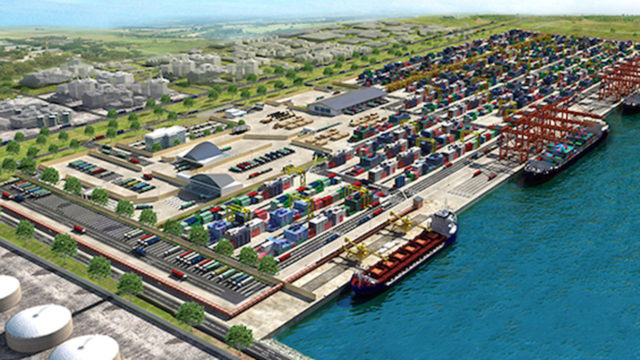
One can boldly affirm that, while there are plans for others, the only deep seaport in Nigeria as at today is the Lekki port. It is Nigeria’s first and currently only operating deep seaport, located in the Lagos Free Zone. It is a multi-purpose port, which commenced full commercial operations in April 2023.
While Lekki port is already operating, there was a time Nigeria had plans for other of such deep seaports in Akwa Ibom state, Rivers state and even an additional port in Badagry Lagos.
The Akwa Ibom state government says the Ibom Deep Seaport is ongoing and that it is being designed to function as a transshipment hub, where smaller vessels will redistribute cargo from larger ships. In like manner, the Bonny Deep Seaport in Rivers is designed a Greenfield development located in project located on Bonny Island.
In the case of Badagry Deep Seaport, it has reportedly received full business case compliance and is awaiting Federal Executive Council approval.
While the above projects are at different stages, the latest addition is the one being projected for Olokola in Ogun state. It is the baby of Alhaji Aliko Dangote. Media reports said that the President of the Dangote Group, Aliko Dangote, has already submitted paperwork to build the “biggest, deepest seaport in Nigeria” in Olokola, Ogun State.
Proposed to be Nigeria’s largest seaport, its promoters said the Olokola port will be dedicated to exports, including liquefied natural gas.
While announcing the project recently, Dangote Group disclosed that the new port is conceived to connect the Dangote group’s logistics and export operations in Lagos, including Lekki Deep Sea Port, through which it currently ships petroleum products and fertilisers overseas.
“We want to do a major project to bring more gas than what NLNG is doing today,” said Devakumar Edwin, a vice president of the group.
“We know where there is a lot of gas, so run a pipeline all through and then bring it to the shore,” he added.
The craving for deep seaports in Nigerian can be understood, because such ports seaports can b economic drivers as they handle larger volume of cargo and larger vessels, making them more efficient for international trade. Deep seaports can serve as transshipment hubs, facilitating the transfer of cargo to smaller vessels for distribution to other ports.
One of the major economic benefits is that it can reduce congestion at existing ports, improve efficiency, lower transportation costs, and attract more international trade
However, the entry of Dangote Group into the capital intensive, but highly-lucrative business of deep seaport may change the narratives completely.
Until the coming of Lekki port, the seaports in Nigeria have always been: Lagos Port Complex and Tin Can Island Port; both in Lagos State, Calabar Port in Cross River State, Delta Ports in Warri, Delta State, Rivers Port Complex and the Onne Port; both in Rivers State. But none of them had the draft that receive bigger vessels.
Then came the deep seaport craving, leading to the ones earlier listed above. Later, the number was pruned down to only three, namely: Lekki, Badagry and Ibom. And out of these, only Lekki port has become a reality.
Before Lekki deep seaport opened for business, Apapa port had always enjoyed the glory of being the biggest port in Nigeria. But the expansive and more modern Lekki port has since taken that glory. This is, going by the services it offers, and the size of the port.
Yes, the two ports in Lagos have been over-stretched, and the effect is glaring for all to see. There is an obvious case of lack of planning about the future of both Apapa and Tin Can Island ports.
It is a fact that the take-off of Lekki Port was the actualization of the objectives of establishing deep seaports in Nigeria.
The rising crave for deep seaports in Nigeria is perhaps informed by the realization by the Federal Government that Nigeria can no longer rely existing ports in Lagos, Rivers, Cross Rivers and Delta states.
There is no doubt that Nigeria is in need of new and better- designed port facilities to handle increasing cargo traffic, new and bigger vessels that need deeper drafts.
As the largest importer and exporter of cargo in the West and Central Africa, Nigeria deserves to become a hub for the sub-continent. Also, bigger ships move cargo more efficiently than smaller vessels, so the economy of scale makes it imperative that ship owners will buy new and bigger vessels and these will have to dock somewhere.
This is where the proposed deep seaport at Olokola in Ogun state that is being spearheaded by the Dangote Group, is a commendable initiative, especially as it is not targeting conventional dry and containerized cargoes. Its promoters have said that their interests is oil and gas.
With the abundance of gas reserves and the products that the Dangote refinery is churning out, the Ogun port is most likely in a world of its own and a likely to be commercial success.
While Nigeria is currently dreaming of about three deep seaports, the question may be asked, whether the nation actually needs the number.
Dangote Group currently exports fertiliser to the US, Brazil, Mexico, India. All these are done from its facilities in multi-billion dollar refinery in Lekki.
While we are not opposed to development of new deep seaports in the country, we are however perturbed about the rush to have as many as about four.
Many of them may turn out to become white elephant projects. Why can’t the states where those ports are being contemplated collaborate with the Federal Government to bring life to the ports that are currently in their axis? Why seek to establish ‘your own ports’?
For instance, we expect Akwa Ibom and Cross Rivers state governments to see how Calabar port will be made more viable, rather than source for funds for Ibom deep seaport. The two states can join hands with the Federal Government to address the shortcomings of the Calabar Port to make it viable. The challenges of Calabar Port are – its limited draft, which has made it impossible for large vessels to call and the low cap of Ikom bridge challenge. These are not insurmountable.
The toughest of the pack is the Badagry port, which the state government says is needed to shift development to the western flank of the state, thereby competing with the Lekki port!
We are doubtful about the competitiveness of the Badagry deep seaport, especially with the proposal for Olokola, which is just about 100kilometres away from Dangote refinery in Lekki.
Available data confirm that container throughput at Lagos ports has hit over two million twenty-foot equivalent units (TEUs). Lagos ports account for almost 80 percent of the total volume of cargo handled by Nigerian ports.
This underscores the need for additional facilities and the best option in line with global trends is a deep seaport. Lekki port appears to be the answer to this question.
As it is, while the proposed Olokola Deep seaport in Ogun state may offer an answer to the desire for a specialized facility to handle oil and gas exports, same can not be said of others that are in the pipeline. However, if their business cases can guarantee viability, they should be encouraged.