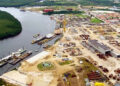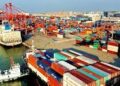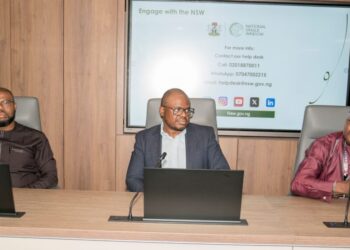
Just like this newspaper reported recently, terminal operators in the nation’s seaports in Lagos, Onne, Calabar, and Warri, are worried over the validity of the concessions which the Federal Government gave to them at different times since 2006. The worry is justifiable, since the promise to review the agreement is taking too long to happen.
It is no longer news that the owners of the seaports- the Government of Nigeria is desirous of opening up the nation’s seaports to new investors, even as the prolonged delay in the renewal of concession agreements lingers.
The uncertainty follows the expiration of concession agreements of many terminal operators—some of which reportedly lapsed as far back as five years ago—while affected firms have continued operations under temporary annual extensions.
There are also indications that recent engagements with some foreign terminal and port operators are aimed at injecting new operators into Nigerian port terminal operations.
We recall that, when the Federal Government embarked on the port concession exercise in 2006, the primary objective was to enhance efficiency, attract private sector investment, and modernize port operations.
At that time, the Nigerian Ports Authority (NPA) had been burdened with inefficiency, bureaucracy, and underinvestment, making it clear that private sector participation was necessary to transform the maritime sector.
But since the landmark exercise took place, some developments have given credence to the apprehensions in some quarters, that there were faults inherent in the Nigerian port concession process.
Perhaps, the greatest drawback in the whole port concession is the absence of an enabling law to guide stakeholders; especially the NPA and the terminal operators.
Exactly two decades after the first set of private sector players were granted concessions, the results have been mixed. While some terminal operators have exceeded expectations by investing in infrastructure, deploying modern cargo-handling equipment, and improving turnaround times, others have failed to meet the required standards, contributing to persistent bottlenecks, congestion, and inefficiencies.
These mix-bag of issues can not be adequately addressed because the parties are no longer equally covered legally. The Government, through the NPA, continue to hold the concessionaires by the jugular by dangling the sword of termination of concession agreement over their heads. Sadly, the concessionaires appear not to have a choice; since they want to continue in business.
We take note of the recent disclosure by the NPA that about five terminal operators are currently affected by expired concession agreements, and we dare add that, more may soon be added to the number, in a few years, unless the needful is done.
According to the NPA, the government is deliberately reluctant, so as to avoid renewing flawed agreements that could undermine efficiency and revenue generation in the maritime industry.
Sadly, this is a simple admission of the fact that the current concessionaires have performed below par, in terms of efficiency and payments to the Federal Government.
These were confirmed recently by the spokesperson of the NPA, Mr. Ikechukwu Onyemekara. “Government is focused on correcting structural issues in existing agreements before approving renewals. A flawed agreement would do more harm than a delayed one,” he said.
It is not the fault of the concessionaires that the agreements were flawed. It is also not their fault that returns on investment to the government have not been optimal.
While we agree that, review of agreement is not out of place, we are particularly worried about the feelers that are emanating from both the NPA and the Federal Government.
A blanket or politically-motivated cancellation of all expired concessions would be counter-productive. Instead, the government must adopt a merit-based system that distinguishes between those who have added value to port operations and those who have not.
The terminal operators should be evaluated on clear performance metrics, including investment commitments, efficiency improvements, and adherence to global best practices. Those who have upheld their end of the bargain should have their concessions renewed, while those who have failed to meet expectations should be shown the exit.
However, beyond assessing the terminal operators, the government must also take responsibility for creating an enabling environment for port efficiency. The lack of supporting public user infrastructure—such as adequate roads, electricity, rail connectivity, and functional scanners have, in many cases, limited the performance of terminal operators.
A significant government investment in these critical areas would complement private sector efforts and ensure that the ports operate optimally. Furthermore, regulatory agencies must be strengthened to improve oversight and enforcement of service level agreements, ensuring that operators meet their obligations, rather than operating unchecked.
More importantly, there is the need for high level transparency in the concession renewal process. The government must resist the temptation of political favouritism. It must, instead adopt a competitive, performance-driven approach. New concessionaires should only be considered if they can demonstrate superior operational capacity and financial commitment compared to existing ones. Otherwise, renewing contracts for well-performing operators remains the best course of action to sustain port efficiency and attract further investment.
We, and of course, stakeholders in the Nigerian maritime industry are also aware that the concession period of some of the terminals have ended at different times, and that some of them (if not all) have secured an temporary extension. So, it is not out of place to request that the whole agreement be reviewed and the gaps blocked.
The Federal Government should consider the impact of the delay on the various concessionaires in the port, and hasten the process.
The envisaged review and renewal process should be a holistic review of the entire 2006 agreement, taking cognisance of the various legal lapses and the contemporary realities.
Nigeria’s ports are critical to the economy, and their efficiency impacts trade, revenue generation, and global competitiveness. While the government’s renewed focus on port reform is commendable, it must ensure that decisions on concession renewals are guided by performance, fairness, and long-term national interest.
Retaining best operators and bringing in new ‘hands’ is the only way to build a port system that meets the demands of a growing economy and global competitiveness. But, this should not take forever.