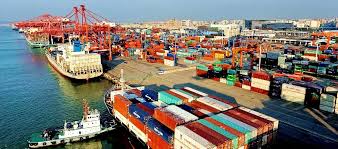
For decades, Nigeria’s ports stood as a symbol of inefficiency, opacity, and entrenched corruption. They were widely regarded as one of the most difficult gateways in West Africa in which to conduct legitimate trade without encountering layers of unofficial demands, duplicated processes, and administrative bottlenecks. Before the reforms that culminated in port concessioning and the current wave of digital transformation, the system was largely paper-driven, manually supervised, and vulnerable to human interference at virtually every stage of cargo clearance and documentation.
At the time, importers and clearing agents often narrated harrowing experiences of multiple agency checks, arbitrary charges, and delays that had little to do with regulatory compliance but everything to do with rent-seeking opportunities. The absence of a unified digital system meant that documents could be “lost,” altered, or deliberately delayed, creating fertile ground for corruption to thrive. The port environment, in many respects, functioned as a maze where efficiency was negotiable and transparency was optional.
The introduction of port concessioning marked a turning point. While not without its challenges, it began the process of redefining operational responsibility, improving infrastructure investment, and reducing direct state monopoly over terminal operations. However, it is the more recent drive towards automation and technology-driven governance that has begun to significantly alter the corruption landscape.
We recall the 2025 report from Maritime Anti-Corruption Network (MACN) on corruption in the nation’s seaports.
The Network, in that report, revealed that Nigeria has transformed from being a global hotspot for maritime corruption, to an international success story, with reported cases of large, unregistered cash demands by officials falling dramatically from 266 in 2019 to just 30 in 2024.
According to MACN, the positive development has prompted countries such as Egypt, India, Ghana, and Senegal to study Nigeria’s anti-corruption model.
The report went further that the introduction of standard operating procedures, the Nigeria Port Process Manual, and enforcement by the Port Security Task Team (PSTT) in collaboration with government agencies such as the NPA, DSS and ICPC, led to a steady decline in cases such as 128 in 2020, 84 in 2021, 48 in 2022, 45 in 2023, and 30 last year.
The report is an affirmation that Nigerian ports are on the right part to becoming a haven for best practices.
However, it is the more recent drive towards automation and technology-driven governance that has begun to significantly alter the corruption landscape.
A key player in this transformation has been the Nigeria Customs Service, whose deployment of digital platforms such as the B’Odogwu system has introduced a more structured, data-driven approach to cargo processing, valuation, and documentation. By reducing human discretion in critical decision-making points, the system has limited opportunities for arbitrary interventions that previously fuelled corruption.
Beyond the Nigeria Customs Service, other key agencies operating at the ports—including the Nigerian Ports Authority (NPA), the Nigerian Maritime Administration and Safety Agency (NIMASA), and the Nigerian Shippers’ Council (NSC)—have also embraced varying levels of digital reform. From electronic documentation to automated billing systems and improved monitoring frameworks, these agencies are gradually aligning with global best practices that prioritise transparency and efficiency over manual discretion.
Of particular significance is the ongoing push towards a fully paperless port system. The paper-based regime, long identified as one of the weakest links in the port value chain, created opportunities for document manipulation and prolonged clearance timelines. A paperless system, by contrast, reduces physical contact points, enhances traceability, and makes it easier to audit transactions in real time.
Closely tied to this reform agenda is the proposed implementation of the National Single Window system. This platform, when fully-operational, is expected to integrate all regulatory and trade-related agencies into a unified digital interface. In practical terms, it means that importers and exporters will be able to submit documentation once, with all relevant agencies accessing the same data simultaneously. This reduces duplication, eliminates bureaucratic overlaps, and significantly limits the room for corrupt practices that thrive on fragmentation and lack of coordination.
However, it would be overly optimistic and indeed misleading to suggest that corruption has been completely eliminated at Nigerian ports. What is evident is a gradual reduction in its scale and visibility. Where previously corruption was systemic and overt, it is now more constrained, more monitored, and increasingly pushed to the margins by technology.
Old habits, however, do not disappear overnight. There remain pockets of resistance, subtle attempts to exploit loopholes in digital systems, and occasional human interference where oversight is weak. The success of these reforms therefore depends, not only on technology but also on sustained institutional discipline, enforcement, and political will.
In conclusion, Nigeria’s ports are undergoing a quiet but significant transformation. The combination of concessioning, digitalisation, and integrated trade systems is steadily dismantling the old architecture of corruption. Yet, the journey is far from complete. The challenge now is not merely to introduce technology, but to ensure that it is robust enough to resist manipulation, and that institutions are strong enough to enforce compliance.
Nigeria is not at Uhuru yet in its quest for corruption-free ports—but for the first time in years, the direction of travel is unmistakably forward.