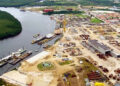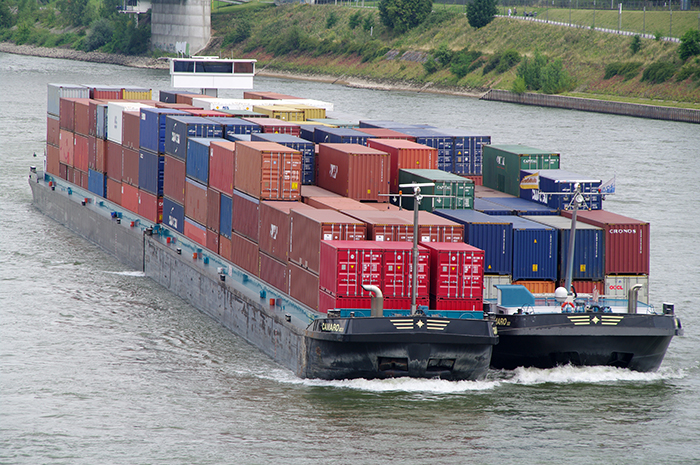
Recently, a barge sank in the shallow brown waters of Mile 2, Lagos, while attempting to berth at the Clarion Shipping bonded terminal, resulting in the loss of over 80 per cent of its cargo. The barge, which was said to have been laden with industrial chemicals, was submerged in the lagoon on Friday July 25, 2025 following a failed maneuver.
According to Public Relations Officer of Barge Operators Association of Nigeria (BOAN), Mr. Daniel Eze, while the crew members were safe, most of the cargo on board the barge was lost.
Notably, barge operations in Nigeria involve using flat-bottomed boats (barges) to transport cargo, particularly heavy, large, or bulk goods, along waterways like rivers and creeks. This method is crucial in Nigeria due to the extensive network of waterways and limited road infrastructure, especially in areas near ports and oil & gas facilities.
Barging became an integral part of port operations in Lagos, especially cargo evacuation at the peak of port congestion a few years ago. Since then, there have been significant investments in the acquisition of such crafts.
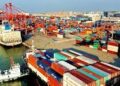
At the peak of the congestion, there was acute failure to evacuate cleared cargos from the ports within a reasonable time. Similarly, the gridlock caused by the congestion became very challenging to the point that shipping lines at one time were compelled to divert Nigeria-bound cargo to neighboring countries. This is because of lack of space to stack containers.
Cargo evacuating trucks often had to wait for long periods before gaining access to the ports to load their cargo and exit the ports. The impact of the congestion was financially and economically crippling to the nation, the cost of trucking cargo from the ports to their destination became unbearably high and cargo interests were often forced into paying huge sums to non-state actors.
To reverse the trend, stakeholders recommended the use of barges for evacuation of cargo from the ports. Consequently, the Nigerian Ports Authority (NPA) signed a Memorandum of Understanding with AP Moller Terminal in Apapa port to adopt barges as a mode of sustainable transportation for the country. Since then, the NPA has issued licenses for barge operations, and the boom in barging began.
Yes, barging has immense advantages. They can actually reduce congestion, alleviate road congestion around ports by providing an alternative method for cargo evacuation. They are also highly cost-effectiveness, because in certain situations, barge transport can be more economical than road transport, especially for long distances or when navigating difficult terrain. Barges can also access areas not easily reached by road, such as coastal communities and offshore oil & gas facilities. Barging can also reduce cargo dwell time and vessel turnaround time at ports.
While it is true that all of the above may have been achieved in Nigeria, the process of regulation has been defective, leading to accidents and compromise.
Since they were introduced, all appeared good until sometime in 2021 when the NPA steeped-in to issue fresh operational licenses to owners of barges that are operating in Lagos.
We recall that the NPA later clamped down on several barges that were not sea-worthy while also sealing illegal jetties following increasing reports of abuses of process in their operations.
The decision followed the establishment of an inter-agency committee comprising representatives of the NPA, Nigerian Maritime Administration Agency (NIMASA), Nigerian Inland Waterways Authority (NIWA), and the Lagos State Inland Waterways Authority (LASWA).
The emerging issues came to the fore when the committee began the clearing of the waterways of lay-by barges and tugboats along the Ibeji/Ilashe axis and as far as the Kirikiri Lighter Terminal and the Mile Two Bridge, as well as the removal of wrongly anchored barges that are obstructing visibility along the Kirikiri channel.
The impact of the excesses came to the fore when it was confirmed by the NPA that most of the barges operate without paying statutory fees to the government. Worst still is that many barges don’t have communication system. By the admittance of NPA, many of the barges were also not branded in their owners’ identity, which makes it difficult to apprehend them when necessary. “We have had situations where ships anchored in the middle of the channel because of a barge in front of it”, so lamented the NPA.
Perhaps equally alarming is the damning verdict from an organization that works directly with the barge operators; Messrs. Truck Transit Park Ltd, operators of the electronic call up system in Apapa. The company raised alarm that barge owners in the Nigerian maritime industry operate below international standards, hence the refusal of shipping lines to allow them to berth by their ships to enhance container evacuation.
In defence, one of the barge operators; Prince Adeyinka Bakare had argued that international standard is not achieved in a day. That was in 2021!
If all that we have pointed out above, happened in 2021, and if since then the regulators have been up and doing, then the recent accident ought not to have happened.
Barge operations are regulated by several bodies, including the Nigerian Ports Authority (NPA), National Inland Waterways Authority (NIWA), and Nigerian Maritime Administration and Safety Agency (NIMASA). In Lagos State, the Lagos Waterways Authority (LASWA) also plays a role. So why do we still have these accidents?
The three agencies mentioned above (with the exception of LASWA) have overlapping functions, superintendent barging and are all under the control of one Ministry of Marine and Blue Economy. Yet, all we hear are excuses and sometime, deafening silence after barge accidents occur. Even in the recent one, there has been no statement or reaction from either NPA, NIMASA or NIWA.
The recurring barge accidents underscore the urgent need for comprehensive and sustained action to improve waterway safety, including stricter enforcement of regulations, investment in infrastructure, and enhanced rescue capabilities.
In other climes, the heads of the three agencies vested with regulatory responsibilities over barging namely; NPA, NIWA and NIMASA would have resigned, especially after the July 25, 2025 accident in Lagos, in which cargoes worth hundreds of Millions of Naira were lost. This is apart from the fact that the consignments are chemical products with its potential hazard.
Despite the benefits, the greatest challenge to barge operations in Nigeria has been the high operating costs, which some operators have voiced concerns about. There is also inadequate berthing facilities and support infrastructure to optimize barge operations. The greatest of them all appears to lack of adequate safety and security of cargo and personnel during barge operations.
The above challenges are the reasons there entrenched superintending agencies of government. We maintain that the lapses that exist is barging and which have led to incessant mishaps is solely in the hands on NPA, NIWA and NIMASA.