By Ajay Menon
Faulty Equipment
On the open ocean, visibility can sometimes be low owing to mist or fog. In addition, waves can make it difficult to detect floating objects that may pose a danger to the vessel.
This is where modern equipment comes in, to guide the officers in the bridge in ensuring stability. However, incorrectly calibrated equipment is extremely dangerous, since the crew may use them to make key decisions.
In general, all equipment is to be routinely monitored and checked for accuracy at regular intervals. Although the preferred time interval between checks should be every thousand kilometres of the open sea or ocean sailing, cuts on spending can force companies to skimp on essential services. This can result in dangerous consequences that may cause the vessel to capsize and sink.
Improper Maintenance
Ships stay at sea for extended periods, often returning to ports once or twice in a month or so for loading supplies and refuelling. Corrosion, metal fatigue and prolonged exposure to harsh conditions can warp and damage the vessel. Without regular maintenance, there is a high possibility of an accident occurring.
For instance, the marine diesel engines that power modern vessels have extremely high ranges of operations RPMs. Under these conditions, the propeller shafts, rudders and propellers themselves can get damaged. In addition to vibrational loads, high-speed propellers are susceptible to cavitation, that occurs due to the boiling of water near the surface of the propeller. Thus, regular check-ups are required, else there is a chance of the propulsion systems getting damaged.
In general, small components are often the first to wear away, and thus comprehensive overall maintenance must be carried out diligently.
On average, ships with a lifespan of ten years have their full overhauls once in two to three years. If not carried out properly, it is possible that systems fail, leading to the vessel capsizing and eventually sinking.
Wartime Casualties
During the world wars of the early and mid-twentieth century, hundreds of ships and vessels were sunk. Torpedoes, underwater mines, depth charges, artillery fire etc. were responsible for the majority of these cases.
In addition to the actual wartime casualties, there continue to be accidents that occur because of undiscovered mines or floating charges that are still armed and highly dangerous.
In most cases of wartime sinking, torpedoes or explosives were used to rupture the hull, allowing water to flood the holds and drag the vessel down. To combat this, anti-torpedo protection such as toughened bilge keels were added to warships and commercial vessels plying dangerous routes. These softened the impact of the torpedo and sometimes deflected the main shockwave away from the ship.
Dock Mishaps
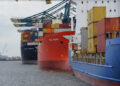
Docks and ports are cramped spaces that seek to maximize efficiency in the smallest of locations. Thus, ships need to be extraordinarily precise when manoeuvring, even with the aid of tugboats. However, considering the massive size of modern ships, there a multitude of port accidents that occur and sink ships.
For instance, if the port has not been correctly constructed, there is a high chance that a huge amount of water is compressed when a ship attempts to berth. The resulting hydrostatic pressure can rupture the hull and capsize the vessel. In addition, collisions with tugs, support vessels and the port wharf itself may damage the steel plating that makes the hull, which could sink the ship.
It is up to the port authorities to ensure that safety protocols are in place to control ships and guide them in manoeuvring around tight turns.
There are many cases of improper loading, leading to ship capsizing and sinking right on the jetty.
Piracy
Piracy at sea continues to be a menace, even though the ages of bearded pirates and ships are long gone. Modern-day pirates use sophisticated technology that rivals the navies of some countries.
Armed with missile launchers, torpedoes and interception devices, they are able to effectively board, loot and eventually sink the vessels that they attack. Generally, piracy results in the ship and the crew being held for ransom. However, sometimes the ships are too massive for the pirates to manage, and hence the bottoms are scuttled once the attack is complete.
To combat piracy-related activities, several navies patrol the waters around dangerous zones such as the coastline and the Horn of Africa. These locations are a hotbed of criminal activity, and some countries have taken to setting bases up at strategic positions to protect ships passing through these waters.
Safety Measures to Prevent Sinking
Although ships are at the mercy of the elements, there are still steps that can be taken to prevent untoward incidents from happening. Regular maintenance and checks of individual components that make up the ship are essential to ensure that the vessel runs smoothly and has a long life.
Although cost-cutting is often the reason behind skipping checks, they actually reduce the life of the vessel, making it costly to the parent company. In addition, properly training the crew and having adequate personnel on board can reduce human error and negligence.
By making the crew aware of the safety protocol to be followed, the damage can be reduced, and lives can be saved. Along with this, properly designing the vessel can eliminate problems that are not apparent initially.
For instance, faulty propulsion valves have serious consequences, but cannot be identified during the sea trials. Also, properly plotting the route and following basic safety guidelines laid down by the SOLAS is essential to curbing accidents that may lead to a ship sinking.
*Concluded