By Joshua Yousouph
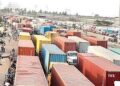
Stakeholders in Nigeria’s maritime sector have raised concerns over the inadequate and non-functional scanning infrastructure at Lagos ports, warning that the situation is undermining the effective implementation of the National Single Window (NSW) initiative.
They argue that the limited availability of functional scanners is slowing cargo clearance processes, creating delays, and weakening the digital trade facilitation system the NSW is designed to achieve.
Findings by Shipping Position Daily revealed that only about three scanners are currently operational across the Apapa and Tin Can Island Port corridor—two located within the Apapa axis and one at the Tin Can Island Container Terminal (TICT)—while several other installed scanners are reportedly non-functional, further worsening cargo processing delays.
Stakeholders maintain that unless scanner capacity is expanded and fully functional across Nigerian ports, the National Single Window project may struggle to deliver its promise of seamless, technology-driven cargo clearance.
Speaking on the issue, a chieftain of the Association of Nigeria Licensed Customs Agents (ANLCA) Sir John Oforbike maintained that all containers are expected to pass through scanning as part of standard port procedure before any physical examination is conducted.
However, he acknowledged that the system is not fully optimized due to limited scanner availability and operational constraints adding that when containers are scanned only those flagged from digital analysis are expected to proceed to physical inspection.
Oforbike also attributed broader inefficiencies within the port system to structural challenges, insisting that persistent gaps continue to hinder reforms such as the National Single Window initiative.
“Every container that leaves the ship entering the terminal has to be scanned. That is how it is supposed to be by law. I don’t even know how many scanners they have, but the efficiency is not there,” Oforbike said
Also speaking, Tin Can Chapter Public Relations Officer of the Association of Registered Freight Forwarders of Nigeria (APFFLON), Clinton Okoro said the effectiveness of the Single Window system is heavily dependent on functional scanners across port terminals, noting that current capacity falls far below operational needs.
He disclosed that only a few scanners are currently working at the Lagos port axis, including those at the TICT terminal and a limited facility within Apapa. According to him, one of the scanners reportedly located at the First Gate area of Tin Can Port is not functional. “That one is not working. It is not functional,” he said, stressing that the situation limits full implementation of scanning protocols introduced under the Standard Operating Procedure (SOP).
Okoro further questioned the sustainability of the system, noting that stakeholders had been informed of planned improvements but had yet to see meaningful deployment of new equipment.
He also raised concerns over the responsibility for providing scanning equipment, arguing that it should rest with government rather than terminal operators.
“It is not the duty of terminal operators to provide that equipment; it should be a government thing. The more terminal operators are bringing in such equipment, the more costly it becomes for cargo clearance. They said they are going to let government know about it, but as I’m talking to you now, I don’t think they have arrived. We are still waiting to see the scanners come back into operation.” Okoro said.
On his part, Chief of Staff of the National Association of Government Approved Freight Forwarders (NAGAFF) 100% Compliance Team, Mr Beth Okeke, lamented the impact of the scanner deficit on cargo processing, saying the situation has resulted in prolonged delays and operational inefficiencies.
Okeke explained that delays in scanning often force cargo rerouting for physical examination, a process she described as costly and time-consuming. “Of course, they are not enough considering the volume of boxes they have to work on. We wait for weeks sometimes just to get our containers scanned.
“It leads to rerouting after days of delay, and that creates additional handling charges. You are never even sure of the dates given for examination, and that uncertainty makes planning difficult.” he noted.
When contacted, the National Public Relations Officer of the Nigeria Customs Service (NCS), DC Abdullahi Aliyu Maiwada, exclusively told Shipping Position Daily that the fixed scanners is part of the first six scanners that arrived in 2024 under the NCS Modernisation project and were deployed across strategic Customs formations in 2025 to enhance cargo examination efficiency, improve trade facilitation, and reduce reliance on physical inspection.
He added that aside from the scanner at the RORO terminal in TCIP, site preparation is ongoing for the installation of another mobile scanner at the Ishaya site within the same port complex.
Maiwada further explained that in line with Section 59(3) of the Nigeria Customs Service Act, 2023, which states that “Non-Intrusive Inspection Equipment shall be provided by the terminal operator or warehouse operator to facilitate the clearance of goods,” terminal operators are actively involved in supporting scanner deployment.
He noted that Lekki Deep Sea Port has already handed over two fixed scanners to the Nigeria Customs Service, while APM Terminals is in the process of procuring two additional fixed scanners alongside the one already installed by Customs.
DC Maiwada also disclosed that pre-importation processes have commenced for 22 additional scanners expected to be delivered within the year. According to him, scanners have already been deployed at the MMAC, while deployment is ongoing at the FCT Command (Abuja Airport) and Kano Airport as part of nationwide modernisation efforts.