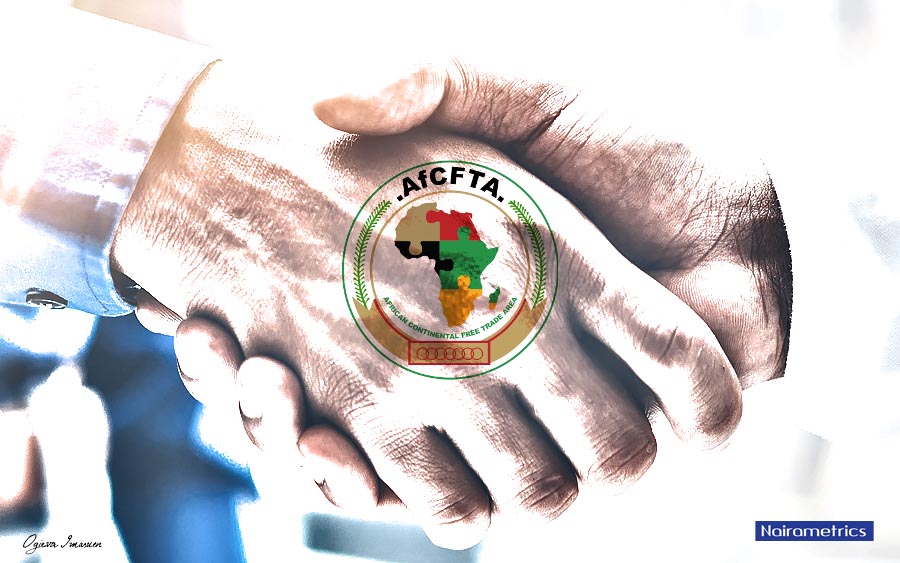
According to a research by the African Development Bank in 2014, only 16% of international trade by African countries takes place between African countries. Apparently, this discovery gave birth to the African Continental Free Trade Area (AfCFTA).
According to the General Agreement on Tariffs and Trade (GATT), a free-trade area is an agreement among a group of two or more Customs territories in which the duties and other restrictive regulations of commerce are eliminated on key provisions of the treaty.
From all empirical data, the AfCFTA is the world’s largest free-trade area by member count. Uniting 54 of the 55 African Union (AU) nations, it aims to create a single market of 1.3 billion people with a combined GDP of about $3.4 trillion.
Nigeria officially signed the African Continental Free Trade Area (AfCFTA) in July 2019 and became the 34th state party to ratify the agreement in December 2020. Aiming to eliminate intra-African tariffs and non-tariff barriers, AfCFTA seeks to create a single continental market of over 1.2 billion people.
The African Continental Free Trade Area (AfCFTA) is expected to cover all 55 countries of over 1.2 billion people and a gross domestic product (GDP) in excess of USD 2.5 trillion. The scope of the Agreement covers trade in goods, services, investment, intellectual property rights and competition policy.
The African Union says that the African Continental Free Trade Area will create the world’s largest free trade area. It promises to change the previous narrative of Africa’s disdain for intra-nations trading.
The AU therefore estimates that implementing AfCFTA will lead to around a 60% boost in intra-African trade by 2022. We can not verify whether this has been achieved, but we can confirm that Nigeria is almost absent on the table.
As Africa’s largest economy and most populous nation, Nigeria holds immense potential to drive and benefit from intra-African trade. But, this has not been the case, even though Nigerian businesses have preferential access to a vast, $2.5 trillion continental market, allowing them to diversify exports beyond crude oil and expand into new sectors.
Yes, AfCFTA promotes regional value chains that could help Nigerian manufacturers to source raw materials locally and regionally while scaling their production.
It is on record, that Nigerian exports are making headway in East Africa; for instance, the country’s first commercially significant AfCFTA exports arrived in Kenya to bolster bilateral trade.
About one year after the agreement kicked off, eight countries representing the five regions of the continent, namely: Cameroon, Egypt, Ghana, Kenya, Mauritius, Rwanda, Tanzania and Tunisia have participated in the AfCFTA’s Guided Trade Initiative (GTI), which seeks to facilitate trade among interested AfCFTA state parties that have met the minimum
The AfCFTA framework provides small and medium-sized enterprises in manufacturing, technology, and agriculture with lowered tariffs, enabling them to trade across borders.
But, it is sad to discover that Nigeria significantly underperforming in the issuance of Certificates of Origin, compared to leading economies on the continent. The data which came from official sources revealed that about 8,500 Certificates have so far been issued across Africa under the AfCFTA framework.
This certificate is a key instrument that certifies the local content of exported goods and qualifies them for preferential tariff access within the continent. In fact, it is the bedrock for qualification under the AfCFTA
Out of the 8,500 Certificates of Origin, South Africa issued over 4,000 Certificates of Origin, accounting for nearly half of the continental total. Egypt, Kenya, and Ghana also maintain significantly higher utilisation rates, placing Nigeria far behind despite its position as Africa’s largest economy.
As bad as this is, this disparity has raised concerns about Nigeria’s continued relevance in the scheme of things.
Nigeria’s current ranking confirms that there is a problem with Nigeria’s AfCFTA implementation structure, which undoubtedly, has failed to effectively drive adoption, streamline processes, and build awareness among exporters.
The implementation procedure remains constrained by bureaucratic bottlenecks, limited automation, and weak inter-agency coordination, all of which continue to discourage exporters from accessing the trade benefits embedded in the agreement.
Surprisingly and without any verifiable data, Nigeria’s minister of Industry, Trade and Investment, Dr Jumoke Oduwole claimed that Nigeria has emerged a pacesetter in the implementation of the African Continental Free Trade Area agreement. Again, she boasted that the nation has been recording a series of groundbreaking achievements in 2025 that position the country as a leader in continental trade cooperation.
This is the type of self-delusion that has brought Nigeria to the lowest rung on the AfCFTA implementation table.
Yes, there is a National Action Committee on implementation of the agreement in Nigeria. The committee has however been very ineffective in galvanizing Nigeria’s participation in AfCFTA. Otherwise, how can anyone justify the current rating?
Nigeria has a plethora of challenges in the way of implementation of the AfCFTA, no doubt. Top among these are poor transportation networks (roads, rail, and maritime corridors) and the unreliable power supply, all of which continue to inflate logistics and production costs. When this happens our goods can not compete, even under the large umbrella of AfCFTA.
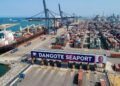
For decades, Nigeria has had to contend with port gridlock and regulatory bottlenecks. Furthermore, because Nigeria largely relies on foreign-owned vessels for cargo movement, regional connectivity remains weak and expensive.
There is no doubt that lengthy customs procedures, inconsistent border checks, and overlapping bureaucratic requirements continue to cause severe delays.
In addition, Nigeria continues to grapple with port gridlock and regulatory bottlenecks. Furthermore, because Nigeria largely relies on foreign-owned vessels for cargo movement, regional connectivity remains weak and expensive.
It is also disappointing that, a significant percentage of Nigerian businesses (particularly small and medium enterprises) lack basic awareness of the AfCFTA agreement, meaning they are unable to utilize its tariff arrangements and trade preferences.