By Oluyinka Onigbinde
Maritime stakeholders have expressed mixed reactions to the Senate’s decision to approve an N11 trillion revenue target for the Nigeria Customs Service (NCS), warning that an excessive focus on revenue generation could undermine the Service’s core mandate of facilitating legitimate trade.
The Senate had, during the consideration of the 2026 budget estimates of the Nigeria Customs Service, approved an N11 trillion revenue target for the agency, while urging the Service to intensify efforts at blocking revenue leakages and improving collections.
However, industry operators say while revenue generation remains important, setting ambitious targets should not come at the expense of trade facilitation, cargo clearance efficiency and the ease of doing business at the nation’s seaports.
The President of the Africa Association of Professional Freight Forwarders and Logistics of Nigeria (APFFLON), Otunba Frank Ogunojemite, cautioned that the target could inadvertently push Customs officers towards aggressive revenue collection instead of facilitating trade.
According to him, Customs is not established solely as a revenue-generating agency. He argued that its responsibilities also include securing the nation’s borders, ensuring compliance with import and export regulations and facilitating legitimate trade.
“The Africa Association of Professional Freight Forwarders and Logistics of Nigeria is concerned that setting an N11 trillion revenue target for the Nigeria Customs Service may unintentionally shift Customs’ focus from trade facilitation to aggressive revenue generation,” Ogunojemite said.
He warned that undue emphasis on revenue generation could result in increased cargo examinations, valuation disputes, delays in cargo clearance and additional costs for importers and exporters.
“Excessive emphasis on revenue targets could result in increased cargo examinations, valuation disputes, delays in cargo clearance and higher costs for importers, exporters and ultimately Nigerian consumers,” he stated.
While acknowledging the constitutional responsibility of the National Assembly to approve government revenue projections, Ogunojemite urged lawmakers to ensure such targets remain realistic.
According to him, unrealistic revenue expectations could encourage practices that increase the cost of doing business at Nigerian ports and ultimately weaken Nigeria’s trade competitiveness.
He therefore called on both the National Assembly and the Nigeria Customs Service to maintain a balance between revenue generation and efficient trade facilitation.
“A thriving economy, increased trade volumes and improved port efficiency will naturally generate sustainable revenue without placing unnecessary burdens on port users and cargo owners,” he added.
Similarly, a former National Secretary of the Association of Nigerian Licensed Customs Agents (ANLCA), Otunba Babatunde Mukaila, said he was not a supporter of assigning revenue targets to Customs administrations.
Mukaila argued that Nigeria’s long-term economic prosperity should be driven by increased local production rather than dependence on import duties.
“I’m not a fan of targets,” he said. “Every government has the prerogative to determine what it wants, but Nigeria is still largely an import-oriented country. We should be producing more instead of depending on revenue generated from imports.”
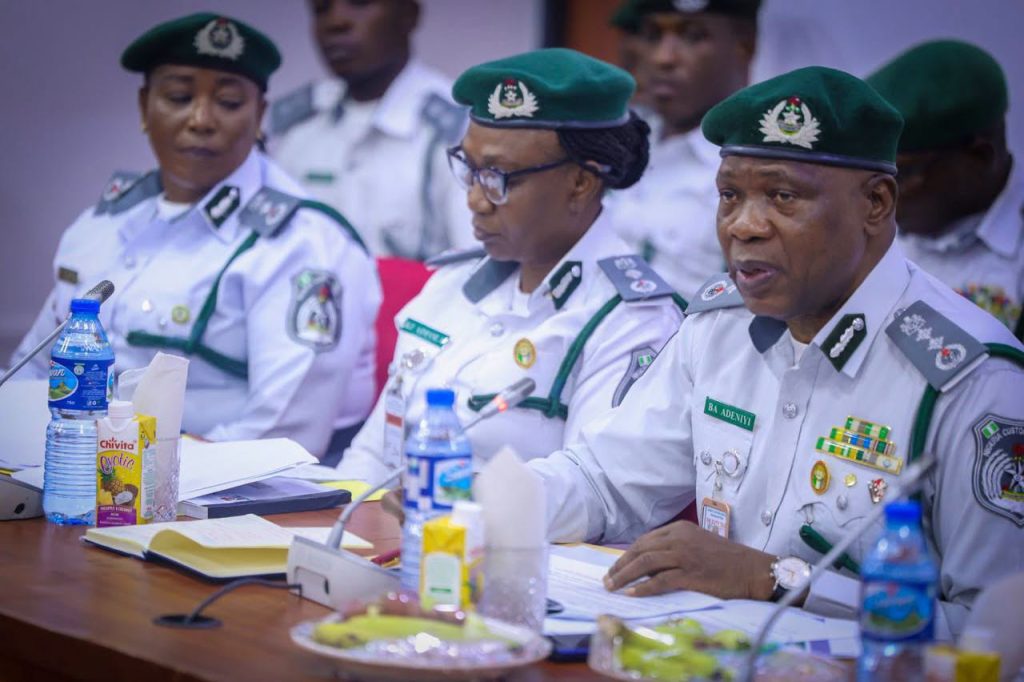
Although he expressed confidence in the capacity of the Comptroller-General of Customs, Bashir Adewale Adeniyi, to improve revenue performance, Mukaila maintained that revenue targets should not become the primary yardstick for measuring Customs’ success.
He urged lawmakers to concentrate more on strengthening the operational capacity of the Service rather than setting ambitious collection figures.
“What they should do more is to build the capacity of the Nigeria Customs Service to facilitate legitimate trade and strengthen enforcement against those who attempt to circumvent the law. That alone can boost government revenue more sustainably than constantly setting revenue targets,” he said.
Mukaila further warned that an overemphasis on revenue collection could gradually erode Customs’ trade facilitation responsibilities.
“The Customs may eventually forget about trade facilitation if revenue becomes the overriding objective,” he cautioned.
The stakeholders’ concerns come amid ongoing efforts by the Nigeria Customs Service to modernise its operations, deploy technology-driven clearance processes and improve Nigeria’s ranking on the ease of doing business index.