Nigeria LNG Limited (NLNG) says it has generated $149.6 billion (about ₦204.2 trillion) in revenue since it commenced operations in 1999, while remitting $10.8 billion (approximately ₦14.74 trillion) in taxes to the Federal Government since becoming tax-compliant in 2009 and paying $47.2 billion in dividends to its shareholders.
The company also disclosed that it has commenced preliminary work on the proposed Trains 8, 9 and 10, as it positions itself for another phase of expansion beyond the ongoing Train 7 project.
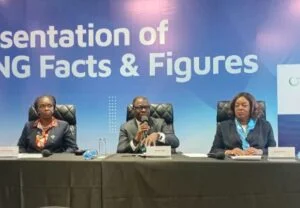
Managing Director and Chief Executive Officer of NLNG, Adeleye Falade, disclosed this during the unveiling of the company’s *Facts and Figures 2026* publication in Lagos.
Falade described NLNG as one of Nigeria’s biggest foreign exchange earners and corporate taxpayers, noting that the company’s operations have continued to deliver significant value to the nation’s economy over the past 27 years.
According to him, the company has grown its asset base to over $22.9 billion, currently operates six liquefaction trains and has successfully delivered more than 6,285 liquefied natural gas (LNG) cargoes to customers across the world.
He added that NLNG contributes about six per cent of global LNG supply, strengthening Nigeria’s position in the international gas market.
Speaking on ongoing expansion efforts, the NLNG boss revealed that the Train 7 project has attained 93 per cent completion and is expected to increase the company’s production capacity by 35 per cent, from 22 million tonnes per annum to 30 million tonnes annually.
He explained that the additional train would also raise liquefied petroleum gas (LPG) production by about 50 per cent, providing increased volumes for both domestic consumption and export.
Falade disclosed that although the proposed Trains 8, 9 and 10 are still at the exploratory stage, the company has already commenced preliminary discussions and technical assessments as part of its long-term growth strategy.
He stressed that Nigeria’s estimated 290 trillion cubic feet of proven gas reserves present enormous economic opportunities and urged accelerated gas development to maximise global demand while favourable market conditions persist.
On domestic gas supply, Falade said NLNG supplied a record 500,000 metric tonnes of LPG, commonly known as cooking gas, to the Nigerian market in 2025, accounting for nearly one-third of national demand.
He expressed concern over the continued reliance on firewood and other polluting cooking fuels, noting that more than 470,000 Nigerians reportedly die annually from illnesses linked to household air pollution.
According to him, expanding access to LPG remains critical to improving public health, protecting the environment and reducing dependence on traditional biomass fuels.
Falade further stated that increased utilisation of natural gas has contributed significantly to reducing Nigeria’s gas flaring rate from about 65 per cent to below 20 per cent.
While acknowledging that gas supply constraints affected production in 2025, he said the situation has improved considerably this year, positioning the company for stronger operational performance.