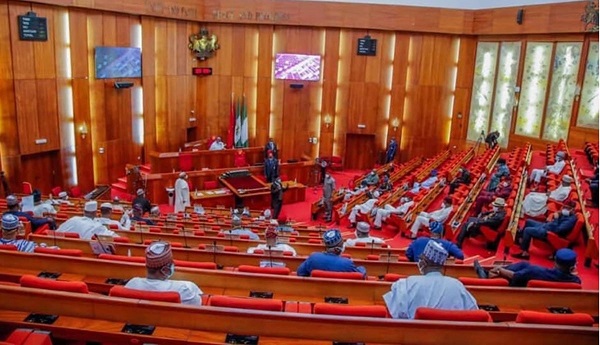
The Senate Public Accounts Committee has given the external auditors of the Nigerian National Petroleum Company Limited (NNPC Ltd.) one week to provide a detailed breakdown of over ₦210 trillion contained in the company’s audited financial statements, insisting that the auditors must account for figures they certified rather than refer the committee back to the national oil company.
The directive was issued on Wednesday during the committee’s continued investigation into NNPC Ltd.’s audited financial statements, where lawmakers are examining about ₦107 trillion recorded as receivables and another ₦103 trillion listed as payables.
The committee noted that despite previous engagements with NNPC Ltd., neither the company nor its external auditors had satisfactorily explained or reconciled the transactions underlying the figures.
Appearing before the committee, representatives of the external audit firm said the schedules supporting the disputed figures formed part of their audit working papers and requested about two weeks to retrieve the relevant documents.
The request was rejected by members of the committee, who argued that auditors who certified the financial statements should readily have access to the documents supporting the figures.
Chairman of the committee, Senator Ibrahim Dankwambo, questioned why the auditors could not immediately produce the schedules backing the figures contained in the audited accounts.
According to him, every figure presented in audited financial statements should have supporting schedules showing how it was derived.
The auditors, however, explained that NNPC Ltd. remained their client and that explanations relating to the figures should ordinarily come from the company. They added that during an earlier appearance before the committee, it had been agreed that NNPC officials would provide explanations on the disputed figures.
Lawmakers rejected the explanation, citing Sections 88 and 89 of the 1999 Constitution, which empower the National Assembly to summon individuals and demand documents relevant to its investigations.
Senator Abdul Ningi told the auditors that they appeared before the committee in their professional capacity and were obligated to respond to lawful requests without seeking approval from their client.
Senator Adams Oshiomhole also maintained that the figures under scrutiny originated from the audit exercise carried out by the firm, stressing that the auditors were responsible for defending the opinions expressed in their audit report.
Other lawmakers questioned the credibility of the audit process, arguing that failure to produce supporting schedules raised concerns about whether the audit had been properly conducted.
The committee further expressed dissatisfaction with the inability of both NNPC Ltd. and its auditors to reconcile the receivables and payables recorded in the financial statements.
Dankwambo said officials of the company had consistently stated that the figures related largely to joint venture cash calls and payments but had not identified the specific transactions or counterparties involved.
He noted that if the receivables and payables related to the same transactions, they should be reconciled accordingly.
According to the committee chairman, the Senate was not alleging that the funds were missing but was seeking explanations for the entries, adding that unreconciled figures of such magnitude in audited financial statements were a source of concern.
Lawmakers also dismissed claims that confidentiality obligations prevented the auditors from disclosing the requested information.
Oshiomhole argued that NNPC Ltd., being wholly owned by the Federal Government on behalf of Nigerians, could not rely on commercial confidentiality to withhold information from the National Assembly in the course of its constitutional oversight functions.
Senator Babangida Useni also maintained that professional ethics and confidentiality agreements could not override the investigative powers of the National Assembly, noting that the committee was empowered to summon persons, demand documents and examine the accounts of government-owned corporations.