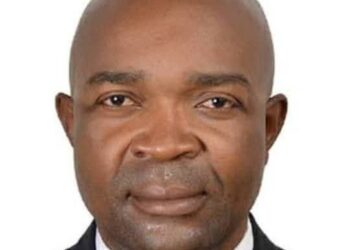
Prof. Mojisola Adeyeye, the Director-General, National Agency for Food and Drug Administration and Control (NAFDAC), says the ban on alcohol in small pack sizes remains the best solution to tackle the menace of underage drinking.
Adeyeye said this at a news conference in Abuja on Tuesday to mark the commencement of enforcement of the ban on sachet alcoholic drinks nationwide.
The enforcement would be carried out by the NAFDAC, National Orientation Agency (NOA) and the Federal Competition and Consumer Protection Commission (FCCPC).
The NAFDAC boss said restricting access to sachets and small volume bottles, which could be easily concealed, would limit children’s access to alcohol.
According to her, alcohol is one of the most widely used substances of abuse among youths.
Adeyeye said several studies showed a rapid increase in alcohol availability, production, importation and consumption across age groups in recent decades.
She added that the availability and easy access to alcohol had been identified as a contributory factor to the increasing alcohol consumption among minors.
Adeyeye recalled that in 2018, the Association of Food and Beverage and Tobacco Employers (AFBTE) and the Distillers and Blenders Association of Nigeria (DBAN), which are part of NAFDAC council, reported NAFDAC management to the Ministry of Health and Social Welfare.
“In 2018, AFBTE and DBAN took NAFDAC to the Ministry of Health and Social Welfare that we were trying to reduce the concentration of alcohol in sachets. By that time, it was like 50 per cent in the sachet.
“DBAN and AFBTE said that their businesses would be destroyed. That was 2018. The then Prof. Pate, the Minister of Health, gave these trade groups five years to reorganise their business.
“On Feb.1, 2024, five years after, we started enforcement because our mandate is to regulate and control the manufacture, importation, exportation, distribution, advertisement, sale and use. Of seven regulated products, alcohol is part of food.
“They resisted us and they took us to the Committee on NAFDAC at the National Assembly, who told us to suspend what we were doing in 2024. It went back and forth throughout 2024. We couldn’t do what we were supposed to do.
“In December 2024, the then Minister, Prof. Pate, said we should give an extra one year and we gave it,” she said.
The NAFDAC director- general said after the agency started enforcement following the order by the Senate, the trade groups also sought for another extension.
“However, in 2018, when this moratorium was given, we were also told to do a survey to even see the impact on our children. We did our survey in NAFDAC.
“The results were not pleasing to the disciplinary group. They said they want an independent survey. So, we had an independent survey. It was conducted in 2021 during the pandemic,” she said.
Adeyeye said the overall objective of the research was to undertake a national survey of consumers and retailers of alcohol, beverages and wines to determine the extent of alcohol abuse among the underage.
She said about 2,000 respondents were sampled across the six geopolitical zones, adding that the result was damning to the country.
Adeyeye said findings showed that 54.3 per cent of minors and underage obtained alcohol by themselves from various sources, while 49.9 per cent patronised retailers selling sachets and pet bottles.
The NAFDAC boss, who said 50 per cent of children drink alcohol, said findings further suggest that minors and underage also access alcoholic drinks from friends and relatives, as well as from social guardians.
“Of those who procure drinks for themselves, 47.2 per cent of minors and 48.8 per cent of underage procure drinks in sachets because it is easy to conceal.
“Whether you are a good parent or a bad parent, it doesn’t really matter. These sachets are easy to conceal and that is what NAFDAC has banned.
‘The survey data revealed that 63.2 per cent of minors and 54 per cent of underage drink alcohol occasionally, while 44.3 per cent and 38.3 per cent of adults drink alcohol occasionally and daily respectively.
“So, they even drink it more than adults because it is easy to conceal. Additionally, 9.3 per cent of minors and 25.2 per cent of underage children consume alcoholic beverages.
“And 11.3 per cent of minors and 9.4 per cent of underage consume alcohol at least once a week. As young as nine years old in this survey consume alcohol,” she said.
According to her, most minors underage buy alcohol for themselves. It’s about N50 to buy a sachet of alcohol. Some people have been made rich but some children are losing their livelihoods and future.