The Council for the Regulation of Freight Forwarding in Nigeria (CRFFN) has taken a significant step toward sanitising port operations and strengthening trade facilitation with the launch of a technical training on Maritime Anti-Corruption Network (MACN) tools for its staff in Abuja.
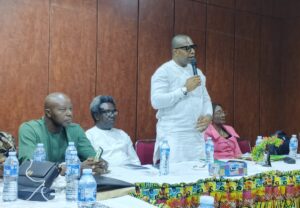
The training, which held on Wednesday at the Federal Capital Territory, brought together selected CRFFN officers from Lagos, Abuja, Kano, Kaduna and other operational zones, alongside representatives of the Maritime Anti-Corruption Network (MACN) and the Convention on Business Integrity (CBi). The programme is aimed at deepening capacity in digital compliance, grievance management and ethical enforcement within the freight forwarding industry.
Speaking at the opening session, the Registrar and Chief Executive Officer of CRFFN, Mr. Kingsley Igwe, said the programme marked the practical commencement of a major reform agenda that would redefine freight forwarding operations ahead of 2026.
Igwe explained that the initiative was borne out of persistent challenges faced by freight forwarders at Nigerian ports and along transport corridors, including extortion, victimisation, unethical conduct and the proliferation of illegal checkpoints that impede trade flow. He noted that similar corrupt pressures also affect vessels arriving in Nigerian waters, where operators are often subjected to unapproved charges by various actors—a situation that historically heightened Nigeria’s maritime risk profile.
According to him, CRFFN’s response is a strategic alliance with MACN and CBi under what he described as the “Integrity Alliance,” aimed at driving corruption in freight forwarding operations close to zero. He disclosed that the partnership, formalised through a Memorandum of Understanding signed late last year, is designed to replicate on the land side the success MACN has recorded in reducing corruption risks on the marine side.
He said the Abuja training was deliberately limited to key user departments and field officers who would serve as knowledge carriers across CRFFN’s stations nationwide.
A major highlight of the reform, Igwe said, is CRFFN’s transition to full digital operations in line with the Federal Government’s paperless policy and the National Policy on Marine and Blue Economy. He revealed that the MACN tools have been customised and embedded into CRFFN’s systems, effectively making them in-house platforms for complaints management, compliance monitoring and ethical enforcement.
The Registrar said the platform would serve as the first point of contact for complaints involving the Nigeria Customs Service, NAFDAC, SON, truckers, enforcement agencies and even hoodlums operating along port corridors.
“These practices amount to anti-trade facilitation habits. They do not support the smooth movement of goods. When cleared cargo is repeatedly stopped by state and non-state actors—sometimes detained or confiscated—it undermines the entire system. What we want to achieve is to reduce the risk level of freight forwarding operations in Nigeria to as close to zero as possible and be able to report this globally as a Nigerian success story,” Igwe said.
He added that the tools are fully owned and operated by CRFFN and would be integrated with its existing platforms, with plans to eventually interface with the National Single Window.
“Freight forwarders will be able to log in, process transactions and receive responses in real time. Complaints will be lodged and addressed promptly, while our enforcement team will be at the frontline ensuring speed, efficiency and trust. That is the only way to strengthen regulatory control,” he said, describing the initiative as a “game-changer” for the industry.

Representing the Chief Operating Officer of MACN, Mr. Vivek Menon, Ms. Maria Gowon described the training as more than a technical session, but a milestone in Nigeria’s freight forwarding reform journey. She said the partnership reflects a shared commitment to integrity, professionalism and service to Nigeria’s trading community.
According to her, the MACN tools introduced at the training are designed to identify risk, strengthen compliance and reinforce ethical conduct across the logistics chain, in line with the digitalisation and standardisation drive of the Federal Ministry of Marine and Blue Economy.
“Freight forwarding is not merely a service industry; it is a national asset with a direct impact on trade efficiency and the prosperity of Nigerian citizens. Reform is not abstract. It is built step by step through people, partnerships and persistence. Everyone participating here today is central to that transformation,” Gowon said.
Earlier, the Director of Programmes at the Convention on Business Integrity, Mr. Emmanuel Bosah, said the programme was fundamentally about building technical capacity to support freight forwarders who play a critical role in maritime trade. He explained that CBi, with over 28 years of institutional experience, focuses on embedding integrity in systems and transactions to build trust, which he described as Nigeria’s biggest deficit.
Bosah said the partnership with MACN supports the Federal Government’s port reform initiative under the Ministry of Marine and Blue Economy, aimed at reducing rent-seeking behaviour and improving operational efficiency at the ports. He noted that the training would focus on how technology supports data gathering, grievance management, private-sector accountability and sustainable reforms.
He added that both government and private-sector actors must take responsibility for ethical conduct in port operations, stressing that reform cannot succeed if the private sector remains complicit in bad practices. He also noted that solutions developed in Nigeria through MACN and CBi are already attracting global attention.
“Without freight forwarding, there is no maritime trade. The role you play is fundamental to the entire ecosystem. The biggest deficit in this country is not budget; it is trust. We are not here to teach you freight forwarding—you already know that. What we are doing is to strengthen what you already do with tools, data and systems that make your work more effective and relevant,” Bosah said.
Participants at the training are expected to serve as institutional champions for CRFFN’s digital, ethical and compliance transformation across port locations nationwide, as the council positions itself for a more transparent, business-friendly and globally competitive freight forwarding system.