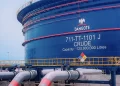
Dangote Petroleum Refinery and Petrochemicals has reassured Nigerians of its determination to remain a stabilising force in the supply of petroleum products despite ongoing volatility in the global oil market triggered by the conflict involving the United States, Israel and Iran.
The Middle East crisis has disrupted global refining operations, forcing the shutdown of some refineries and reducing production capacity in several parts of the world.
The situation is expected to tighten global petroleum product supply, especially as China has reportedly halted the export of gasoline and diesel, raising fears of possible shortages in the international market.
In a statement issued on Thursday, the refinery said it was taking deliberate steps to shield the Nigerian market from the impact of the disruption by prioritising domestic supply. It noted that such resilience was one of the major benefits of having local refining capacity.
The company explained that the ongoing geopolitical tensions had pushed crude oil and freight prices significantly higher, with the benchmark Brent crude rising by about 26 per cent within a short period to over $84 per barrel.
According to the refinery, the sharp increase in costs compelled it to introduce a modest adjustment of N100 per litre in its ex-depot price of Premium Motor Spirit (PMS), representing an increase of about 12 per cent.
Despite the adjustment, Dangote Refinery said it had absorbed about 20 per cent of the cost increase to cushion the effect on the domestic market, even as it continues to purchase crude oil at prevailing international market prices whether from local or foreign suppliers.
The company further explained that Nigerian crude oil currently trades between $3 and $6 above the Brent benchmark. When freight costs of about $3.50 per barrel are added, the crude effectively lands at the refinery at between $88 and $91 per barrel.
By comparison, it said crude oil was landing at about $68 per barrel when the refinery previously sold petrol at N774 per litre.
The refinery also disclosed that although it receives about five cargoes of crude oil monthly from the Nigerian National Petroleum Company Limited (NNPC), paid for in naira, the volume falls far short of the 13 cargoes required monthly to meet its domestic supply obligations.
“As a result, we are compelled to source foreign exchange at open market rates to pay for crude cargoes purchased from both local and international traders,” the company stated.
It added that the situation had been worsened by the failure of some Nigerian upstream producers to supply crude oil to the refinery in line with provisions of the Petroleum Industry Act (PIA), forcing the company to rely on international traders who charge additional premiums.
Dangote Refinery maintained that as a private enterprise operating in a fully deregulated market environment, it must align pricing with prevailing market realities to sustain operations and maintain steady supply.
The company stressed that selling petroleum products below production cost would undermine its ability to procure crude oil, maintain production levels and ensure uninterrupted supply to Nigerians.
Nonetheless, the refinery emphasised that local refining continues to play a critical role in reducing Nigeria’s exposure to global supply disruptions, lowering foreign exchange demand and protecting the country from severe fuel shortages during periods of international market instability.