By Oluyinka Onigbinde
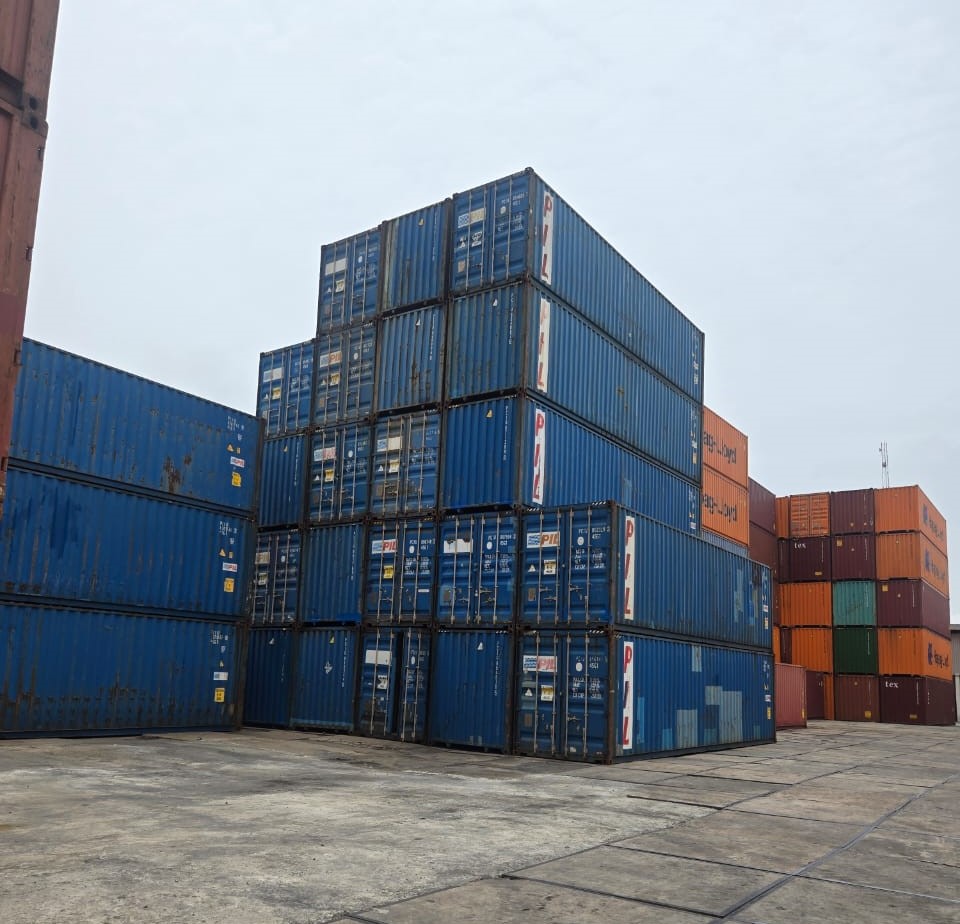
Stakeholders in Nigeria’s maritime sector have called for urgent regulatory reforms following renewed controversy over the disposal and sale of empty shipping containers by foreign shipping lines operating in the country.
The debate, which has gained traction in industry circles and among trade experts, was triggered by allegations that Nigeria may have suffered significant revenue losses over several decades due to the sale of containers imported under temporary admission arrangements without proper customs regularisation.
Trade consultant, Okey Ibeke, had earlier raised concerns that containers brought into Nigeria under “temporary import” status must be re-exported unless formally converted to permanent importation through the Nigeria Customs Service. He argued that any local disposal of such containers should attract appropriate customs duties and regulatory oversight.
However, shipping line operator; Grimaldi Agency Nigeria denied any wrongdoing, insisting that containers sold under its arrangement remain in “foreign customs position” and are not transferred as domesticated equipment. The company maintained that any customs obligations arise only when buyers choose to domesticate or change the use of the containers after purchase, stressing that such responsibilities rest with the purchaser.
Amid the back-and-forth, stakeholders have urged regulators to address broader systemic gaps rather than focus solely on the specific transaction under dispute.
In an addendum on the issue, the Sea Empowerment and Research Center (SEREC) said the controversy highlights the absence of a unified national framework governing the management, tracking, conversion and disposal of empty containers in Nigeria.
SEREC noted that weak reconciliation mechanisms for temporarily imported containers, potential revenue leakages, port congestion, and environmental concerns are longstanding challenges within the maritime ecosystem. The group also warned that unclear processes around container disposal continue to create operational and regulatory ambiguities for both regulators and industry operators.
The research body therefore called on the Nigeria Customs Service, Nigerian Ports Authority, Nigerian Shippers’ Council, the Federal Ministry of Marine and Blue Economy, and other relevant agencies to jointly develop a harmonised regulatory framework. Such a framework, it said, should clearly define procedures for container conversion, strengthen tracking systems, eliminate ambiguities on applicable duties, and improve transparency in ownership transfers.
SEREC further recommended a comprehensive audit of empty container movements and disposal practices across shipping lines operating in Nigeria as part of broader port sector reforms.
Industry stakeholders also weighed in on the debate, with differing interpretations of the applicable customs rules.
A chieftain of the National Association of Government Approved Freight Forwarders (NAGAFF), Stanley Ezenga, argued that containers sold locally by shipping lines should attract import duties, stating that once disposal occurs within Nigeria, such containers effectively enter the domestic economy.
He maintained that shipping lines should either re-export containers or ensure that applicable duties are paid when they are sold within the country.
Similarly, Babatunde Mukaila, former Secretary of the Association of Nigerian Licensed Customs Agents (ANLCA), supported the view that containers have commercial value beyond their role in cargo transport and are governed by established international container operation conventions.
Mukaila said the issues raised were consistent with global practices in container usage and emphasized the need for clarity in applying international standards alongside domestic customs regulations.
The divergent positions underscore ongoing uncertainty within the sector over the regulatory treatment of empty container disposal, particularly under temporary import arrangements.