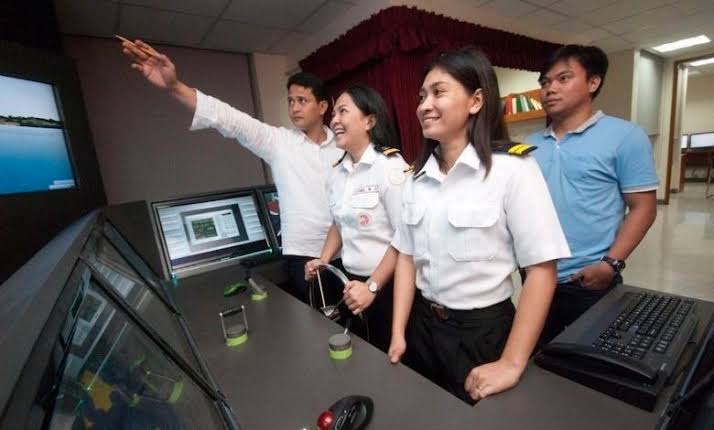
Shipping’s training ecosystem is struggling in an era of accelerating change, with industry leaders warning that tick-box learning and operational pressures are undermining seafarer competence. The latest instalment from our brand-new Seafarers magazine.
Maritime training is under strain. Between relentless schedules, shrinking manning levels, and an accelerating pace of technological change, the old ways of teaching seafarers are creaking. The industry knows it must do better — but few agree on how. Across interviews with senior leaders, a consensus emerges: training is too compliance-driven, too disconnected from daily reality, and far too time-hungry for the modern shipboard environment. From gamification and microlearning to AI-driven personalisation, shipping is beginning to explore how to make training stick — but time, not technology, remains its greatest constraint.
The time trap
“Seafarers are under intense operational pressure,” says Steven Jones, founder of the Seafarers Happiness Index. “When crews are stretched thin just managing daily operations, even well-designed training programs struggle to gain traction.”
It’s a sentiment echoed across the industry. Pradeep Chawla, CEO of MarinePALS, notes that the average ship’s planned maintenance system has around 3,000 individual tasks. “If a proper study were done, we’d find it’s not humanly possible to complete them all,” he says. “When you add bad weather, port calls, and administrative work, there’s simply no time left for learning.”
The result, says Chawla, is a “tick-box attitude” to both work and training — not because seafarers are complacent, but because they are overwhelmed.
From tick boxes to touchpoints
Across shipping, a new wave of training reformers is asking whether maritime learning should look more like mobile gaming than classroom study. Lars Gruenitz of Norstar Ship Management believes interactive and gamified learning can make training far more impactful — especially when seafarers can learn “at their own pace, wherever they are, whether at a training centre, onboard, or at home.”
For Wiebke Schuett at Wilhelmsen Ship Management, the answer lies in microlearning — short, targeted modules designed for attention spans measured in minutes, not hours. “We incorporate gamification and interactive elements to make learning engaging and memorable,” she says. “The goal is stickiness — ensuring seafarers actually retain and apply what they learn.”
Gamification, AI-driven personalisation, and scenario-based training are reshaping the learning landscape. Angad Banga of Caravel Group says training must evolve faster: “The industry is changing rapidly, and training needs to capture that momentum. We’re focusing on immersive, simulation-based programs that align with how people learn today — creating learning that sticks, not ticking boxes.”
Compliance versus competence
That phrase — tick-box — has become the defining critique of maritime training. Henrik Jensen of Danica Crewing Specialists argues that statutory training under the STCW framework is “not in sync with what is actually needed.” The international standards may provide a baseline, but “they evolve far too slowly for a fast-developing industry.”
Simon Frank of NSB Crewing Solutions agrees that “training methods are not modernised fast enough” and remain “driven too much by compliance compared to actual improvement needs.”
This compliance culture, says Jones, creates “a cycle where training is viewed as a burden rather than a valuable investment.” He warns that “even excellent training faces an uphill battle” unless the industry first tackles manning levels, fatigue, and honest reporting of working hours. “Without adequate time for genuine training, all other improvements become meaningless.”
Blending realities
For Carl Martin Faannessen, CEO of Noatun Maritime, training is a “schizophrenic environment” split between regulatory mandates and operational needs. He advocates for “blended learning” — combining digital modules with structured onboard engagement. “Senior officers should be mandated to engage with their crew at least once a day for training purposes,” he says.
This idea of integrating learning into daily work resonates with Eva Rodriguez at Bernhard Schulte Shipmanagement. BSM is rolling out modular and just-in-time training, “allowing seafarers to choose when to complete sessions within a set timeframe,” she says. “Personalised learning optimises limited time and addresses individual needs.”
At Columbia Group, Simona Toma is promoting flexibility too: “Training today must be flexible and practical. We blend LMS modules, microlearning, simulations, and hands-on practice — even exploring virtual reality — to make learning more engaging and effective.”
A question of relevance
Many industry voices argue that the content of training, not just its delivery, needs radical overhaul. Vinay Gupta of Union Marine Management Services believes training “struggles to keep pace” with fast-evolving technology. “Institutes hesitate to invest, unsure how quickly today’s systems may become obsolete,” he warns, leading to “a widening gap between technological progress and preparation.”
That same gap is evident in digital skills and data literacy. Captain Rajalingam Subramaniam, the CEO of Fleet Management, says the priority is “bridging traditional seafaring with digital competency. We need seafarers who are equally confident with a sextant and a screen.”
John Rowley , CEO of Wallem Group, adds that gamification will help engage seafarers, but “we also need effective train-the-trainer programs” to ensure those teaching the next generation are equally modern in approach.
Several executives see a deeper, cultural problem. Jones argues that the decline of “professional trust and respect” onboard is undermining training outcomes. “We need to rebuild crews as cohesive units rather than collections of individuals monitoring screens,” he writes.
Faannessen takes this further, calling for stronger cross-cultural leadership. “A lack of self-awareness and cultural understanding drives misunderstandings and conflict,” he says. “The soft stuff is the hard stuff.”
That focus on human factors echoes through many responses. Captain Rajiv Singhal of MTM says training “must evolve from compliance-driven modules to curiosity-driven learning. Training must go beyond certificates; it must build confidence.”
A living system
Ultimately, training cannot be static. “No training ecosystem can ever be perfect,” says Singhal. “It is a living process that must continuously evolve with technology, operations, and human needs.”
For Aalok Sharma of Anglo-Eastern, this evolution requires “modern training facilities, immersive technologies, and updated curricula” aligned with real-world scenarios.
And yet, as Jones reminds the industry, technology alone will not fix a broken system. “Until we address the honesty and accuracy of working hour reporting, and right-size manning levels,” he says, “we cannot create the conditions necessary for effective learning.”
The challenge, then, is not just to make training smarter, but to make it possible.
*Source: Flash 247.com