
“From the day I was appointed as DG, I prepared myself to leave that job anytime”
Dr Ade Dosunmu, a former DG of NIMASA, in this no-holds-barred interview with Shipping Position Live, reminiscences about his tenure, the highpoints, the achievements and the challenges facing the strategic maritime sector regulatory agency. Watch out next week for an insight into his new found love, that is politics
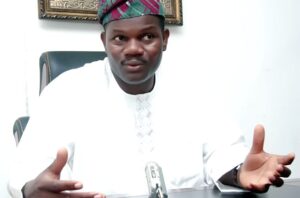
How has it been since you left NIMASA?
It’s been nice over the years, at least I have been able to lay my hands on other things; after spending the better part of my youthful life in the public service. Leaving the service at the time I left has also given me some opportunity to start and do other things and it has been very interesting. I am not totally out of touch with the maritime industry. I still go in and out when it is necessary.
What plans did you have for NIMASA that your sudden removal didn’t allow to actualize?
In any public office, except it is an elected or elective position, you cannot be too sure about your tenure and that has to do with the situation that we find ourselves as a country. That also affects the confidence and performance of those who were elected because they will always have the mind of being there today and not there tomorrow, irrespective of what your letter of appointment says. So that is a problem and also the system. The system is worst for it. The negative impact such removals have on the system can better be imagined. But in my own case, honestly, from the day I was appointed, I prepared myself to leave that job anytime. The reason I had that mindset then was because I looked at the history of that agency and discovered that most of my predecessors did not finish their tenure. There was this “Banana Peel” syndrome that is associated with NIMASA. So when I got there, I just felt like doing my best during the time I am there and if tomorrow they say it’s time, then I go. That really helped me because I didn’t feel it (removal from office). What I meant by I didn’t feel it is that, already I was prepared for it. If I was not prepared for it and was still hoping that my letter states a four-year tenure, then I will be shocked because I left after two years and three to four months. Don’t forget that I was an Executive Director in the same agency for about a year and some months. So I quite understood the politics of that industry; particularly the agency. I can make some comparisons for you. There are some agencies within the same Transport and Maritime sector; let me be particular with the Shippers’ Council. Shippers’ Council has not had more than five Chief Executives since it was set up. We had Dr Kingsley Usoh, Chief Adebayo Sarumi, Captain Adamu Biu, Mr Hassan Bello and the new man there now. They are just five. If you look at the NMA/NIMASA, even NIMASA alone has had more than five. I am talking of NIMASA from 2006 and not NMA from 1987. We had Mfon Usoro, Dosunmu, Omatseye, Akpolomokemi, Dakuku Peterside and now Jamoh. We have had six in less than 12 years. Whereas in about 30 years Shippers’ Council, had just five CEOs.
So we can see how that instability would have affected the growth and development of that agency and the industry it superintends over, because it is the regulator. That has not even augured well for the industry. You can see so many organizations within the Transport sector and the Maritime industry. When you go to Maritime Academy of Nigeria, Oron and also the National Railway Commission, their Chief Executives still serve their tenure. It is only NIMASA. For me, I was not surprised because I already saw that as a pattern.
If you have a second Chance, what will you rather do differently?
Well, I don’t look forward to any second chance, because I think I have overgrown that now. The best I can do now is to offer my advice and share my experience with those that are in the service; let us rub minds together and see how I can contribute to the policy initiatives that they are trying to put together and let us see to the growth and development of the industry. I have to be honest with you, the rate at which the industry is going is not as fast as some of us expect. The current DG of NIMASA is trying to fasten the rate of growth in some of the things he is putting in place, such as the Deep Blue Project, Seafarers Development Programme and some concessions for vessels that are coming into the country. These are incentives that ought to have been in place before now. How do you want to compete with other jurisdictions, if you don’t want to encourage your own ship owners by trying to give some concession? Looking at the level of capital that is required, how many Nigerians can come up with that? So these are some of the issues which I think the current man in the saddle is doing well and he needs to do more.
The National Seafarers Development Programme is your brainchild. What informed its creation of by your administration at NIMASA?
I will say the Nigerian Seafarers Development Programme is completely my brainchild and what we actually did then was to conduct a study. At that time in the Mid 2000, we realized that we had this influx of Filipinos and foreigners on our waters to the point that even the Coastal vessels are being manned by them; not even international vessels. We looked at it and enacted the Cabotage Act. The Cabotage Act is built on a tripod which includes that the vessel must be owned, manned and crewed by Nigerians. If you look at that compared to the availability of the skilled manpower that we expect that will crew those vessels. We also looked at the training institutions we have locally that will assist in the training and certification of skilled manpower. We looked at Oron and evaluated their programmes and challenges and we realized that they had challenges that may not make it possible for them to be able to meet the supply requirements. We did a survey of the industry and we realized that we need about 50,000 skilled manpower or seafarers to man our national fleet. We sat down and decided; we had to come up with the creation of NSDP when we realized that Oron cannot solve our problem, because they cannot give enough sea time after education. Oron has produced so many graduates who are supposed to be seafarers that have veered into other professions, because of lack of sea time.
So that is why we came up with the Nigeria Seafarers Development Programme, wherein we packaged the education and the sea time together in foreign institutions. We sponsor them for their education and sea time in foreign maritime academies. What that initiative has solved for us is that it has helped us to eliminate the problem of sea time. Whenever anybody is selected and sponsored for the programme, he will definitely not only finish his education but also finish his sea time and seat for the Certificate of Competency exam. So that makes him qualified as a seafarer. So without the CoC, you cannot board any vessel. So that was the main objective to be able to address the challenges we were facing; particularly in the local maritime training institutions in Oron and all that.
Today, I am happy that over 2,000 plus have benefited from that programme. They have gone to different countries and some of them have even become Captains. It shows that it was a good initiative. The government just needs to support it more, because this is a critical sector that needs government’s support. It is very difficult for any parent to be able to see their wards through education and sea time, except government intervenes.
Read Also: Shipping Position Interaction with Dr Ade Dosunmu
But there are no ships to work on?
The beauty of ships is that shipping is global and the skills they have gone to acquire are also required globally. So they are not only needed for the Nigerian market, they are prepared for the global shipping industry. Secondly, it is also a way of removing youth restiveness and equipping our youths with the required skills that will make them relevant in the global maritime industry. Thirdly, to also reduce the rate of unemployment. We should not say because we don’t have ships, we shouldn’t train our people in that line. When we have ships, it will then be difficult to say you want to start training people. After their experience, some of them will come back and end up in Safety administration. We have a lot of them in the Maritime Safety Department in NIMASA after their practical experience. I believe that with time, Nigeria will increase its fleet, if only we can get certain policies right. Like the Cabotage thing, I believe that there are lots of smaller vessels that are operating within our coastal waters and some supply vessels and offshore patrol vessels. With that, I think we should just continue producing seafarers; first for the local market and then for the global market.
Will you say that the Cabotage Act is a failure or a success?
Well, it is not easy for me to make a sweeping remark on Cabotage. For me, Cabotage comes with a lot of mixed feelings. First, it is a beautiful piece of legislation, because it has created a kind of awareness for the industry to know that these are potentials that we have within the industry and we must make efforts to tap into it. These are the potentials of owning, manning and building. Building is for the shipyards, crewing is for the training institutions and then owning is for the businessmen who are within the ship owners. Before the Cabotage Act, these potentials were not there and even if they were, they were there latently, they were not captured in any legislation. So for it to be captured in the legislation shows the seriousness of the Government.
Looking at the enactment of that legislation to date, accessing the impact is another thing. There may be one or two bottlenecks that are making it difficult. The one I can easily tell you is that building, crewing and ownership is a challenge. The Act tries to address the issue of ownership by coming up with the Cabotage Vessel Financing Fund, that would have addressed the issue of ownership. The NSDP would have addressed the issue of crewing. The issue of the building which is of maritime capacity that ought to be built is a major challenge. We have the Naval Dockyard and some shipyards here and there, but vessels are not built by shipyards unless they are required; that is, somebody coming with the requirements and whoever is going to come with it must have a contract. There are three things that are important, you need money, vessel and cargo. But the most important one is the Cargo. If you have the Cargo which is the business, you can get the vessel and also the money. But if you have the money, you may not get the cargo. These are the intricacies that government needs to look into. For me, it is a good legislation and also work in progress.
How do feel about the fact that Nigeria lost the IMO Council seat again?
Without sounding immodest, it is unfortunate that we have not been able to get back to the council. I feel that there is a lot that still needs to be done. When things like this happen, we have to draw strength from it and the strength we can draw from it is that we still have a lot to do. There are a lot of things that Nigeria will gain from the council. The IMO is a body of 167 countries. Out of those 167 who are maritime nations, only 40 will be at the council. The council is the decision-making and policy- formulating organ of the IMO. That is just one of them, there are other benefits that Nigeria stands to gain if we are in the council.
Kindly like us on Facebook














Discussion about this post