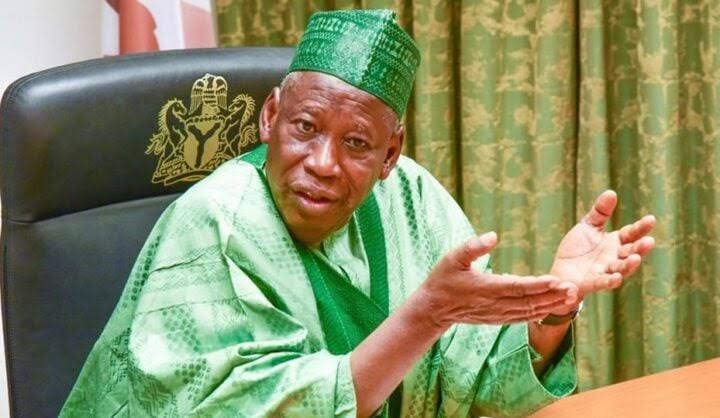
The ownership of Dala Inland Dry Port in Kano, Kano state has become a subject of an intense legal battle involving the Kano State Government and the family of former Kano State Governor Abdullahi Ganduje and some other interested parties.
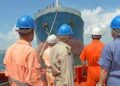
The Dala Inland Dry Port was commissioned on January 30, 2023 by the then-President Muhammadu Buhari. It is one of the three IDPs currently operational. The remaining two are: Kaduna IDP and Funtua IDP in Katsina state. They are all being superintended by the Nigerian Shippers Council.
The legal battle over the ownership of the Port commences at the Kano High Court on Thursday, December 18, when the Ganduje, who was the state governor between 2015 and 2023 is expected to appear alongside his three children and others to face a ten-count charge of criminal conspiracy, misappropriation of public funds, breach of trust, and conflict of interest.
The prosecution alleged that the defendants diverted over ₦4.49 billion of Kano State funds to execute infrastructure projects such as a double carriageway, electricity, and perimeter fencing at the dry port for their personal and family benefit.
The defendants are also facing charges of abuse of office and conflict of interest, as it was alleged that they leveraged their official roles to redirect public resources for personal benefit, thereby violating financial and constitutional regulations.
The State Government had filed a suit before the State High Court, seeking to reclaim its 20 percent equity stake in Dala Inland Dry Port Limited and recover funds allegedly misappropriated to the tune of ₦4,492,387,013.76.
The state government accused the defendants of conspiring to fraudulently transfer 80 per cent of the shares of Dala Inland Dry Port, including the state’s 20 per cent equity, to private ownership under the fictitious name “City Green Enterprise”.
The Kano state government is insisting that, when Dala Inland Dry Port Limited was incorporated on 8 December 2003, its only directors were the founder, Ahmad Rabiu, and his son, Rabiu Ahmad Rabiu.
The state government later acquired 20 per cent equities in the strategic dry port.
Two years after the port was incorporated, and at an extraordinary general meeting on 19 January 2005, the board was expanded with the appointment of four new directors: Abdulaziz Haladu, Anwar Isyaku-Rabiu, Diepreye George, and Abdullahi Kwaru.
It was also alleged that, at the meeting, the state government was removed as a co-owner of the dry port and the Ganduje children were appointed, not just as directors, but also as shareholders with five million shares each.
According to the charge sheet, the prosecution has lined up several key witnesses to testify in court. They include: the lead investigating officer who uncovered the alleged fraudulent transactions. an early stakeholder in the project, who will testify on how he was allegedly sidelined during the equity transfer process, among others.
The prosecution’s summary of evidence alleges that the defendants: Used sham entities and proxies to hide ownership of Dala Inland Dry Port shares, diverted public funds to family-owned firms and personal businesses, coerced the original project founders into relinquishing control while allowing them to retain only nominal shares, created false documents and misleading letters to deceive regulatory authorities, and orchestrated a chain of transactions, including through Safari Textile Ltd (STL Enterprise), to facilitate the diversion of N750 million in state funds.
In the document, the prosecution will during the trial showcase how the 4th defendant was made to conduct a research of Dala Inland Dry Port and acknowledge the existence of 20% shares belonging to Kano State Government in accordance with the policy document to that effect, when it was initiated by the then president Olusegun Obasanjo which the prosecution will also tender and relied upon at the trial.
Also, the prosecution said in the summary of evidence that during the trial it will adduce cogent evidence to prove beyond reasonable doubt that the earlier board of directors of the company represent diverse interests with Abdullahi Haruna representing the interest of Kano State Government and the purported transfer was done and executed without other board members consent but rather that of the first defendant, Abdullahi Ganduje alone as the governor of the state was used to execute the plan.