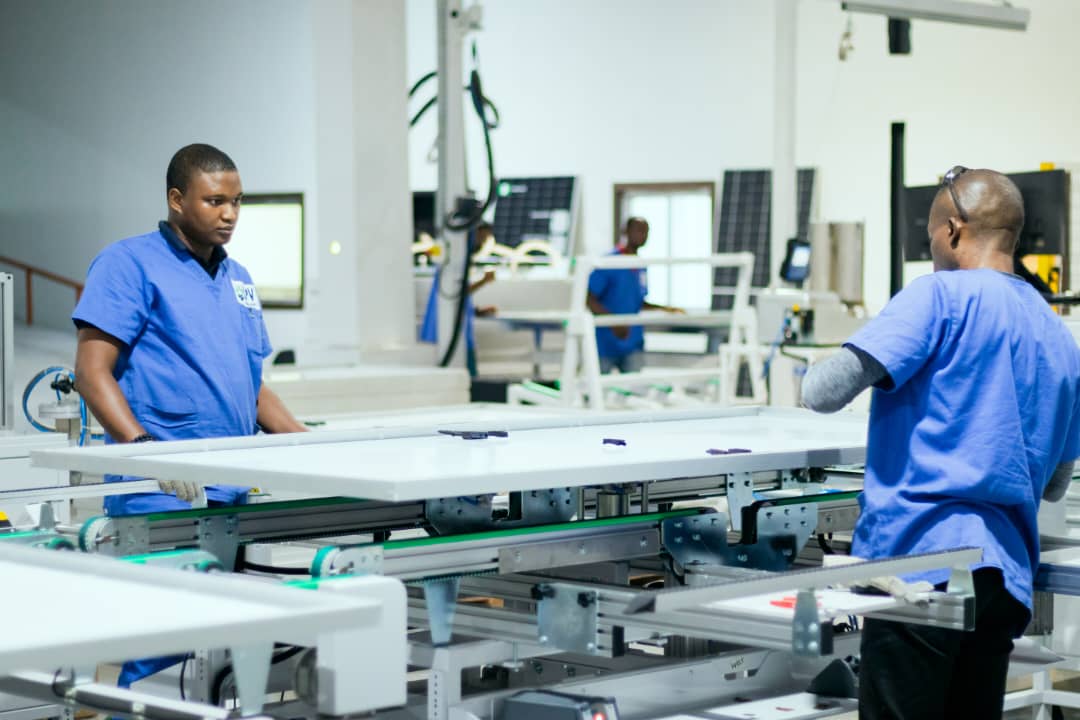
A Nigerian solar energy company LPV Technologies has called for a radical shift in government policy with a call for a zero-import approach to solar panels, arguing that only through local manufacturing can Nigeria truly secure its renewable energy future.
Speaking at a press briefing at its newly unveiled state-of-the-art facility in Lagos, Executive Director Yinka Adelodun laid out a bold vision for the future of solar power in the country—a vision that hinges on local production, quality assurance, and supportive government policies.
“We have always believed that seeing is believing,” Adelodun declared as he addressed the gathered journalists and guests. “It’s one thing for you to say you have a facility like this; it’s another thing to actually see it and confirm it exists. The journey for this facility started almost two years ago with the mission of deploying solar infrastructure at scale. Today, while many are putting solar panels on their roofs as a band-aid, the real solution lies in harnessing solar and gas to power our economy sustainably.”
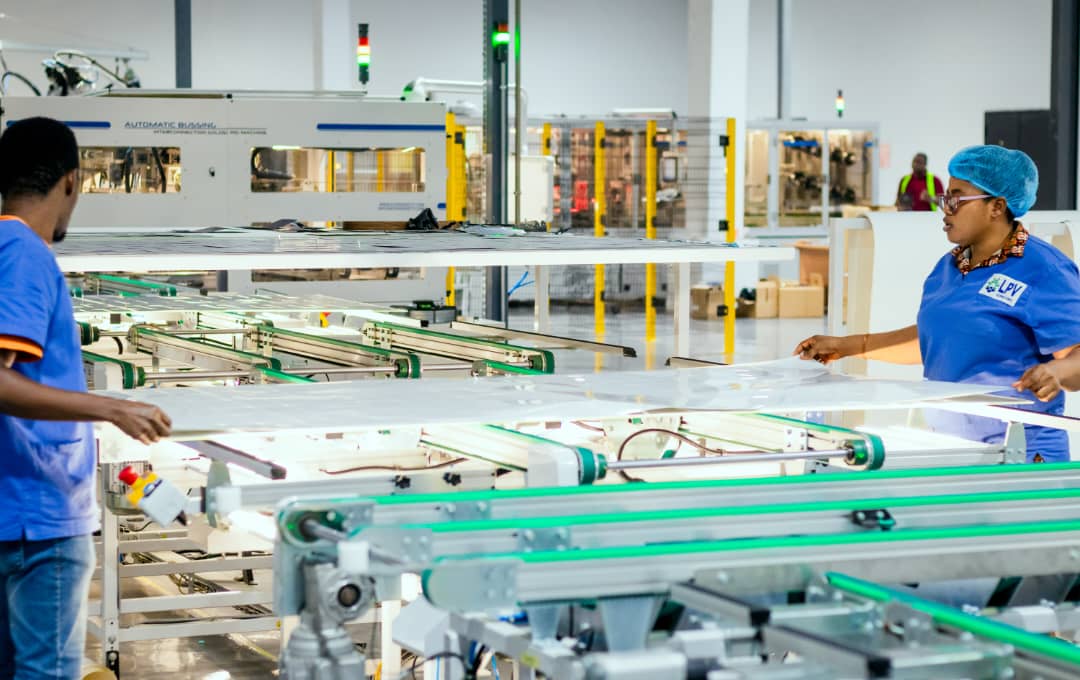
He explained that the facility was created to resolve significant issues faced by the industry, such as developers ordering panels months in advance only to have their shipments delayed by customs or storage issues. “You can call us and say, ‘I want five megawatts of solar panels,’ and we will produce it on demand,” he said. Adelodun emphasized that by controlling the supply chain, the company would be able to ensure that every panel meets rigorous quality standards. “What you saw today is a product of collaboration with a European OEM, ensuring our panels are of grid A European standard. We have about six different gates of quality assurance before the final product is finished. This is a level of assurance that imported panels often cannot offer, with 20-25% of them failing to meet the mark,” he added.
Adelodun continued, stressing the importance of government action. He called on policymakers to institute a framework that favors local production by removing import duties on all components used in domestic manufacturing. “If you’re importing panels duty-free while we pay duty on everything except the cells, the playing field isn’t level. We expect a zero-import policy on solar panels so that Nigerians can take pride in our own manufacturing capabilities,” he asserted.
During the facility tour, Emmanuel Agboola, Head of Operations, reinforced the quality message by highlighting the exceptional durability of the solar panels. “Our panels are engineered to last for more than 25 years,” Agboola noted, explaining that the company’s heavy investment in advanced technology and automation allows for a level of quality that can rival—and even exceed—that of imported products.
Meanwhile, Juwon Solarin, Head of Business Development and Marketing, shared insights into the company’s distribution strategy. “We already have multiple sales outlets in place, and our plans include expanding our distribution network significantly,” Solarin said. “We are calling on more distributors to join us in pushing these high-quality, locally manufactured panels throughout Nigeria. It’s about building a strong ecosystem that can compete on a global level.”
The company’s new facility, which is entirely operated by Nigerian experts, underscores the potential of homegrown talent in the renewable energy sector. Adelodun noted with pride that every person on the production line is an engineer, demonstrating a commitment to not only manufacturing excellence but also capacity building and job creation. “We want to replace the importation of panels with Nigerian ingenuity. This is a critical undertaking for our country’s future,” he said.
The company’s production line is designed with flexibility in mind. Currently using PERC technology, the facility can produce panels ranging from 550-watt to 720-watt configurations and is already configured to adopt emerging technologies like TopCon.
“In a rapidly evolving industry, being flexible and ready to incorporate new technologies is key to staying ahead,” Adelodun remarked.
He also pointed out that while the company’s current capacity is about 100 megawatts, this is only a fraction of Nigeria’s potential. “Nigeria needs gigawatts of power every year. Even if we double our capacity, we will still have ample demand locally. And make no mistake—there is also substantial interest from other West African countries like Togo and Cameroon,” he said.
Adelodun’s remarks also touched on challenges such as the sourcing of raw materials. While cells must currently be imported, all other components—glass, aluminum frames, and junction boxes—are either already sourced locally or can be manufactured domestically. “We are working with local companies, like the aluminum facility in Abuja, to meet our needs. The more we localize production, the more we can alleviate forex issues and reduce production costs,” he explained.
The Executive Director’s comprehensive address, coupled with Agboola’s and Solarin’s insights, paints a picture of a company determined to lead Nigeria’s renewable energy transition through indigenous production. By demanding a zero-import policy and advocating for government support, the company not only aims to create a robust supply chain for high-quality solar panels but also to set a benchmark for the entire renewable energy sector in Nigeria.
In a country where the national grid is under strain and decentralized micro-grids are becoming increasingly important, this call for zero import is positioned as a critical step towards a sustainable, self-reliant energy future. As Nigeria stands on the brink of a renewable revolution, the company’s bold vision and concrete steps toward local manufacturing could well pave the way for a new era in energy security and economic growth.