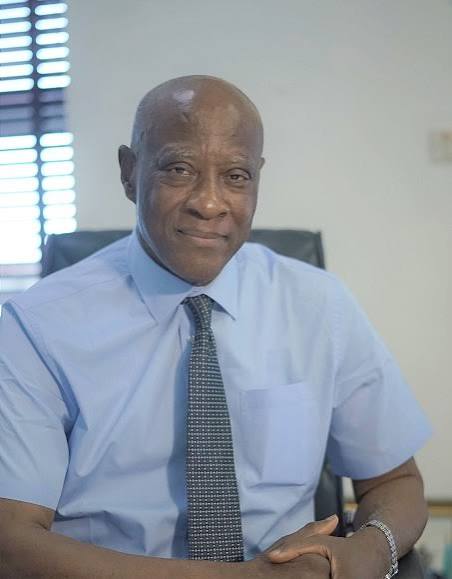
Former Minister of Interior, shipowner and Chairman, Integrated Oil and Gas Ltd., Captain Emmanuel Iheanacho in this interview during a courtesy visit by the leadership of the Maritime Reporters’ Association of Nigeria (MARAN), shares his perspectives on some of the most pressing issues shaping Nigeria’s maritime sector. He reflects on his journey in shipping and the oil and gas industry, assesses the renewed drive to disburse the Cabotage Vessel Financing Fund (CVFF), and outlines what must be done to ensure the success of the proposed National Fleet. He also offers insights into ship financing, maritime capacity development, environmental responsibility and the future of indigenous shipping, drawing from decades of experience in the industry.
“The CVFF process is more transparent now; I believe it will work this time”
Your colleagues recall your days as a shipowner. Looking back, what memories stand out?
Yes, I hope to return to ship owning by the grace of God. We diversified into the oil business, but shipping has always remained close to my heart. Unfortunately, ships have become extremely expensive. The vessels we used to buy for about six million dollars years ago now cost as much as twenty-five million dollars. That tells you how much the industry has changed. I remember a Nigerian shipowner who wanted to sell an MR tanker of about 50,000 tonnes. We agreed on six million dollars. Unfortunately, I couldn’t complete the purchase because my bank delayed the financing despite all the assurances they gave me. That experience taught me an important lesson. Banks sometimes appear to understand shipping transactions, but in reality they do not fully appreciate the urgency involved. By the time the financing was expected, I faced serious embarrassment because I couldn’t pay for the vessel.
At one point I owned seven ships. I had a particular formula. I bought vessels at a certain age, operated them for some years and sold them at the appropriate time, often realising their scrap value. Eventually, I sold all my ships because the oil sector at that time presented greater opportunities. Today the oil industry itself has become highly competitive. People often ask why I left shipping. My answer is simple—I walked away at that time. But by God’s grace, I hope to walk back into shipping very soon.
The Nigerian Maritime Administration and Safety Agency has officially opened the portal for applications under the Cabotage Vessel Financing Fund (CVFF). Several previous attempts to disburse the fund failed. From your vantage position, do you think this time will be different?
What has happened over the past few months gives the impression that there is real transparency in the way the CVFF is being handled. Before now, whenever people talked about the CVFF, the general reaction was, “We have been hearing about this fund for years and nothing is going to happen.” That was the perception because previous efforts never produced the expected results.
This time, however, I am pleased that the Director-General of NIMASA adopted a very open process. They didn’t keep the process behind closed doors. They actually drew up a comprehensive scheme showing exactly how prospective beneficiaries could access the fund and invited industry stakeholders to examine the process. That level of openness is encouraging because people can now clearly see the requirements instead of relying on speculation.
Many operators still do not fully understand the application process. What exactly is required to access the fund?
The process is quite elaborate because ship acquisition itself is a complex business. If you intend to buy a vessel, you must first prepare a proper feasibility study. You need to provide all the technical documentation relating to the vessel you intend to acquire. There are technical drawings, surveys and several supporting documents that must accompany your application.
Another important requirement is that you must work with one of the approved Primary Lending Institutions (PLIs) selected by NIMASA. Once you choose one of those banks and they agree to work with you, they package the credit application. People should understand that two different funding components are involved. One is the conventional commercial loan that comes from the financial institution, while the other is the government’s intervention through the CVFF. The challenge is bringing both together in a manner that satisfies the objectives of both parties without one conflicting with the other. That is why the process is detailed and structured.
What happens after an applicant submits the necessary documents?
NIMASA has mapped out a step-by-step procedure. Once your Primary Lending Institution is satisfied with your proposal, it prepares the necessary documentation and forwards it appropriately. NIMASA then conducts its own independent assessment based on its established criteria. After that stage, the application proceeds to the Honourable Minister for the necessary approvals. From what I have seen, the timeline has also been properly structured. The process is expected to run over several months, with specific stages assigned to the banks, NIMASA and eventually the Minister. That shows that this is not something they intend to rush. There is a clear sequence that applicants are expected to follow.
Despite the optimism, some industry players remain skeptical. Why are you confident the process will succeed?
I have followed the entire process very closely. Like many others, I wanted to see whether it would simply fade away after all the announcements. But that has not happened. There are officers specifically assigned to the CVFF programme, and whenever you ask questions, they respond. Beyond that, external consultants are also supporting the process by helping applicants understand exactly what is required at every stage. Those are positive developments because they demonstrate that people are actively working on the implementation rather than merely making announcements. That gives me confidence that, in the not-too-distant future, Nigerians will begin to see tangible results from the effort to help indigenous shipping operators acquire vessels.
Some people argue that the amount available under the CVFF is insufficient to purchase modern vessels. How do you respond to that concern?
People must understand the purpose of the fund. The money is not intended to buy ships for everybody. Government cannot realistically finance every vessel acquisition. That is not the objective. The CVFF is meant to serve as a demonstration and intervention fund. It helps operators acquire vessels, begin operations and generate income. Once operators start earning from those vessels, they should gradually develop the financial capacity to expand their fleets from their own resources. It cannot become a situation where every time someone wants another ship, they return to government asking for fresh funding. No government can sustain that. The fund is designed to help operators take the first major step into ship ownership.
Beyond financing, what other challenges should intending shipowners prepare for?
Buying a ship is much more complicated than many people imagine. There is a great deal of technical knowledge involved. You need to understand vessel surveys, documentation and inspection reports. Someone has to interpret those reports properly because they determine whether you are buying a sound vessel. Timing is also critical. For example, you should acquire a vessel when there is still sufficient time before its next statutory dry docking. If you buy a vessel today and immediately discover that it has to enter dry dock, you could incur huge expenses before the ship even begins commercial operations. That is why proper planning is essential. Dry docking itself is a major cost element. If I know my vessel will require dry docking in two years, I should already begin setting aside money today. You continue building that reserve until the dry docking becomes due. These are the kinds of practical issues operators must understand before venturing into ship ownership. In my opinion, NIMASA has done a good job by developing a framework that exposes prospective Nigerian shipowners to all these important requirements.
You have remained active in both the maritime and oil and gas sectors. How has the transition been?
I am still very much in shipping, even though we have diversified into the energy sector. In the oil and gas business, we use ships all the time. In fact, today we need ships more than ever because the operating environment has become extremely competitive. If you don’t own ships and you suddenly have cargo to move, you begin looking around for vessels to charter. Then the next challenge is where to find the money to pay the daily charter rates, which can be as high as $50,000 per day. That is why having in-house shipping capacity is a major advantage. Historically, we have always understood how to run ships, and we have deliberately maintained that capacity within our organisation. So whenever we decide to return to ship ownership, we already possess the technical knowledge and operational experience needed to compete effectively.
The Federal Government has announced plans to refloat a national fleet. What is your assessment of the initiative?
I would rather not criticise any government’s decision to establish a National Fleet because every government has the right to pursue policies it believes will advance the country’s interests. However, I believe there are certain issues that must be carefully addressed before we embark on such a project. The first thing we should do is honestly examine why the previous National Fleet did not survive. Unless we understand the reasons for its failure, we risk repeating the same mistakes. There is nothing wrong with aspiring to own a National Fleet. One of its major objectives is national pride—the ability to fly the Nigerian flag across the world’s oceans. That is something every maritime nation desires.
You have previously commanded Nigerian vessels internationally. How significant was that experience?
It was one of the proudest moments of my career. I remember when I was a captain and took command of a vessel that sailed from the United Kingdom to Canada. We were transporting a project cargo at the time. When we arrived, many people who boarded the vessel expected to find a mixture of foreign officers and Nigerian crew members. Instead, they found an entirely Nigerian crew. I was only 32 years old, and it was deeply satisfying to demonstrate that Nigerians possessed the competence to operate ships successfully across international waters. That experience proved beyond doubt that Nigerians have the capacity to manage sophisticated maritime operations. Those are the kinds of achievements that give a nation confidence in its maritime manpower.
What, in your opinion, caused the former National Shipping Line to fail?
One of the biggest mistakes was that we did not fully understand the market in which ships operate. Shipping is not simply about buying vessels. You must first understand the market the vessel is expected to serve. If you buy a ship without understanding where the cargo will come from, how freight is generated and how the market functions, you will simply be moving the ship from one port to another without profitable business. That is not sustainable. Market knowledge is absolutely essential before fleet acquisition.
Can you explain that further, particularly with regard to liner shipping?
A liner service does not operate with a single vessel. It operates as a fleet. Liner operators pursue higher-value cargoes, and whether cargo is immediately available or not, they are expected to maintain regular port calls according to schedule. That means you must understand conference arrangements, container operations and the commercial structure of liner shipping before investing. Containerisation has also changed the business significantly, introducing additional operational requirements. Without understanding those dynamics, it becomes difficult to compete successfully.
Beyond technical competence, what other areas should government pay attention to when establishing a national fleet?
Marketing. That was one area that did not receive sufficient attention in the past. During the days of the Nigerian National Shipping Line, enormous emphasis was placed on technical operations. Everybody wanted to become Director of Technical because that department handled crewing, vessel maintenance, provisioning and other operational responsibilities. Those functions are important, but they are only one part of the business. There also has to be a very strong marketing function whose responsibility is to ensure that ships are carrying the right cargoes. A ship may be full and still lose money if it is carrying low-value cargo. On the other hand, another ship carrying premium cargo may generate substantial revenue despite transporting less volume. So success in shipping is not simply about filling vessels. It is about carrying the right cargo, serving the right market and earning sustainable revenue. Those commercial considerations must be integrated into any future National Fleet plan if Nigeria truly wants the project to succeed.