In this wide-ranging interview at the sidelines of a recent stakeholders’ meeting in Lagos, the Registrar of the Council for the Regulation of Freight Forwarding in Nigeria (CRFFN), Kingsley Igwe, offers deep insight into the on-going transformation of Nigeria’s freight forwarding sector. He speaks with Joshua Yousouph on the significance of the National Single Window, confronts long-standing controversies surrounding the Practitioners Operating Fee (POF), and outlines his administration’s reform agenda aimed at promoting transparency, efficiency, and professionalism across the industry.
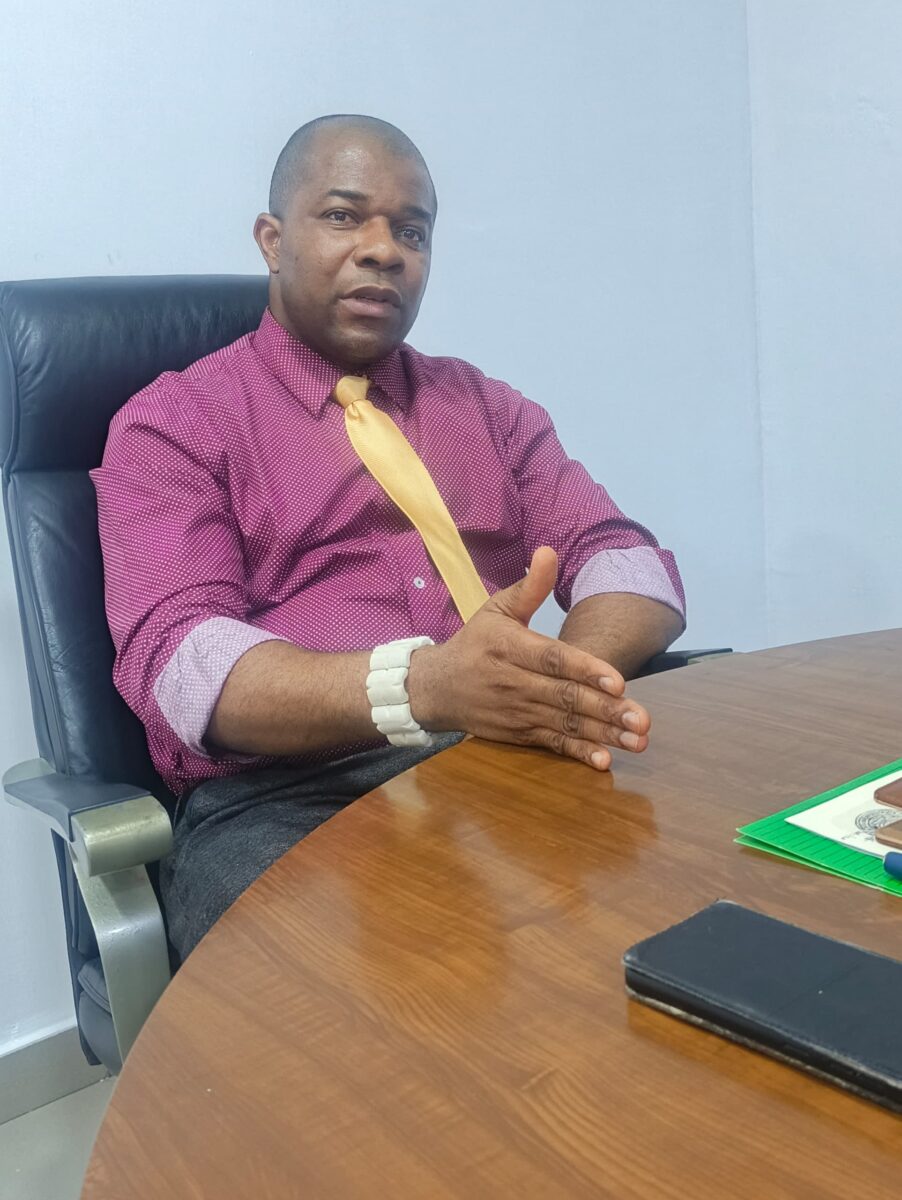
“My approach is not about appearances, it is about impact”
“Stakeholders must actively engage, report inefficiencies, and collaborate openly”
What is the significance of this stakeholder engagement, especially coming on the eve of the National Single Window launch?
This engagement is both timely and strategic. We are gathered here on the eve of the National Single Window launch to align stakeholders, deepen understanding, and collectively explore how this reform will transform cargo clearance processes in Nigeria. The National Single Window represents a major leap in trade facilitation. It is designed to integrate processes, eliminate inefficiencies, and enhance transparency across the logistics chain. Our goal today is to ensure that all stakeholders—regulators, operators, and private sector players—are fully prepared to leverage its benefits.
What milestones has CRFFN achieved despite industry challenges?
Despite initial challenges, the Council has made significant progress. We have established five zonal offices, 24 outpost offices nationwide, and a training institution—the Nigerian Institute of Freight Forwarding, in Abuja. In addition, we have deployed digital platforms for registration, annual returns, and training enrolments. We have also created a national freight forwarders’ registry, to enhance transparency and traceability, alongside regular training and certification programmes across the country.
What are the major challenges currently facing freight forwarders in Nigeria?
The industry continues to face several challenges, including fragmentation of processes, lack of system integration, high transaction costs, and delays in cargo clearance. While the National Single Window is expected to significantly reduce these issues, there are still operational bottlenecks outside port terminals that require attention. Addressing these challenges requires collaboration and real-time reporting of inefficiencies.
How does the National Single Window address these challenges?
The National Single Window is designed to unify and digitalize cargo clearance processes. It will eliminate redundancy, reduce bureaucratic bottlenecks, and improve efficiency. We expect it to significantly cut down clearance time and costs, while enhancing transparency and accountability. It aligns perfectly with the Federal Government’s vision of creating a modern and globally competitive freight forwarding sector.
There has been persistent concern among freight forwarders over the Practitioners Operating Fee. What is really happening?
The issue of the 5% on POF is one of the professional problems that emerged over time and, frankly, it has deviated from the original intention behind the establishment of CRFFN. Yes, it was a promise that had been made, and as we say, government is continuous. But the reality is that the system used to collect POF has been fundamentally inefficient. The platform through which POF was collected was supposed to capture and document every practitioner, every payer, and their performance. Unfortunately, that system was not domiciled within CRFFN. We did not—and still do not—have access to its backend. This is not something I want to hide. It may have been treated as a secret before, but it is no longer. We must deal with the truth today if we want to build trust for tomorrow.
Can you explain how this inefficiency affects freight forwarders directly?
Let me simplify it. Imagine Mr. Jerry pays his POF through a POS machine operated by Fatima. The system captures Fatima as the one making the transactions, not Jerry who is the actual practitioner. Now, Fatima is not a freight forwarder, and she does not input Jerry’s details into the system. So, the platform aggregates transactions under her name without distinguishing the actual payers. This creates a major problem. If there is supposed to be a 5% return or benefit tied to those payments, who exactly should receive it? The system cannot accurately identify the rightful beneficiary. So, you can see the dilemma—who is losing in this situation? It is the practitioners. It is indeed a systemic problem that has existed for a long time. And to be honest, under my leadership, I have not yet found a complete solution to it. That is why I am using this platform to appeal to stakeholders. If anyone has a workable solution, come forward. My office is open. Let us sit together, dialogue, and find a lasting answer. I am also affected by this issue—I pay the same 5% you are talking about. So this is not an abstract problem; it affects all of us.
Beyond POF, what other major challenges is CRFFN facing?
Another critical issue is the fragmentation within the freight forwarding industry. CRFFN was established to professionalize freight forwarding. However, the industry has become highly polarized along the lines of unions and associations, each with different interests. This division makes it difficult to implement uniform standards and policies that benefit everyone.
How are you addressing this fragmentation?
When I assumed office, I made a deliberate decision to focus on foundational reforms. I have spent my first year—and continuing into the second—studying the problems deeply and working on structural solutions. These are not always visible to stakeholders because they involve policy development, regulatory frameworks, and institutional restructuring. I dedicate most of my time to this work. On average, I sleep just three to four hours daily because of the need to think through policies, guidelines, and systems that can reposition the industry.
Some stakeholders feel disconnected from the leadership. What is your response to this?
I understand that perception, but it is important to clarify. I may not be physically present at every gathering or social event, but that is because I am focused on building systems that will outlast individuals. My approach is not about appearances—it is about impact. That said, I operate an open-door policy. My office is accessible, and I encourage stakeholders to engage directly with me. Dialogue is key to progress.
You mentioned training earlier. How does that tie into the POF issue?
Training is central to the mandate of CRFFN. Freight forwarding is a professional field, and continuous capacity building is essential. If you look at other sectors, particularly maritime operations, agencies like NIMASA place significant emphasis on training—especially for seafarers—and these programmes are well-funded. So, the question is: why is freight forwarders’ training not given the same priority? Originally, POF was designed to support such initiatives. But today, practitioners neither receive adequate training nor the expected financial returns. That disconnect must be addressed.
Many stakeholders are advocating for digitalization. Is that the way forward?
Absolutely. In fact, across different stakeholder groups, digitalization has been a recurring recommendation, and rightly so. We are moving in that direction. The idea is to create a system where once a payment is made, the record is automatically captured under the correct individual. With proper digital infrastructure, transparency improves, accountability is ensured, and issues like misallocation of payments can be eliminated. That is one of the key reforms we are pursuing.
CRFFN recently launched a Complaint and Feedback Portal. What is its purpose?
The Complaint and Feedback Portal is a critical innovation aimed at strengthening transparency and accountability. It allows freight forwarders and stakeholders to report operational challenges, inefficiencies, and unethical practices in real time. This platform will improve regulatory oversight, enhance service delivery, and ensure that reforms translate into measurable outcomes. It is a key tool for driving responsiveness within the system. The platform was introduced to provide a centralized digital channel for reporting malpractice, inefficiencies, and disputes in Nigeria’s freight forwarding and logistics sector, especially following the rollout of the National Single Window. It is open to freight forwarders, importers, exporters, clearing agents, shipping companies, and the general public. Users can report issues such as overcharging, delays in cargo clearance, fraud, regulatory breaches, and unprofessional conduct, while also tracking their complaints in real time.
How will the platform improve accountability and service delivery in the ports?
The platform enhances accountability by holding licensed freight forwarders, government officials, and logistics operators responsible for unethical practices. It allows CRFFN to mediate disputes and take regulatory actions where necessary. By promoting transparency, reducing delays, and addressing inefficiencies, the system is expected to improve service delivery, protect port users, and support ongoing reforms in Nigeria’s marine and blue economy.
Can you shed light on CRFFN’s collaboration with international and private sector partners?
We have entered strategic collaborations with organizations such as the Maritime Anti-Corruption Network and the Convention on Business Integrity under what we call the Integrity Alliance. This partnership, established in November 2025, is focused on enhancing transparency and combating corruption in freight forwarding operations. It builds on lessons from vessel clearance reforms and extends them to land-side logistics. We are actively participating in international platforms such as FIATA and the World Customs Organization frameworks. We are also updating licensing standards and training curricula to ensure that Nigerian freight forwarders remain competitive globally. Our focus is on professionalism, certification, and continuous development.
What is your message to stakeholders in the freight forwarding and logistics sector?
I understand their frustration. It is painful when promises are not fulfilled. And we are not dismissing those concerns or sweeping them under the carpet. But the truth is, the challenges are more complex than they may appear. As I have explained, even we as regulators are dealing with uncertainties in certain areas. This is why I keep saying: we cannot continue doing things the same way and expect different results. This is a time for change. The success of these reforms depends on collective efforts. Stakeholders must actively engage, report inefficiencies, and collaborate openly. This is not just about discussing problems—it is about designing solutions that will shape the future of trade facilitation in Nigeria. Together, we can build a system that is efficient, transparent, and globally competitive.
Finally, what is your commitment going forward?
My commitment is transparency, inclusiveness, and reform. I invite all stakeholders—freight forwarders, associations, and industry players to engage with us. Bring your ideas, your solutions, and your perspectives. Let us work together to fix these problems once and for all, so that we can build a stronger, more professional freight forwarding industry in Nigeria. If we collaborate effectively, I believe we will soon reach a point where issues like the POF controversy will no longer dominate our conversations.