This week, the International Maritime Organisation (IMO) will again lead the world in the annual celebration of seafarers. Precisely, June 25 every year has come to be known as the Day of the Seafarer.
What has now become an annual ritual of celebrating the world’s seafarers actually started in 2010. It was in that year that the Diplomatic Conference met in Manila, Philippines and adopted milestone revisions to the International Convention on Standards of Training, Certification and Watchkeeping for Seafarers (STCW Convention) and its associated Code. The conference agreed that the unique contributions made by seafarers from all over the world, to international seaborne trade, the world economy and civil society as a whole, should be marked annually with a ‘Day of the Seafarer’.
And since then, every year on the 25th of June, stakeholders gather to celebrate the huge contributions and sacrifices of seafarers to international commerce.
This year’s theme is: Carrying Global Trade. Carrying the Risks. Under the theme, the International Maritime Organization aims to highlight the essential role of seafarers in keeping international trade moving, often under complex and hazardous conditions.
Apparently, the campaign is targeted at highlighting the hardship, pressure and risks of life at sea, especially in high‑risk and conflict‑affected areas, while underscoring seafarers’ essential role in keeping global trade moving.
No doubt, the theme is timely, especially given the current travails of seafarers who have been caught in the cross fire of the US-Israel-Iran war in the Middle East.
We also join the world to celebrate these professionals for their service to mankind through commerce.
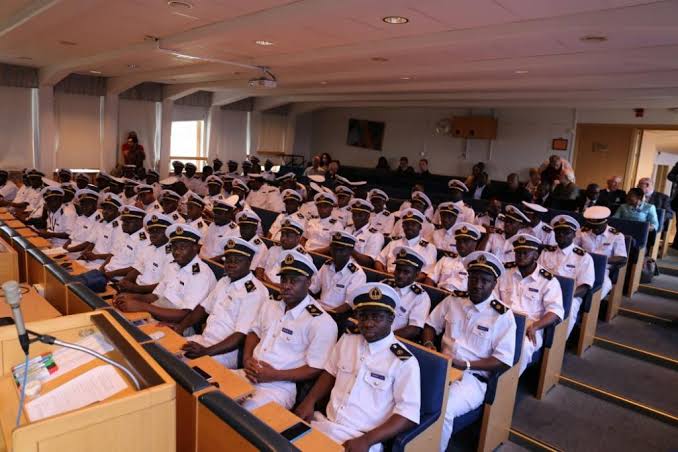
Coming home to Nigeria, each year, the celebration of the Day of Seafarer offers an opportunity to also focus of the peculiarity of our seafarers, whose problem is quite different from what their contemporaries in other climes are facing. Clearly, the problems of Nigerian seafarers is not about abandonment, criminalization, and certainly not about neglect on board ships.
It is a fact that, Nigerian seafarers face a myriad of challenges, including unemployment, wage disparities, certification issues, and involvement in illegal activities such as illegal bunkering, sea robbery.
Arguably, unemployment is one of the most pressing issues faced by Nigerian seafarers. Despite the significant number of maritime training institutions in Nigeria, many graduates find it difficult to secure basic employment.
The reasons for this are multifaceted: The Nigerian maritime industry does not have enough vessels and top-rate shipping companies to absorb the growing number of trained seafarers. The few indigenous shipping companies prefer to employ foreign seafarers due to perceived higher competency levels and reliability.
The economic challenges facing Nigeria, which include fluctuating crude oil prices and volatile exchange rate, have adversely affected the maritime sector, leading to reduced investments and dwindling job opportunities.
Perhaps, the biggest headache leading to unemployment is the huge gap between the training provided by maritime institutions and the practical skills required by the industry. This mismatch results in Nigerian seafarers being less competitive compared to their foreign counterparts.
Also, connected to the above is the certification process leading to employment. Certification consequently becomes the major hurdle for Nigerian seafarers. The International Maritime Organization (IMO) sets stringent standards for seafarer certification, and Nigerian seafarers often struggle to meet these requirements, due to inadequate training facilities. Many maritime training institutions in Nigeria lack the necessary infrastructure and equipment to provide training that meets international standards.
The process of obtaining and renewing certifications is often hampered by bureaucratic red tape and corruption.
Added to this is the fact that, Nigerian certificates are often not recognized internationally due to the perceived quality of training and non-adherence to international standards. This limits employment opportunities abroad. The certificates which are limited, provide limited opportunities for their holders. Sadly, Nigeria can only boast of issuing coastal voyages certificates only.
Without Class 1 and Class 2 Certificates, how does a Nigerian seafarer grow to become Chief Engineers, Chief Mates, and Captains? The few who can afford it often have to travel abroad to obtain these certifications, at high personal costs.
Lack of employment opportunities and the associated economic hardships have driven many Nigerian seafarers to engage in illegal activities such as bunkering, piracy, and theft.
A lot of people have blamed the current travails of the Nigerian seafarer on government and by extension, on NIMASA, which is the implementing agency for maritime labour. While this may not be entirely correct, NIMASA has not done enough to boost the marketability of seafarers, this it would have done by ensuring that the Maritime Academy of Nigeria in Oron, Akwa Ibom state is well-funded and its certificates global, competitive and unlimited. The Near Coastal Certificates which many seafarers possess is a limiting factor.
But, rather than enhance Nigeria seafarers’ certificates, NIMASA is funding some maritime institutes in universities and also sending young Nigerians to foreign maritime academies for training in nautical sciences and marine engineering, under the National Seafarers Development Programme (NSDP). Perhaps, a robust programme of sea time for graduating seafarers would have helped too.
Addressing the problems faced by Nigerian seafarers requires a multi-faceted approach. The Nigerian government must implement policies that promote the growth of the maritime industry and create more job opportunities for seafarers.
This includes investing in maritime infrastructure, providing incentives for local shipping companies to hire Nigerian seafarers, and strengthening regulatory frameworks to ensure fair wages and working conditions. Maritime training institutions must be upgraded to meet international standards, with a focus on practical skills and competencies.
It is a shame that Nigeria’s is fast losing its foremost and world-class seafarers to age, and we no longer owns high tonnage ships. But even if we no longer own ships, the abundance of budding and qualified seafarers should propel government to guarantee secured employment for them. This, in our opinion should be the essence of the ‘seafarers’ day’ in Nigeria.