The steady infiltration of hard drugs into Nigeria has assumed an alarming dimension, and the nation’s seaports are increasingly emerging as the primary gateway. From land borders to airports, illicit substances continue to find their ways into the country.
However, while arrests at airports appear more frequent and dramatic, the volumes intercepted at the seaports tell a far more troubling story.
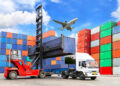
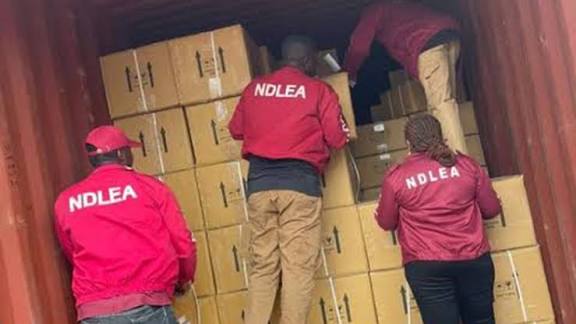
Investigations by Shipping Position Daily reveal that between 2021 and 2025, a staggering 2,553,132.90 kilogrammes of illicit drugs valued at over ₦3 trillion were seized at Nigeria’s seaports. Statistics obtained from the National Drug Law Enforcement Agency (NDLEA) show that these seizures were recorded across major seaports and marine commands nationwide. The figures underscore not only the scale of drug trafficking through Nigeria’s maritime gateways but also the intensity of enforcement operations over the five-year period.
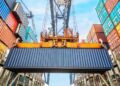
The contrast between airports and seaports seizures is revealing. At the airports, arrests are more frequent, often involving individual traffickers attempting to smuggle smaller quantities concealed in luggage or on persons. At the seaports, however, a single intercepted consignment can amount to massive volumes, bales and sacks of narcotics packed into containers. The implication is clear: the maritime corridor has become the preferred route for large-scale trafficking, by daredevil “merchants of death” who prioritise money over human lives.
This reality should not be interpreted as a failure of enforcement agencies. On the contrary, the collaboration between the NDLEA and the Nigeria Customs Service (NCS) deserves commendation. Intelligence sharing, joint examinations, container profiling, and coordinated operations have led to remarkable serial seizures. The fact that over 2.5 million kilogrammes of illicit drugs were intercepted is evidence that vigilance is active at the ports and its yielding results.
Security measures at the ports have been strengthened. Container scanning technology, risk management systems, inter-agency task forces, and tighter documentation checks have all been deployed to reduce vulnerabilities. Yet, despite these efforts, traffickers continue to test the system. Their persistence suggests that the criminal networks behind these operations are sophisticated, well-funded, and trans-national in scope. They exploit global shipping channels, falsify documentation, conceal contraband within legitimate cargo, and leverage insider information where possible.
As a maritime media outfit, we are increasingly concerned that Nigeria’s ports may be perceived as vulnerable transit routes by international drug cartels. Seaports are critical national assets, gateways for trade, economic growth, and regional integration. If they become synonymous with drug trafficking, the consequences will extend beyond security and health, to reputational and economic damage. Shipping lines, investors, and international partners closely monitor compliance and security standards. Persistent drug seizures on a massive scale may inadvertently cast shadows over Nigeria’s port integrity, even when enforcement agencies are working tirelessly.
However, beyond the ports and the seizures lies a more frightening dimension: The social impact of drug proliferation. Drug consumption in Nigeria is no longer confined to a particular demographic. There is virtually no social stratum that is untouched. From teenagers aged 15 and 16 to elderly citizens in their 70s , from the affluent to the impoverished, from urban centres to rural communities—drug abuse cuts across gender, class, and geography.
The health implications are grave. Increased cases of addiction, mental health disorders, and drug-induced psychosis are placing immense pressure on families and healthcare systems. Rehabilitation facilities remain inadequate compared to the growing number of users. Beyond health, the security implications are even more disturbing. Hard drugs fuel criminality. They embolden perpetrators of kidnapping, banditry, armed robbery, cultism, and even religious extremism. A drug-dependent population is more vulnerable to manipulation, violence, and social instability.
The linkage between narcotics and insecurity cannot be ignored. Criminal gangs often rely on drug proceeds to finance operations. Some violent actors operate under the influence of stimulants that suppress fear and heighten aggression. Thus, every bale of cocaine, heroin, methamphetamine, or synthetic substance that slips through represents not just a health hazard but a potential trigger for broader societal chaos.
The fight against hard drugs, therefore, must extend beyond seizures. While the NDLEA and Customs are intercepting significant quantities, the root causes of demand must also be addressed. Prevention and demand reduction campaigns in schools, faith-based institutions, and communities need to be intensified. Youth engagement programmes, employment opportunities, and mental health awareness initiatives are critical in reducing vulnerability. Rehabilitation and reintegration frameworks must also be strengthened to give recovering addicts a second chance.
Furthermore, port security architecture must continuously evolve. Investment in advanced scanning technology, artificial intelligence-driven cargo profiling, enhanced surveillance systems, and stricter accountability mechanisms will help close existing gaps. International cooperation is equally vital, as drug trafficking networks operate across borders. Intelligence collaboration with exporting and transit countries can disrupt supply chains before consignments even reach Nigerian waters.
Nigeria stands at a crossroads. The seizures recorded between 2021 and 2025 demonstrate that enforcement agencies are not asleep. They are intercepting massive consignments and disrupting networks. Yet, the sheer volume of drugs being attempted suggests that the stakes are rising. Criminal syndicates would not risk consignments worth trillions of naira, unless the profit margins were astronomical and the demand substantial.
Our seaports must not become conduits for destruction of lives. They are meant to drive commerce, not carnage; development, not decay. The collaboration between NDLEA and Customs is working and must be strengthened, not undermined by blame. At the same time, the nation must adopt a holistic strategy that addresses supply, demand, enforcement, rehabilitation, and socio-economic drivers.
The battle against hard drugs is no longer just a law enforcement issue; it is a national survival imperative. If the tide is not decisively turned, the cost will not merely be measured in kilogrammes seized or naira valued, but in broken homes, shattered futures, and a generation imperiled.