By Joshua Yousouph
The National Inland Waterways Authority (NIWA) says it has conducted an on-the-spot assessment of its patrol surveillance fibre boat, PB Gurara, which was reportedly vandalised and looted at the Katcha waterfront in Niger State.
The assessment, led by the NIWA Minna Area Manager, Mr. Akapo Adeboye, followed an incident that allegedly occurred between July 10 and 11, 2026, resulting in the vandalisation of the Authority’s fibre patrol boat powered by twin 75HP Yamaha engines.
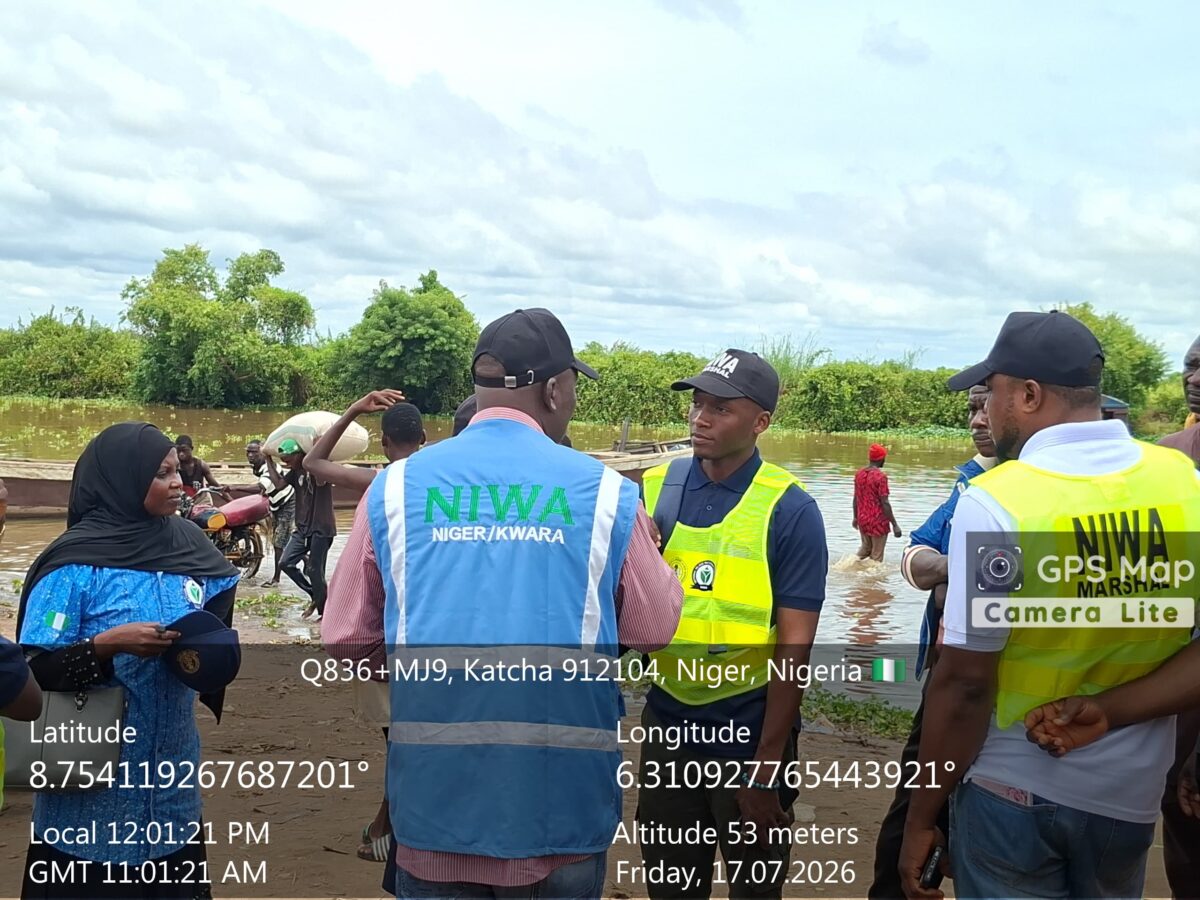
Speaking on the development, Adeboye said the inspection team visited the Katcha waterfront on July 17, 2026, to evaluate the extent of damage to the vessel and engage relevant stakeholders on the incident.

According to him, the team held consultations with the District Head of the community, the Sheshi Palace, the Divisional Police Officer (DPO) in charge of Katcha Police Station, officials of the Department of State Services (DSS), management of Badeggi Radio Station, and the Chairman of Katcha Local Government Area.
He explained that the visits formed part of efforts to gather information, strengthen collaboration with local authorities, and support ongoing investigations into the vandalisation and looting of the patrol boat.
The Area Manager reiterated NIWA’s commitment to safeguarding public assets and ensuring that facilities deployed for waterway safety and surveillance are protected from criminal activities.

Adeboye emphasized that the Authority remains determined to preserve government property and ensure accountability in the management of assets funded by taxpayers.
He further disclosed that video evidence and findings from the assessment exercise would be forwarded to the management of the Authority for necessary action.
The vandalised patrol boat, PB Gurara, is one of the operational assets deployed by NIWA to enhance surveillance, safety enforcement, and monitoring activities along the nation’s inland waterways.
The Authority has continued to intensify efforts aimed at improving security and safety on inland waterways through stakeholder engagement, patrol operations, and collaboration with security agencies.