The Presidency on Wednesday disclosed that Nigeria’s non-oil sector generated ₦20.59 trillion between January and August 2025, surpassing the federal government’s annual revenue target.
It also announced that the Nigeria Customs Service (NCS) collected ₦3.68 trillion within the first half of the year, exceeding its set target by ₦390 billion and achieving 56 percent of the full-year projection.
These details were contained in a statement issued by the Special Adviser to the President on Information and Strategy, Bayo Onanuga, titled: “Nigeria’s Non-Oil Revenues Power Strongest Fiscal Performance in Recent History.”
According to the statement, the strong revenue performance is the result of fiscal reforms aimed at strengthening compliance, broadening the tax base, and digitising government revenue collection systems.
The Presidency explained that the improvement in collections has significantly boosted monthly disbursements at the Federation Account Allocation Committee (FAAC), enabling the federal, state, and local governments to receive more funds for critical development projects.
“From January to August 2025, total collections reached ₦20.59 trillion, a 40.5 percent increase from ₦14.6 trillion recorded in the same period of 2024. This performance places the government firmly on track to meet its annual target,” the statement read.
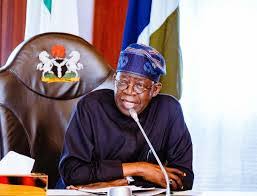
President Bola Tinubu, while addressing a delegation of the Buhari Organisation led by Senator Tanko Al-Makura on Tuesday, was quoted as saying that the federal government has stopped borrowing from local banks to support its operations, attributing this to stronger fiscal performance since the beginning of the year.
The statement also noted that, for the first time in history, FAAC allocations to states and local governments crossed ₦2 trillion in July 2025, expanding fiscal space for subnational governments to fund food security, infrastructure, and social services.
However, it acknowledged that despite the increases in revenue, the government’s ambitions for spending on education, healthcare, and infrastructure have not yet been fully met.
Commenting further, Onanuga said: “Nigeria’s fiscal foundations are being reshaped. For the first time in decades, oil is no longer the dominant driver of government revenue. Reforms, compliance, and digitisation are powering a more resilient economy.”
He stressed that the priority remains ensuring that the gains translate into tangible benefits for citizens in the form of better schools, hospitals, roads, jobs, and improved living standards.
According to the Presidency, of the ₦20.59 trillion generated within eight months, non-oil revenue accounted for ₦15.69 trillion — representing three out of every four naira collected, underscoring a fundamental shift away from oil dependence.
While inflation and foreign exchange revaluation contributed to the revenue surge, the statement clarified that the uplift was largely reform-driven — citing digitised filings, Customs automation, stricter enforcement, and broadened compliance as key drivers.
It emphasized that revenue performance was ahead of expectations and that final validated figures would be published by the Budget Office at year’s end.
“The numbers are rising, the base is broadening, and reforms are working. The next step is ensuring these revenues bring real relief to citizens — by putting food on the table, creating jobs for young people, and investing in critical infrastructure,” the statement concluded.