Amidst recurring boat mishaps in some parts of Niger state, many residents of the riverine communities are blaming the accidents and accompanying fatalities on supernatural influence of “marine spirits” who capsize the boats and take the victims.
This explains why drowning victims are often left without rescue, not because help is unavailable, but because many locals believe their fate has already been sealed by a “marine spirit.”
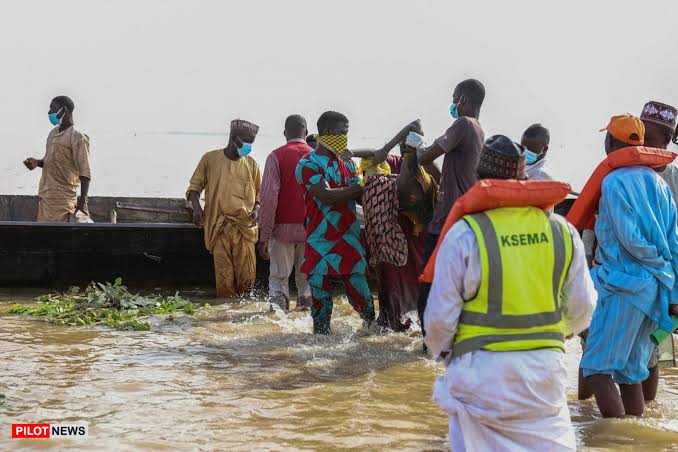
In a fact-finding visit to Niger state last week, our correspondent gathered that the belief, deeply entrenched in the culture of these communities, holds that when someone falls into the water, it is the marine spirit’s way of “taking them.” In the light of this, they believe that life jackets are meaningless if the spirit has chosen its victim.
Shipping Position Daily recalls that last month, at least 13 people were confirmed dead in a boat mishap in Shiroro Local Government Area of Niger State. The tragic incident occurred around 2 p.m. when a boat carrying passengers from Guni in the Munya Local Government Area to a weekly market capsized.
This revelation comes as the Etsu Nupe and Chairman of the Niger State Council of Traditional Rulers, Alhaji Yahaya Abubakar has ordered the prosecution of boat operators and passengers who violate safety regulations on the state’s waterways.
However, while speaking during a media interaction with Shipping Position Daily in Minna last week, the Deputy Governor of Niger State, Comrade Yakubu Garba dismissed the notion on the entrenched beliefs of marine spirits being responsible for boat mishaps, insisting that 21st-century Niger State should be embracing technology, not superstition.
The Deputy Governor noted that many boat mishaps are not only the result of technical faults, but also due to man-made negligence. He cited overloading, use of ageing wooden boats that are far beyond their lifespan, and poor compliance with safety rules as recurring factors.
Addressing environmental hazards, Comrade Garba acknowledged the presence of trees and shrubs along some water channels. He stressed that while the government is working to instill a safety culture, it also needs stronger federal collaboration and private sector investment to address infrastructural gaps on the waterways.
Speaking to the locals’ belief in marine spirits and their powers, the Deputy Governor asked: “Are we saying our ancestors caused mishaps? They should have saved us, not kill us. We must move beyond such beliefs and work on technology and safety. We have good policies. What we need is patriotic action. Once we have the right enforcement tools, we should use them to the fullest.” Comrade Garba said.
Also confirming the superstitious belief of the riverine community dwellers, the Niger state Commissioner of Transportation, Hajia Hadiza Kuta raised alarm over a deadly mix of cultural beliefs and unsafe vessels that continues to claim lives on the state’s waterways. While recounting a recent tragedy, she said that even with a speedboat stationed at the scene of the fatal boat accident, no rescue attempt was made.
The Transport Commissioner explained that poverty compounds the problem, with most villagers relying on aging wooden canoes. While the state government has provided eight fiber boats and five 50-seater boats, she noted that traditional canoes remain the primary means of transport in riverine communities.
In partnership with the National Inland Waterways Authority (NIWA), Hajia Kuta said the government is now registering all boat operators, phasing out unsafe wooden vessels, and introducing a hire-purchase scheme to make modern boats more affordable.
Explaining further, she said: “When that boat accident happened, we actually had a speed boat stationed in the area. But even that day, they didn’t use it for rescue. They just felt, ‘Ah, the person has already fallen in the water; the spirit has taken them’.
“We are calling an emergency meeting with traditional rulers and community tribunals to help us sensitize their people. Many won’t listen to the governor or government officials, but they will listen to their traditional rulers, village heads and respected figures. We also need enforcement to arrest one or two erring operators, and it will send a message.” Hajia Kuta said.
On his part, the Area Manager of the National Inland Waterways Authority (NIWA), Mr Akapo Adeboye called for a decisive shift in the mindset of riverine communities towards safety compliance, stressing that genuine change in attitudes is key to reducing boat mishaps across Nigeria’s waterways.
Mr. Akapo Adeboye lamented that despite sustained efforts to provide life jackets, sensitise passengers, and enforce safety guidelines, many still engage in high-risk practices such as overloading, embarking on night voyages, and refusing to wear protective gear.
“Attitude is our number one challenge. Some passengers and boat operators see life jackets as unnecessary. They call them singlets, sell them, or even use them as pillows or farm tools. That mindset puts lives at risk.” Akapo said