
On February 25, 2014, at a forum organised by PAN Nigeria in Lagos to unveil some Peugeot cars scheduled for production in Kaduna, former Head of State, Gen. Yakubu Gowon, surprised the guests when he went down memory lane, stressing that one of the most lamentable points of his regime’s ouster, was the discontinuation of the policy of building a vibrant domestic auto industry.
On February 25, 2014, at a forum organised by PAN Nigeria in Lagos to unveil some Peugeot cars scheduled for production in Kaduna, former Head of State, Gen. Yakubu Gowon, surprised the guests when he went down memory lane, stressing that one of the most lamentable points of his regime’s ouster, was the discontinuation of the policy of building a vibrant domestic auto industry.
Gen. Gowon, who graced the event in his capacity as the Brand Grand Patron (BGP) of Peugeot, recalled that before “I was shoved aside”, a development plan was in place, which was intended to lead to the production of sundry auto models on a sustainable basis by the assembly plants being set up by his government to satisfy the country’s passenger cars and commercial vehicles needs.
He, however, bemoaned the lack of efforts by subsequent regimes to continue with the implementation of the plan. The effect of this, according to him, combined with other factors to bring the auto industry to its knees only a few years after the plants came on stream.
With the swearing-in of President Muhammadu Buhari three days ago, the domestic auto industry has, once again, found itself at a critical point where the question being asked is: Will the new government retain the Nigerian Automotive Industry Development Plan (NAIDP), popularly referred to as the automotive policy? Or will the gains so far recorded be allowed to waste again?
A survey of the opinions of major stakeholders over the past few days, showed an overwhelming support for the retention of the policy by President Buhari’s government. From the umbrella body of auto makers in the country (Nigeria Automotive Manufacturers Association, NAMA), and the local content suppliers (Automotive Local Content Manufacturers Association of Nigeria, ALCMAN), to leading auto plants like Innoson Vehicle Manufacturing Company Ltd, Nnewi; ANAMMCO, Enugu (where Shacman heavy duty trucks are now produced); Kia Motors Nigeria; and PAN, Kaduna; among others, there is a concerted yearning for the continuation of the policy.
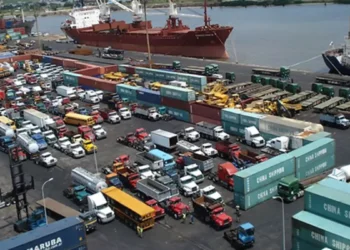
They also called for strict enforcement of the guideline on SKD1/SKD2 production to check the abuse by dubious firms that import fully built vehicles disguised in containers as semi-knocked down components for local assembly, and still take extra advantage of the provision that allows them to import fully built units equal to the number they ‘produce’. It was also alleged that many vehicles still come into the country through unapproved points, while some of those imported through the ports do not pay the applicable duties.
National Automotive Council (NAC) records show that no fewer than 23 investors have either set up assembly facilities or are in the process of doing so, while production activities have restarted at some older generation plants like Volkswagen, Ojo, Lagos (where Nissan and Hyundai vehicles are now produced by the Stallion Group), ANAMMCO, and PAN.
First approved on October 2, 2013, by the Federal Executive Council (FEC), the automotive policy came into full effect on Tuesday, July 1 last year, to attract off-shore investments which have been scarce in the industry, resuscitate the dead and dying plants and encourage technologically advanced manufacturing activities. High tariff on imported ready-made vehicles was a key component intended to remove the advantage enjoyed by importers over local manufacturers.
The expectation is that as the new policy favours the production of automobiles in Nigeria, against the importation of fully built-up new and used vehicles which presently dominate the market, there will be a reduction in the latter. With imported vehicles gradually eliminated, it is the target of the policy framers that local assembly plants will be in a position to produce vehicles that would be affordable to the average buyers (at between N1.2 m and N1.5m, for cars).
To achieve this, a new regime of fiscal measures on imported vehicles and tyres issued on November 14, 2013, by the former Coordinating Minister for the Economy/Finance Minister, Dr. Ngozi Okonjo-Iweala, pegged duty on fully built unit (FBU) cars at 35 percent, plus 35 percent levy, totaling 70 percent. A waiver was granted to second-hand vehicles importers by which the so called tokunbo will continue to come in on the old duty regime. However, critics suspected that the cancelation of the December 31, 2014 deadline and the extension of the waiver till later this year, were based more on political reasons (as the elections approached) than the official reasons offered.
Vital part of the policy is that those who engage in local value added will import new fully built vehicles twice the number they assemble without levy as well. This means that SKD 2 kits imports for the easiest and fastest level of assembly will attract only 10 percent tariff without levy, SKD 1 kits for slightly more advanced level of assembly attracts 5 percent tariff without levy, and advanced assembly level of CKD attracts 0 percent tariff without levy.
“This is to ensure rapid local assembly to gain volume within the shortest possible time and to create demand for existing and potential local content companies”, the Director-General of NAC, Aminu Jalal, an engineer, said.
Advising the new government not to even mull reversing the NAIDP, an ALCMAN chieftain, Dr D.V.C Obi and the interim coordinator of NAMA affairs, Mr.Babatunde Kolade, argued that a policy summersault would flush down the drain the success so far recorded in the industry, in addition to sending a negative signal to potential investors. Another key player in the industry also argued that a reversal would end up a costly mistake, considering that many global auto makers had cited “characteristic policy inconsistency” as one of their reasons for standing aloof, at least, for now.
In taking a decision on the policy, the Buhari administration should take into consideration the fact that first generation of assembly plants died because of a tariff regime that favoured importation, Kolade argued. Speaking specifically about used vehicle import, he added: “No country in the world produces vehicles at home and at the same time allows indiscriminate inflow of used vehicles”.
This is a view shared by Mr. Jacky Hathiramani, the Managing Director of Kia Motors Nigeria (a member of the Dana Group) which was encouraged by the policy to commence the production of Kia vehicles in Lagos. He called for the immediate application of the new duties on imported used vehicles.
To Obi who also heads the auto group of the Manufacturers Association of Nigeria (MAN), what government should do is to ensure that the loopholes being exploited by insincere auto companies, including the abuse of the SKD1 and SKD 2 incentives, are blocked. “In fact, I do not see any positive reason for providing for the SKD production, whether 1 or 2, in the policy. Therefore, I strongly advise government to discard it, and move on with the policy which I think is the best thing to happen to our industry”.
However, like the NAMA spokesman, the Managing Director of ABC Transport Plc, Mr. Frank Nneji, believes that checking the abuse of the SKD can be done by making the relevant agencies; particularly the Customs, to be alive to their duties and ensure stricter enforcement of the aspects of the policy that require importation.
ABC Transport’s sister company, Transit Support Services, is partnering with a Chinese auto maker to produce Shacman heavy duty commercial vehicles at ANAMMCO.
“The new government should retain the policy, because it has started to yield the desired results in terms of employment and local content sourcing. The policy cannot be blamed for the malpractices. What is needed is stricter enforcement of the aspects that are being abused”, Nneji remarked, calling for a clear definition of SKD and SKD PRODUCTION. He also disclosed that hundreds of workers have been re-engaged to produce vehicles at ANAMMCO.
Advising against truncating the NAIDP which, according to him, would have unpleasant consequences, a consultant on strategic investments and auto industry matters, Mr. Ike Aroh, described the policy as “a laudable economic initiative that covers all that is needed” to take the sector to a higher level.
Echoing this, Hathiramani also called for inclusiveness in taking vital decisions on matters concerning the industry, in place of a situation where “just a few usual stakeholders” have their way. He looks forward to a convergence of all relevant stakeholders in the near future where the policy impact will be discussed.
*By Moses Akaigwe







Discussion about this post