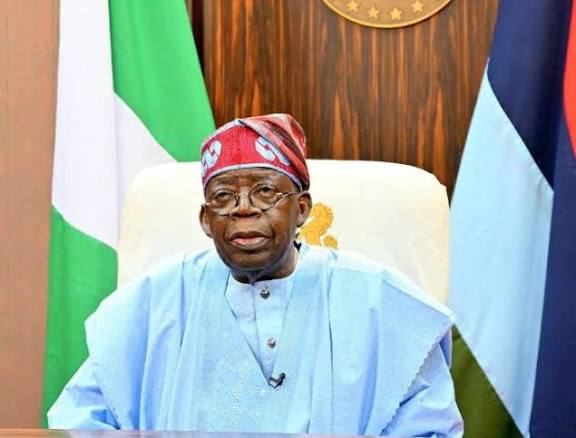
President Bola Ahmed Tinubu, in his 65th Independence Day national broadcast on Tuesday, pledged renewed investments in maritime infrastructure, including modern seaports, coastal highways, and rail connections to boost trade and diversify the economy.
Speaking in Abuja, the President acknowledged that Nigeria’s underdeveloped transport network—especially seaports and coastal routes—remains a major bottleneck to sustainable growth, but assured that his administration is “setting things right” after decades of neglect.
“We do not have enough electricity to power our industries and homes today, or the resources to repair our deteriorating roads, build seaports, railroads, and international airports comparable to the best in the world, because we failed to make the necessary investments decades ago,” Tinubu said. “Our administration is setting things right.”
He announced that rail and water transport recorded a combined growth of over 67% in the last two years, with work progressing on the Lagos-Calabar Coastal Highway—a project of direct benefit to port connectivity and maritime trade. In addition, seaports are among the infrastructure priorities to which the government has redirected funds following the removal of fuel subsidies.
Tinubu also noted progress in the oil and gas sector, a critical component of Nigeria’s maritime economy, revealing that crude production had risen to 1.68 million barrels per day from barely one million in May 2023. He attributed this rebound to “improved security, new investments, and better stakeholder management in the Niger Delta,” while adding that Nigeria had, for the first time in four decades, refined PMS domestically and now leads the continent in aviation fuel exports.
On trade, the President highlighted Nigeria’s emergence as a net exporter for five consecutive quarters, with non-oil exports climbing to 48% of total trade. Manufactured goods exports rose by 173%, a development maritime analysts say will put more pressure on port logistics and increase demand for efficient shipping services.
With the Eastern Rail Project recently approved for completion at $3 billion, Tinubu stressed that rail-to-port connections will “unlock bottlenecks in cargo movement” and enhance Nigeria’s competitiveness within the African Continental Free Trade Area (AfCFTA).
The President’s remarks come at a time when port users continue to lament congestion, dilapidated access roads, and the absence of a functional port community system. Maritime stakeholders are expected to watch closely how the promised investments will translate into concrete improvements in port efficiency, cargo handling, and vessel turnaround time.
While acknowledging the “temporary pains” of economic reforms, Tinubu framed his message as one of hope, urging Nigerians to embrace productivity and patronise locally made goods. “Let us farm our land and build factories to process our produce. Let us patronise Made-in-Nigeria goods. I say Nigeria first,” he declared.