
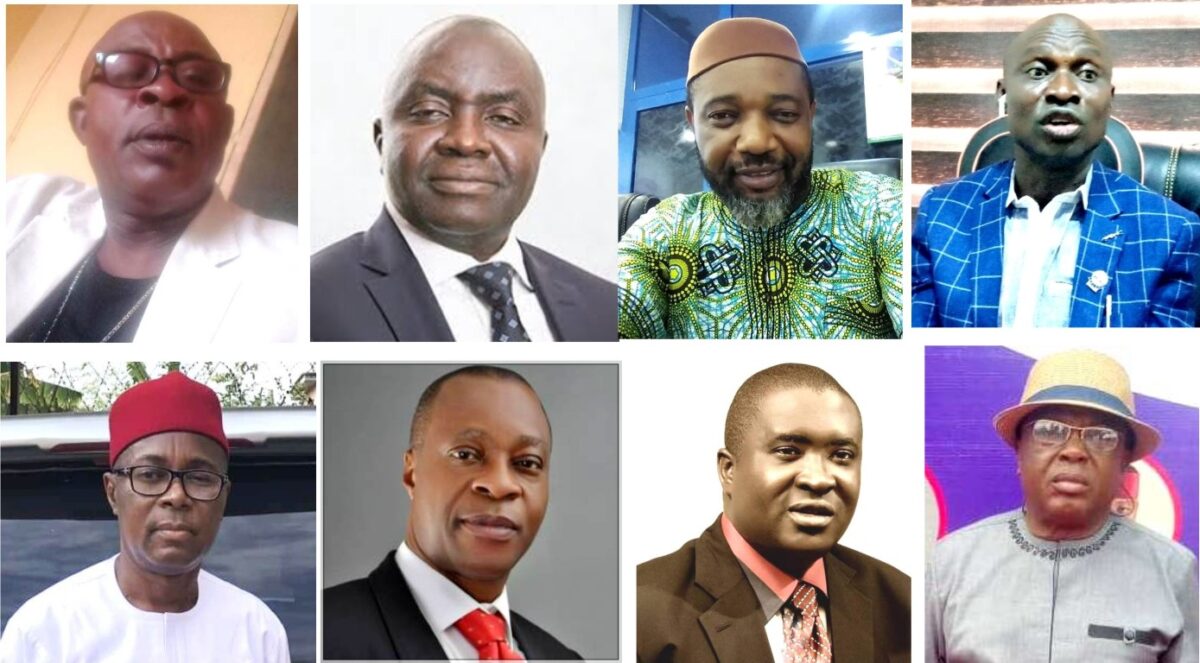
Rev. Alex Nwokedi (National Financial Secretary, AREFFN)
It has not been effective. We are saying they are working because Innoson is working which is an offshoot of their efforts. Some others are into assembly too. Many companies are coming up now with manufacturing, but the only company I can vouch for especially when it comes to 100 percent manufacturing it is Innoson. Others are doing assembling.
Muda Yusuf (Former DG, LCCI)
The automotive policy has not achieved much, because the whole idea is to be able to produce locally (and more importantly) cars or vehicles that are affordable. We have seen what people have been producing and they are still not affordable. Initially, there was a contemplation that the moment we have all these made-in-Nigerian cars, we will do away with tokunboh vehicles because the expectation was that the ones produced locally will be affordable, but they are not affordable. To that extent, I’m not sure we have achieved much.
Import content is 90 percent. Right now we are not even producing tyres which is the basic and we were producing before. We only have assembly plants which are not adding much value. I think we need to go back to the drawing board and see how we can ensure that our automobile companies are able to increase in local content. Then we will be able to bring the best of those products cheaper and more affordable, and also generate a lot more multiplier effects in terms of linkages especially backward integration, so that other segments of the economy can benefit.
Chief Eugene Nweke (Former President, NAGAFF)
The automotive policy is still suffering the effects of integrating genuine and enduring national policy contents. Ask the National Automotive Commission, the total number of vehicles imported as completely knocked down (CKD) and semi-knocked down (SKD) and assembled in Nigeria without any local contents (raw materials/ spare parts wise)? Please, leave the Innoson motors out of it, because the plant has existed many years before the policy.
Then, when you get the total number of assembled vehicles within the period compared it with the importation of used accidented vehicles classified as tokunboh, then you can compare figures to see whether the purpose has been achieved, against the background that the policy was targeted at making affordable vehicles for the average Nigeria citizen. Secondly, ask the NAC, to account for all the two percent NAC paid on import duty of vehicles and vehicles parts prior to the present auto policy. Mind you, the 2% NAC was targeted at developing our auto industry. What happened to the money over 20 years of collection, what was developed in the auto industry?
Ojo Peter Akintoye (ANLCA Chieftain)
The automotive policy is a brilliant idea. It is a good idea because it will increase our labour force and job opportunities. But the question still remains how sincere is the government in encouraging the local manufacturers to produce for the purpose of genuine use by Nigerians. How is it going to impact us? Will a common man be able to afford it? How do we drive this policy? Are we ripe for it? Innoson is doing the best, but how many Nigerians and even politicians are patronizing them?
We can see that the policy has died on arrival. We are not encouraging local manufacturers that are springing up. Politicians prefer to take their money to Europe to buy the best cars for themselves. We are not even producing any of the parts that comprise a vehicle in Nigeria, we only import them in parts and assemble them.
Frank Obiekezie (National Secretary, AREFFN)
The automotive policy is like any other Federal Government policy in Nigeria. Sometimes when you look at the policies, sometimes they don’t take time to do complete feasibility studies. Most of the policies are always Dead-On-Arrival. The policy is supposed to develop the auto industry, so that all the benefits that accrue from such an industry will come to Nigeria and benefit the people. Some countries in the world like Japan, Korea, Germany have well-defined policies regarding the Auto industry and they are using it to push their foreign policy and every other thing. If we have developed our auto policy, Nigeria will have been able to produce for Nigeria and even West Africa if not the world. The Government has been unwilling to drive the policy they have emaciated. Policies don’t work in the air; it is people that drive them. If we have a sound auto policy, it will lead to expansion in wealth creation, technical knowledge acquisition, conservation of our foreign exchange reserve amongst others. We have to go back to the drawing board.
Henry Njoku (ANLCA Chieftain)
We are not being consulted on most of the relative decisions as it affects the economy. If stakeholders were consulted, we would have made some inputs that will enhance the smooth running of it. Most of the time, we just hear that this is the policy statement from the Federal Government. But the policy is not really the reflection of this time. If we compare ourselves to other countries, we will begin to feel bad that we have not got it the way it is. We are hopeful that things will continue to improve.
Francis Omotosho (Registrar, NAGAFF Academy)
The policy is a welcome development, but the problem is if you are stopping the importation of cars and you did not put your house in order, then definitively there will be big chances that there will be shortages of people who will buy our products. The government should not just come up with such policy, but rather should strengthen local production, and make it available at a very cheaper price for the citizens.
When all that is at hand and fully operative in the local market in Nigeria, all the automobile companies are working, they manufacture new vehicles and citizens can get it at a cheaper price then you don’t need to force anybody to stop bringing vehicles from abroad or enforcing the policy. It is going to be voluntary. But if you make a policy and there are no adequate measures for that policy to work, then definitely it is a wrong step in the right direction. The Government should work on all the automobile industries, fund them, let them produce these cars for the citizens for installment payments like they do in the US.
Stephen Ibeh (National President, T-PACI)
We know we are not up to anything in this country in terms of manufacturing vehicles. We had Peugeot, Volkswagen, and ANAMCO assembly plants, but they are no more due to bad governance. When they were operational, there was not much importation of vehicles into the country. Anyone who is saying the stoppage of importation of Tokunboh vehicles into the country is to help the country, is not telling any truth. Tokunboh vehicles are what the poor masses are using and that has made transportation to be cheap. The automotive policy is for the benefit of the rich. If we want to work towards having a good government, then we should be looking at what will benefit the poor masses who are suffering. Cars are now made for the rich. The automotive policy is a bad policy.
Kindly like us on Facebook















Discussion about this post