
Prior to the death last week of the Executive Governor of Yobe State, Senator Mamman Alli, I had thought of devoting a couple of weeks to exposing you to some challenges that our body system face. Some are due to our genetic composition, some as a result environmental disunity. Our organs and blood system are most vulnerable; by virtue of challenging genes (inherited through our genealogy) and over- exposure to the vagaries of environment. Leukaemia (and other forms of cancerous conditions) is treatable when modern medical facilities are available. This is dedicated to the memories of Senator Mamman Alli whom many described as an accomplished politician of a rare breed. Watch it; that slight discomfort requires medical attention!
What is Leukaemia?
Leukemia is a cancer that starts in the organs that make blood, namely the bone marrow (the soft inner part of the bone) and the lymph system. In leukaemia, abnormal and immature white blood cells are produced in the bone marrow and lymph system. The immature white blood cells are called leukocytes.
In some individuals, leukocytes are so numerous that the blood actually has a whitish tinge. When abnormal and immature white blood cells are produced, production of normal cells decreases and the ability to fight infection decreases.
The ability to fight infection decreases because the leukaemia cells accumulate and lessen the production of oxygen-carrying red blood cells, blood-clotting cells (platelets), and normal leukocytes. If left untreated, the surplus leukaemia cells overwhelm the bone marrow, enter the bloodstream, and will eventually invade other parts of the body, such as the lymph nodes, spleen, liver, and the brain, and spinal cord.
Leukaemia means “white blood” in Greek. Leukaemia occurs when there is an excess of abnormal white blood cells in the blood.
There are 4 major kinds of leukaemia: acute, chronic, lymphocytic, and myelogenous. Acute leukaemia’s progress very rapidly, and chronic leukaemia’s progress slowly. The majority of the childhood leukaemias are acute leukaemias.
Symptoms of Leukaemia
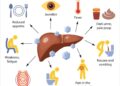
There are many symptoms of leukaemia and everyone will not experience the same symptoms. Some of the symptoms are: Weakness or chronic fatigue, Fever of unknown origin, Weight loss that is not due to dieting or exercise, Frequent bacterial or viral infections, Headaches, Skin rash, Non-specific bone pain, Easy bruising, Bleeding from gums or nose, Blood in urine or stools, Enlarged lymph nodes and/or spleen, and Abdominal fullness.
Doctors can determine the presence of leukaemia through blood tests and examinations of bone marrow.
What Causes Leukaemia?
The cause of most leukaemias is unknown. However, researchers are working hard to determine the cause. Researchers do know that leukaemia occurs in males more often than in females and in white people more often than in black people. However, researchers cannot explain why one person gets leukaemia and another does not.
Types of leukaemia
There are several types of leukaemia. They are grouped in two ways. One way is by how quickly the disease develops and gets worse. The other way is by the type of blood cell that is affected.
Leukaemia is acute or chronic, lymphocytic or myelogenous. In acute leukaemia, the abnormal blood cells are blasts that remain very immature and cannot carry out their normal functions. The number of blasts increases rapidly, and the disease becomes worse quickly. There are different kinds of acute leukaemia’s:
In chronic leukaemia, some blast cells are present, but in general, these cells are more mature and can carry out some of their normal functions. Chronic leukaemia refers to a condition where the cells look mature but they are not completely normal. The cells live too long and cause a build-up of certain kinds of white blood cells. Also, the number of blasts increases less rapidly than in acute leukaemia. As a result, chronic leukaemia worsens gradually.
Lymphocytic and myelogenous (or myeloid) leukaemia refer to the two different kinds of cells from which leukemia’s start. Lymphocytic leukaemia’s develop from lymphocytes in the bone marrow. Myelogenous leukemia (also called myelocytic) develops from either granulocyte white blood cells or monocyte white blood cells.
Can Leukaemia be prevented?
Most cancers can be prevented by changes in lifestyle or diet, which will reduce the risk factors. Unfortunately, in leukaemia, there are no known risk factors. With no known risk factors, it is difficult to prevent them
Can Leukaemia be treated?
Yes. There are two phases of treatment: induction therapy and continuation/maintenance therapy. In induction therapy, the main treatment is to reduce the number of leukaemia cells and the main aim is to induce a remission. A remission is
The second phase of treatment occurs after a patient goes into remission. The aim of this phase is to kill any remaining cells and to extend the remission period as long as possible.
Chemotherapy, radiation therapy and bone marrow transplants are all methods of treatments.
Chemotherapy is the use of drugs to kill cancer cells. Surgery is usually not an option. Surgery is usually not an option because leukaemia cells can spread to all the organs via the blood stream and the lymph vessels.
Radiation therapy is the use of x rays or other high-energy rays to kill cancer cells and shrink tumours,
Bone marrow transplantation is a process in which the patient’s diseased bone marrow is replaced with healthy marrow.
Treatment
Leukaemia doesn’t always need to be treated. For example, elderly people with CLL that is progressing slowly may not need treatment if they are well. Most leukaemias, however, do require treatment. It may include radiotherapy, chemotherapy, immune therapies, bone marrow or stem cell transplantation or combinations of these.
Most people with leukaemia are treated in hospital, at least in the early stages, in aspecialist haematology unit by a multidisciplinary team including haematologists, specialist nurses, social workers, dietitians, physiotherapists and other health care specialists.
Treatment periods can vary, from no treatment in the elderly to two years or more intensive chemotherapy for children. On average, treatment lasts about eight months. Treatment usually starts immediately, within 24 hours of diagnosis. The aim is to get the person into ‘remission’ – that is, where there are no abnormal cells in the blood and bone marrow – and then to keep the person in that state.
Effects of Treatment
Leukaemia Statistics Leukaemia strikes both sexes and all ages.
Overall survival rates have tripled over the last 30 years.
PROGNOSIS
The prognosis for various forms of leukaemia varies widely. Three important factors are the patient’s age and general health, and the time since diagnosis. That is, younger patients who are otherwise in good health have the best chance for survival if their leukaemia is diagnosed early.
Prognosis also varies depending on the form of leukaemia. In general, patients with chronic forms of the disease tend to live longer than those with acute forms. The average survival rate for patients with chronic leukaemia is about nine years. By contrast, only about half of all patients with acute myelogenous leukaemia survive five years. For acute lymphocytic leukaemia, the survival rate is even less.
Medical progress has greatly improved the prognosis for leukaemia over the past thirty years. Surgeons are becoming much more proficient at bone marrow transplantations. As a result, more and more patients face the possibility not only of remission but also a cure.










Discussion about this post